
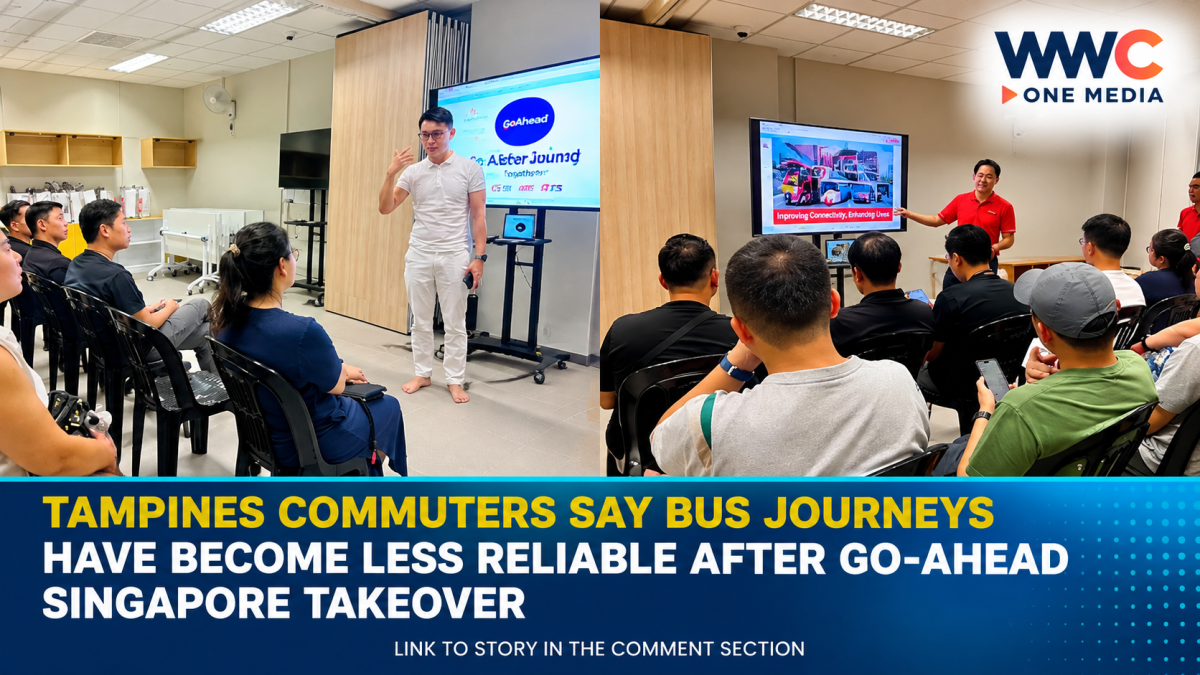
SINGAPORE — Tampines residents are voicing growing frustration over longer waiting times, late arrivals and buses arriving together after Go-Ahead Singapore took over bus services in the area.
Tampines GRC MP Baey Yam Keng said he has received numerous complaints from residents who believe their daily commutes have become less predictable since Go-Ahead Singapore began operating the Tampines bus package in July.
“Many Tampines residents have told me that their daily bus journeys have become less predictable, with longer waiting times and buses arriving together,” Baey said in a Facebook post on Sunday, Sept 13.
The concerns have now prompted discussions between Baey, grassroots leaders and Go-Ahead Singapore management as commuters wait to see whether promised improvements will translate into shorter and more reliable journeys.
What Happened After Go-Ahead Singapore Took Over?
Go-Ahead Singapore officially took over the Tampines bus package from SBS Transit on July 5, ending SBS Transit’s more than four decades of operations in the town.
The package covers 27 bus routes and was transferred to Go-Ahead Singapore under Singapore’s Bus Contracting Model.
The transition was completed in two phases, with an initial group of services transferred in early July and another 15 services joining the new operator later that month.
But just weeks after the transition, some commuters began reporting problems.
Residents complained about:
- Longer waiting times
- Late buses
- Less predictable arrival schedules
- Bus bunching, where several buses arrive close together
- Differences between actual arrival times and displayed timings
One commuter said the first bus of the day could arrive around eight minutes late, while delays sometimes stretched to as much as 15 minutes.
For commuters heading to work, school or appointments, those delays can have a significant impact.
Why Does Go-Ahead Singapore Say Problems Are Happening?
Baey said Go-Ahead Singapore has acknowledged that the operator faced challenges during the transition.
One major issue involves its workforce.
According to Baey, around 40 per cent of Go-Ahead Singapore’s bus captains are new and are still becoming familiar with their routes.
The operator is also working from the new East Coast Integrated Depot, meaning bus captains are adjusting to a new workplace environment after previously operating from the SBS Transit depot they were familiar with.
These changes can affect attendance, route familiarity and operational performance, which can then indirectly affect bus services.
The transition represents a major operational change for the area.
Go-Ahead Singapore was awarded the S$646 million Tampines bus package in 2025, with the Land Transport Authority placing significant emphasis on quality and the company’s ability to manage large-scale electric bus operations.
Residents Say the Change Has Been Noticeable
Some residents commenting on Baey’s post said service standards appeared to have declined since the SBS Transit era.
One commuter described previous journeys as consistently punctual and said the new service had disrupted daily routines.
Another resident said displayed arrival timings had become less useful when buses failed to arrive as expected.
Several commuters also said they felt the situation had worsened after the second phase of the handover.
Bus bunching has become one of the key complaints.
When buses scheduled at regular intervals arrive together, passengers who miss both vehicles may face a much longer wait for the next service.
Singapore’s Land Transport Authority has previously explained that planned schedules and speed regulation are important tools for preventing bus bunching and maintaining more regular arrivals.
Go-Ahead Singapore Says Most Issues Have Been Resolved
According to Baey, Go-Ahead Singapore told him and grassroots leaders that most of the transition issues had already been addressed.
The company is strengthening training and support for bus captains as they become more familiar with their routes and operating environment.
But Baey stressed that commuters need to experience real improvements.
“What matters now is that commuters see real improvements,” he said.
That statement reflects the main concern among residents: explanations may help people understand the problems, but they still need buses to arrive on time.
Targeted Monitoring Proposed at Key Bus Stops
Baey and grassroots leaders have proposed targeted monitoring at key bus stops to measure actual waiting times.
The monitoring would aim to identify:
- Recurring delays
- Actual waiting times
- Bus bunching
- Services experiencing repeated problems
- Possible corrective actions
Baey said he would continue following up with both the Land Transport Authority and Go-Ahead Singapore regarding affected services.
The approach could help authorities distinguish between isolated transition problems and recurring operational issues affecting specific routes.
End of an Era for SBS Transit in Tampines
The complaints come after a major change for Tampines commuters.
SBS Transit had operated bus services in the area for 43 years, with its history in Tampines stretching back to 1983.
The company described its departure from the town as the end of an era, saying it was leaving a community it had called home for more than four decades.
Go-Ahead Singapore, meanwhile, began its expanded operations with the promise of serving Tampines with greener and reliable journeys.
Its winning proposal included plans to use technology and AI-driven tools to reduce bus bunching and improve service reliability.
That makes the current complaints particularly significant.
The company was selected partly on the strength of its operational proposal, and Tampines residents are now watching closely to see whether the early transition problems can be resolved.
The Real Test Starts Now
For now, neither Baey nor Go-Ahead Singapore has suggested that the operator change itself will be reversed.
Instead, the focus is on improving training, addressing operational problems and monitoring actual service performance.
But commuters say the real measure will be simple.
Are buses arriving when they are supposed to?
The Tampines transition involved new routes, a new depot, new bus captains and a new operator.
Those challenges may explain some of the problems.
But for thousands of residents relying on buses every day, explanations alone will not make a late bus arrive faster.
Tampines commuters have spoken. Go-Ahead Singapore says most issues have been resolved. Now, the pressure is on to prove it.
The biggest question is: Will targeted monitoring finally restore reliable bus journeys—or will Tampines residents continue facing longer waits and unpredictable commutes?




Leave a Reply