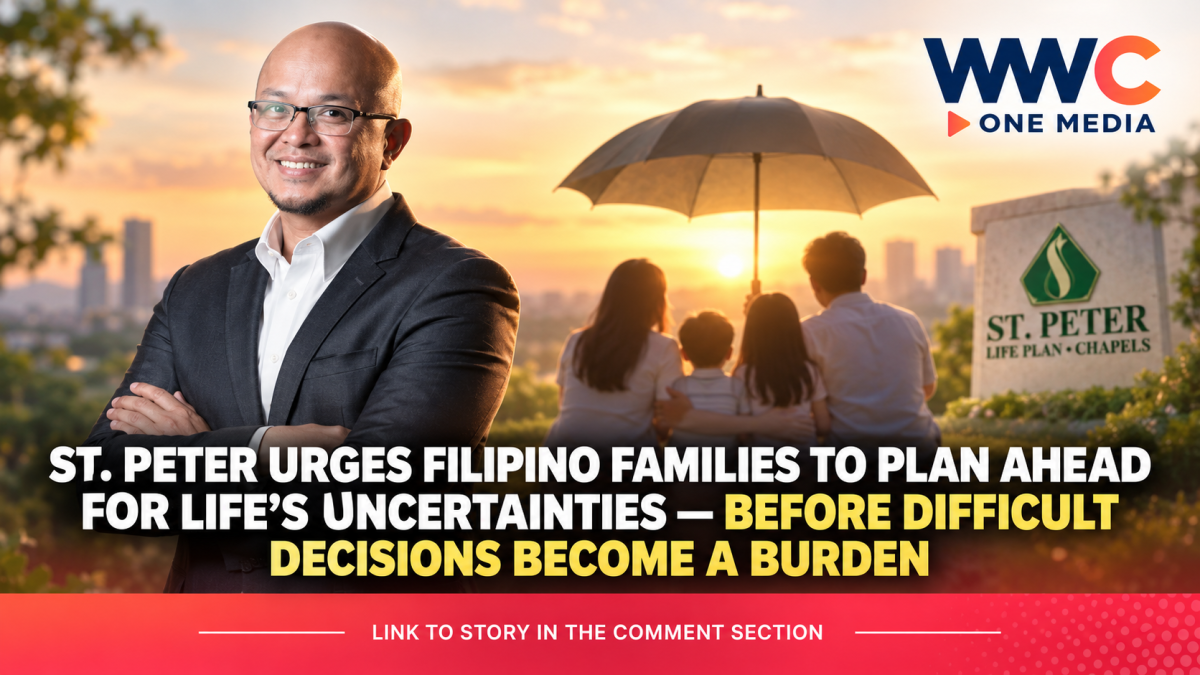
MANILA, Philippines — Filipino families are being encouraged to look beyond emergency supplies, savings and disaster preparedness as St. Peter Life Plan Inc. calls for a more comprehensive approach to protecting loved ones from life’s unexpected challenges.
The company is urging households to make advance memorial arrangements, arguing that preparing for difficult circumstances can help families avoid making important financial and personal decisions during moments of grief.
In a report published by InsiderPH on September 21, St. Peter emphasized that life planning should be treated as a normal part of household preparedness, much like keeping emergency funds, important documents and essential supplies ready for unforeseen events.
The message highlights an often-overlooked aspect of family preparedness: while many households prepare for typhoons, medical emergencies and everyday financial pressures, conversations about funeral arrangements and end-of-life planning are often postponed until an immediate need arises.
Planning Ahead Is an Act of Care, St. Peter Says
St. Peter Life Plan president and CEO Jonathan B. Vitangcol said families should view advance preparations as a practical expression of love and responsibility.
According to Vitangcol, preparing for future uncertainties is not simply about anticipating difficult events. It is also about ensuring that family members have the information, support and arrangements they need when unexpected situations arise.
The company said its pre-need life plans allow individuals to arrange future memorial services in advance, giving relatives more time to discuss their preferences and make important decisions without the immediate pressure of a family emergency.
St. Peter is positioning advance memorial planning alongside other familiar Filipino household practices, including checking on elderly relatives during severe weather, preparing essential supplies and keeping important documents accessible.
Philippine Memorial Plan Industry Sees Growing Demand
St. Peter’s message comes as the Philippine pre-need industry continues to attract households seeking to prepare for future expenses.
According to a February 25, 2026 report by The Philippine Star, citing Insurance Commission figures, the country’s pre-need industry recorded substantial growth in 2025.
PHILIPPINE PRE-NEED INDUSTRY | 2025
895,679
Pre-need plans sold
₱23.94B
Total premium income
28.02%
Increase in plans sold from 2024
99.84%
Share of sales from life and memorial plans
Source: Insurance Commission figures reported by The Philippine Star, February 25, 2026.
The figures illustrate the significant role of memorial arrangements in the country’s pre-need market.
Meanwhile, a July 16 report by The Freeman highlighted how younger Filipinos are becoming an increasingly important customer segment for the industry.
Executives from Cebu-based Cosmopolitan Funeral Homes and Cosmo Climbs Life Plans said millennials are showing greater interest in preparing for memorial expenses, including purchasing plans for their parents.
The report also described how some providers have introduced longer installment periods and expanded digital services to appeal to younger customers.
These developments suggest that advance memorial planning is no longer being marketed exclusively to older generations. However, the industry figures do not establish that every Filipino household can afford or needs a prepaid memorial plan.
Why Funeral Costs Can Become a Financial Burden
The financial pressures surrounding funeral arrangements are another reason families may consider planning ahead.
A previous GMA News report documented how one Filipino family spent approximately ₱100,000 on funeral and burial arrangements, partly financed through borrowing.
The 2018 report also highlighted how expenses for funeral packages, chapel rentals and cemetery arrangements could vary considerably depending on the services selected. Those historical figures should not be treated as current price quotations.
Advance planning can give families an opportunity to compare available services, discuss their preferences and determine how much they are prepared to spend.
However, purchasing a memorial plan does not necessarily eliminate every expense associated with a funeral.
Families should check the specific contract to establish whether their selected package covers the viewing, chapel use, transportation, cremation or burial services they expect to need.
A separate budget may still be necessary for arrangements that fall outside the plan’s covered benefits.
Government Funeral Assistance Offers Another Form of Support
Families facing funeral expenses may also have access to government assistance, depending on their eligibility.
In July 2026, the Government Service Insurance System increased its funeral benefit from ₱30,000 to ₱50,000 for qualified members and pensioners.
According to GMA News, the increase applies to eligible claims beginning July 13, 2026, with the benefit payable to a qualified beneficiary or claimant under GSIS rules.
Separately, Republic Act No. 12309, or the Free Funeral Services Act, became law in September 2025.
The measure provides for government-supported funeral services for eligible indigent families and other qualified households facing crisis situations.
GMA News reported that covered services include funeral documentation, preparation of remains, burial or cremation, transportation and other specified arrangements through accredited service providers. Eligibility and documentary requirements apply.
These programs illustrate that prepaid memorial plans are not the only available form of financial preparation or assistance.
What Families Should Check Before Purchasing a Life Plan
Although advance arrangements may offer reassurance, households should carefully review the financial commitment and contractual protections involved.
Under Republic Act No. 9829, or the Pre-Need Code of the Philippines, companies selling pre-need plans are regulated by the Insurance Commission.
The law requires pre-need companies to establish trust funds for the benefit of planholders, with funds set aside to support their contractual obligations.
Such regulatory requirements provide safeguards, but they do not mean every plan offers identical benefits or that a planholder faces no financial risk.
Before signing an agreement, families should establish what services are included, what additional expenses may arise, whether benefits can be transferred, and what happens if scheduled payments are missed.
They should also verify the provider’s current licensing status and obtain a written copy of the complete contract.
Financial preparedness should account for the household’s immediate needs, existing savings and other financial responsibilities.
A Difficult Conversation That Could Make Future Decisions Easier
St. Peter’s latest campaign presents life planning as part of a broader culture of preparedness rather than a response to fear.
For Filipino families, that preparation may begin with a conversation about individual wishes, available financial resources and the practical arrangements relatives would need to make in an emergency.
Whether those arrangements involve a prepaid memorial plan, dedicated savings or a combination of available support systems, the objective is to ensure that important decisions do not have to begin from zero during a difficult period.
As St. Peter emphasizes, preparing for an uncertain future can be another way of caring for the people who matter most.