
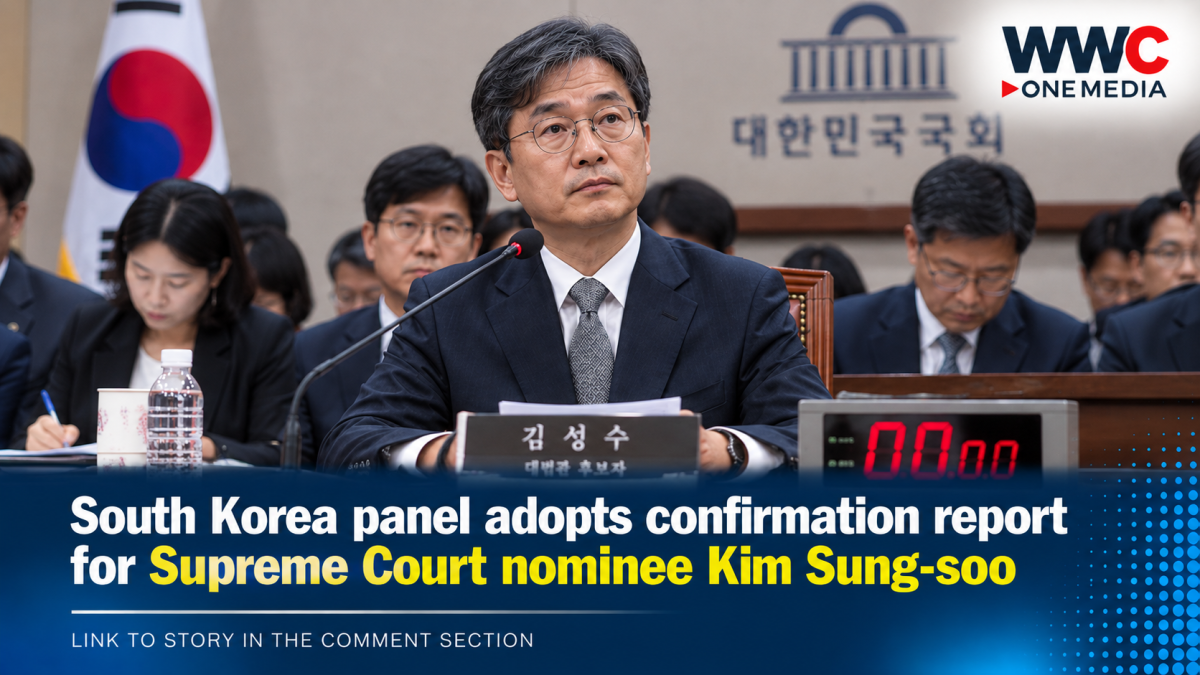
SEOUL — South Korea’s parliamentary committee on Wednesday adopted the confirmation-hearing report for Supreme Court Justice nominee Kim Sung-soo, moving his nomination to the next stage of the appointment process.
The decision came two days after Kim appeared before the National Assembly for his confirmation hearing, where lawmakers questioned him about his qualifications, political neutrality and issues involving his financial and real-estate dealings.
Committee Report Clears the Next Hurdle
The committee’s adoption of the report does not by itself complete Kim’s appointment.
A vote in the National Assembly’s plenary session is expected Thursday. If lawmakers approve the nomination, President Lee Jae Myung would then formally appoint Kim to the Supreme Court.
If the process proceeds as expected, Kim would become the first Supreme Court justice to take office under the Lee administration.
Ruling Party and Opposition Split Over Nominee
The confirmation process has exposed a clear disagreement between South Korea’s major political parties.
The ruling Democratic Party gave a positive assessment in the committee report, saying Kim’s responses demonstrated his commitment to political neutrality and judicial independence.
The main opposition People Power Party, however, opposed that assessment and questioned whether Kim was suitable for the position, including raising concerns about his qualifications and political neutrality.
These are competing political assessments rather than judicial findings about Kim’s suitability.
Controversies Raised During the Hearing
During Monday’s hearing, lawmakers questioned Kim about allegations involving tax payments and a real-estate transaction.
According to The Korea Herald, questions included a high-value apartment in Seoul’s Gangnam district that Kim rented from his brother-in-law under a jeonse arrangement. Opposition lawmakers raised questions about the unusually low deposit and the handling of gift-tax obligations.
Kim apologized for causing concern and said he had begun the process of paying the outstanding gift tax, while maintaining that he had not intended to receive the apartment as a gift.
Why the Appointment Matters
The Supreme Court justice appointment is significant because the country’s highest court handles cases that can have major consequences for South Korean law and public institutions.
Kim was among two candidates recommended by Supreme Court Chief Justice Jo Hee-de, according to The Korea Herald. The presidential office ultimately proceeded with Kim’s nomination after rejecting the other recommended candidate, citing a lack of consultation between the presidential office and the Supreme Court.
The Next Decision Comes in the Plenary
The committee’s action now shifts attention to the National Assembly’s plenary session.
The expected Thursday vote will determine whether Kim’s nomination receives the parliamentary approval needed before the president can formally appoint him.
Until that vote and subsequent appointment take place, Kim remains a Supreme Court justice nominee rather than a sitting justice.
The coming vote will therefore be the next major step in determining whether South Korea’s Supreme Court gains its first new justice under the Lee administration.
WWC ONE MEDIA G.A




Leave a Reply