
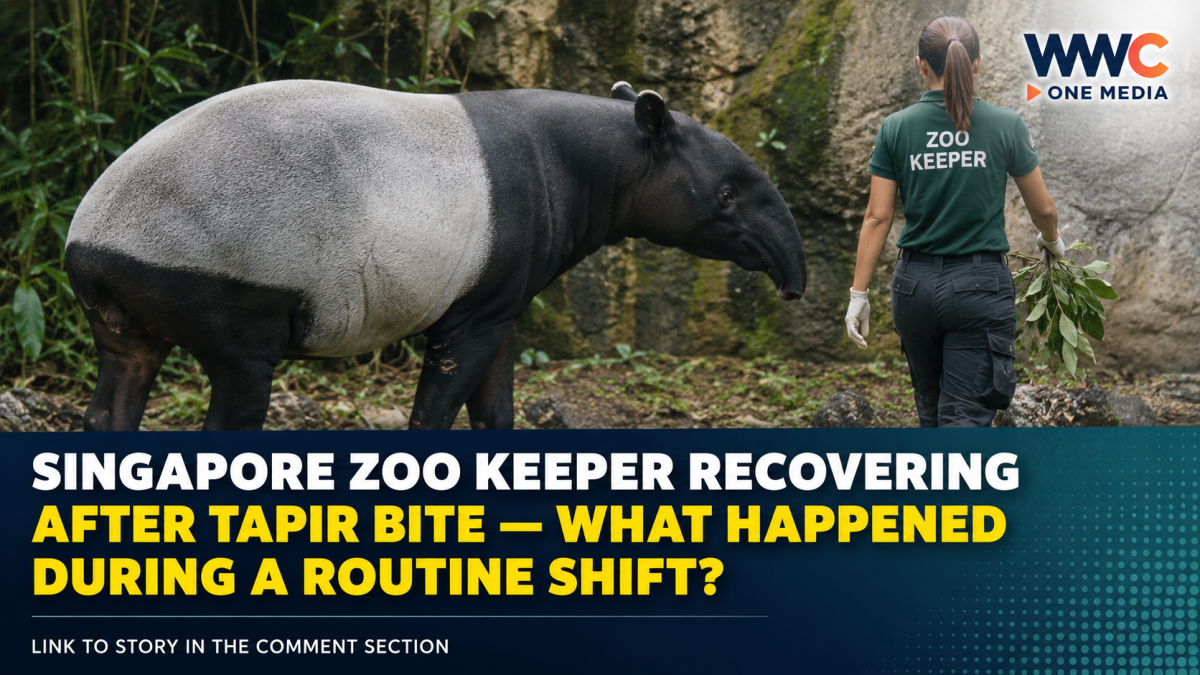
SINGAPORE — A Singapore Zoo animal keeper is recovering in hospital after being bitten by an adult Malayan tapir during routine end-of-day activities, in an incident that has prompted Mandai Wildlife Group to review its operating procedures.
The incident occurred on the evening of Aug 26, when the keeper was guiding the tapir back to its off-exhibit den, according to statements reported by AsiaOne and The Straits Times. Another keeper who was inside the exhibit stepped in to assist, and the animal was secured in its den shortly afterwards.
A Mandai Wildlife Group spokesperson said the injured employee remains under close medical supervision and is on the way to recovery. The organisation is also in contact with the keeper and their family to provide support.
A Rare Incident Involving a Familiar Animal
The Straits Times reported that the tapir involved is a 23-year-old female that was born under Mandai’s care and remains with the wildlife group. Her keepers have worked closely with her throughout her life, including during her pregnancies and the birth of her calf.
Mandai Wildlife Group said tapirs are generally shy and non-confrontational, making such incidents uncommon. However, the episode also serves as a reminder that wild animals can behave unpredictably, even when they are familiar with their caregivers and accustomed to human presence.
The wildlife group is reviewing the incident and its procedures to determine whether additional measures could further improve safety for both staff and animals.
What Makes the Malayan Tapir So Significant?
The Malayan tapir is the only tapir species native to Asia and is classified as Endangered by the International Union for Conservation of Nature, meaning the species faces a high risk of extinction in the wild. Singapore has also seen several rare sightings of Malayan tapirs outside managed wildlife settings in recent months, highlighting the species’ unusual presence and conservation significance in the region.
While the incident has raised understandable concerns about the risks faced by animal care professionals, there is no indication that the tapir was removed from Mandai’s care. The focus remains on the keeper’s recovery and the review of safety protocols following the incident.
The Bigger Picture: Working With Wildlife Carries Inherent Risks
Animal keepers build close relationships with the creatures in their care, but familiarity does not eliminate the instincts and physical power of wild animals. The latest incident underscores the challenges of balancing close-contact animal husbandry with rigorous safety procedures — particularly when working with large animals capable of causing serious injuries.
As the Singapore Zoo keeper continues recovering, Mandai Wildlife Group’s review could offer further insight into whether existing procedures need to be strengthened following this rare workplace incident.
The key question now is whether the review will lead to changes designed to make future interactions safer — while continuing to provide the specialised care these endangered animals require.

Leave a Reply