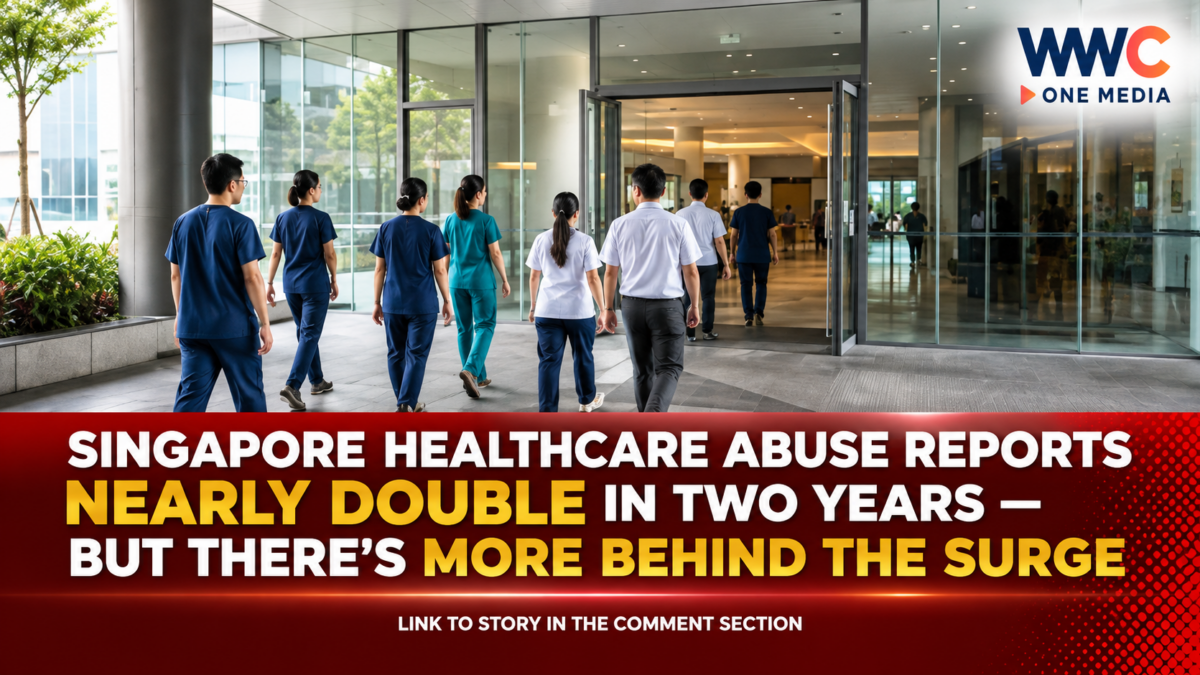
Reports of abuse and harassment against healthcare workers in Singapore’s public healthcare sector have nearly doubled in just two years, rising from about 2,200 cases in 2023 to 4,200 in 2025.
But authorities say the sharp increase should not automatically be interpreted as proof that abusive behaviour has become more widespread.
Instead, the rise is also being linked to greater awareness of what constitutes abuse and growing confidence among healthcare workers to report incidents and seek action.
Police Reports Also Increased
Of the 4,200 cases reported in 2025, about 550 — or 13% — were reported to police.
That compares with around 350 police reports, or 16%, of the 2,200 cases recorded in 2023.
Singapore’s Ministry of Health highlighted the figures as part of a new report from the Tripartite Workgroup for the Prevention of Abuse and Harassment of Healthcare Workers, which concluded its formal term after several years of work.
Minister of State for Health Rahayu Mahzam, an adviser to the workgroup, said difficult conversations can occur when patients or caregivers are anxious or frustrated, but abuse should not be treated as an unavoidable part of healthcare work.
Why Are More Cases Being Reported?
The increase comes after Singapore introduced a tripartite framework in 2023 designed to create a common definition of abuse and harassment and establish consistent responses across healthcare institutions.
Before the framework, some healthcare workers were reluctant to report incidents because they were uncertain about reporting channels, worried about repercussions or viewed abusive behaviour as simply part of the job.
A 2023 survey involving more than 3,000 healthcare workers found that about two in three had witnessed or experienced abuse or harassment.
The new framework has helped establish clearer procedures for identifying and responding to incidents.
Hospitals Have Strengthened Protection Measures
Public healthcare institutions have introduced dedicated staff-protection functions and other measures to support workers facing abuse or harassment.
More than 6,000 healthcare workers in public healthcare institutions and the community care sector have also received advanced training in de-escalation and self-defence techniques, while basic training is provided to frontline staff as part of their onboarding.
Institutions can take action against abusive individuals, including issuing warnings and, where appropriate, removing them from hospital premises.
Patients who are medically fit for discharge can also be discharged when their abusive behaviour disrupts the delivery of care.
Confidence in Reporting Is Growing
The latest findings suggest that the reporting environment has changed significantly.
A 2025 survey found that more than 90% of healthcare workers at public institutions felt their organisations encouraged reporting of abuse and harassment and supported a safe and respectful workplace.
Among members of the public surveyed, 86% said they would consider intervening if they witnessed a healthcare worker being abused, while nine in 10 agreed that everyone has a role to play in preventing such behaviour.
The workgroup said maintaining that progress will require continued participation from healthcare institutions, workers, patients, caregivers and the wider community.
The Bigger Story Behind the Numbers
The jump from 2,200 reported cases in 2023 to 4,200 in 2025 is striking. But the figures need to be read in context.
Singapore’s healthcare authorities say higher reporting can reflect greater willingness to speak up rather than simply a rise in the underlying prevalence of abuse.
That distinction is becoming increasingly important as hospitals work to create environments where healthcare workers can report incidents without feeling that mistreatment is simply something they have to tolerate.
The formal workgroup has now concluded, but its work will continue through a Community of Practice bringing healthcare providers and partners together to exchange experiences and strengthen prevention efforts.
The number has nearly doubled — but the real question may be what the 4,200 reports reveal about a healthcare system where more workers are finally willing to speak up.
WWC ONE MEDIA G,A