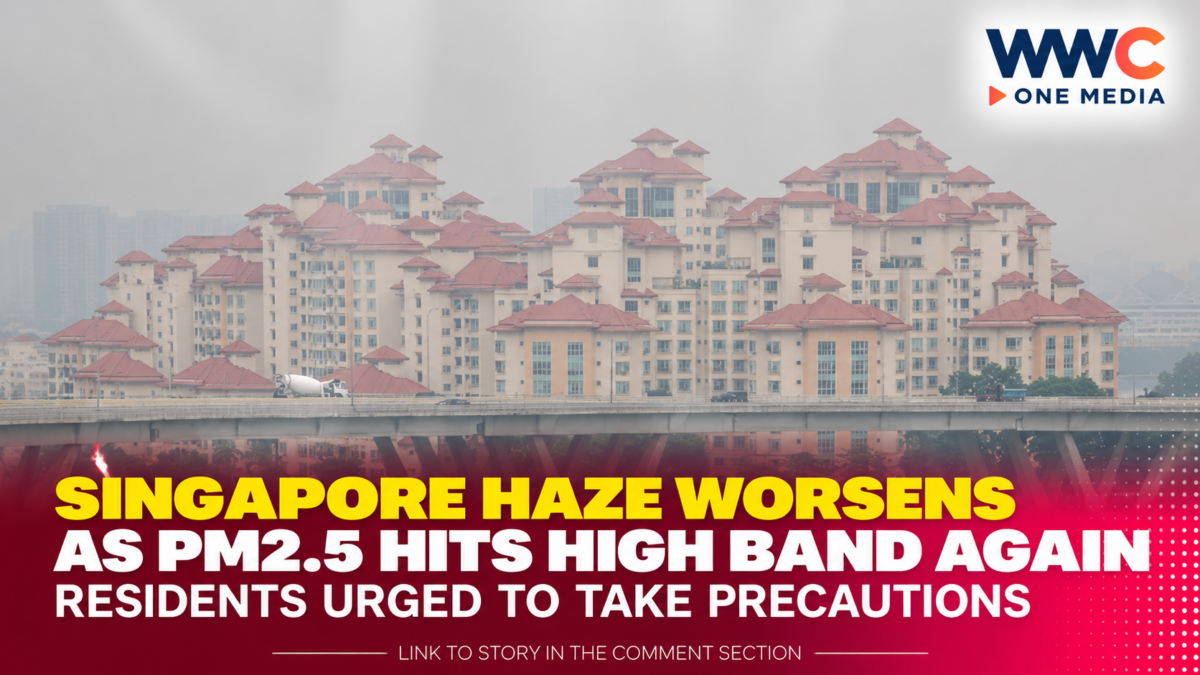
Singapore’s haze situation deteriorated on Monday (Oct 12), with fine-particle pollution levels in the central region climbing back into the high band as smoke haze continued to drift across the island.
At 1pm, one-hour PM2.5 readings ranged from 91 micrograms per cubic metre (µg/m³) in the south to 156 µg/m³ in the central region, according to the report by AsiaOne. The western region recorded 124 µg/m³, while the east registered 116 µg/m³.
PM2.5 readings between 151 and 250 µg/m³ fall within the high band, indicating elevated concentrations of tiny airborne particles that can penetrate deep into the lungs.
Meanwhile, Singapore’s 24-hour Pollutant Standards Index (PSI) ranged from 104 in the north to 147 in the central and western regions. These readings fall within the unhealthy range.
Haze linked to regional forest fires
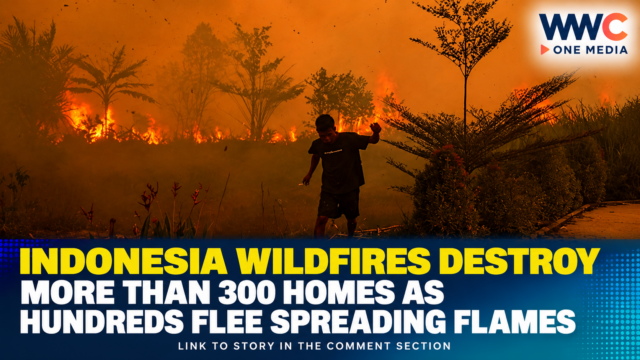
The National Environment Agency (NEA) has warned that smoke haze from southern Sumatra and West Kalimantan could continue affecting Singapore under prevailing southerly and south-easterly winds.
Although showers may bring temporary relief in some areas, dry conditions in parts of Indonesia could allow fires and haze to persist.
Haze-related medical support activated
With air quality worsening and more people reportedly seeking treatment for respiratory ailments, Singapore’s Ministry of Health is activating the Public Health Preparedness Clinic (PHPC) scheme and Haze Subsidy Scheme from Oct 12.
The measures are intended to help Singaporeans access medical care for haze-related conditions. Residents should check the official scheme details for eligibility and available subsidies.
Who should take extra care?
Fine particles can irritate the respiratory system and may worsen existing lung or heart conditions. Children, older adults, pregnant women and people with chronic respiratory or cardiovascular illnesses should take particular care when pollution levels rise.
Health precautions include:
- Reduce strenuous outdoor activity: Avoid prolonged or intense exercise outdoors when air quality is unhealthy.
- Check hourly PM2.5 readings: These provide guidance for immediate outdoor activities, while the 24-hour PSI helps with planning.
- Keep indoor air cleaner: Close windows when outdoor haze is heavy and use suitable air filtration if available.
- Seek medical advice if symptoms worsen: Persistent coughing, wheezing or breathing difficulties should not be ignored.
The haze situation remains dependent on regional fire activity, wind direction and rainfall. Residents should monitor updates from Singapore’s NEA and follow the latest health advisories as conditions change.