
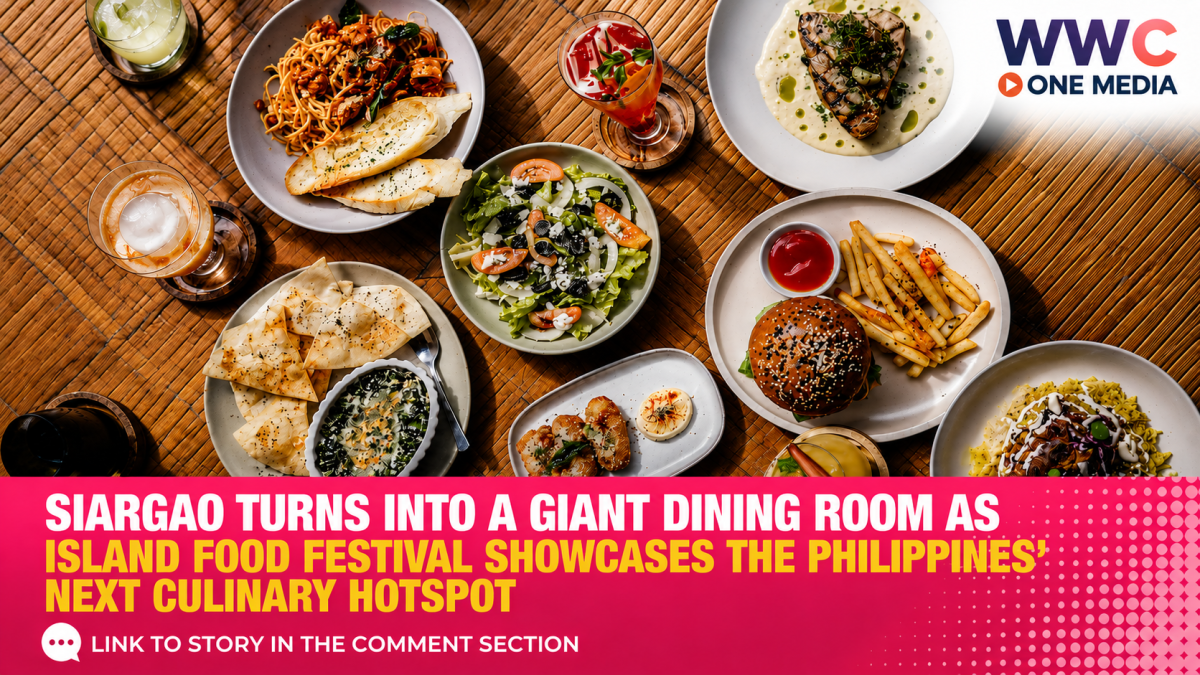
From fresh seafood and local coffee to coconut-focused dinners and a beachside boodle fight, Ani Sang Siargao brought chefs, farmers, fishers and food lovers together across the island.
SIARGAO, PHILIPPINES — Siargao may be internationally famous for its waves, but its food scene is increasingly becoming a destination in its own right.
The 2026 Siargao Food & Wine Festival, also known as Ani Sang Siargao, transformed the island into an island-wide culinary playground from August 26 to 31, bringing together more than 30 chefs, farmers, fishers, producers and participating venues across nine municipalities.
Unlike a conventional food festival held in one convention center or resort, Ani Sang Siargao spread its events through restaurants, cafés, farms, markets, beaches and nearby islands. The official festival program listed 16 gatherings over six days.
From surf destination to food destination
Siargao’s global identity has long been built around surfing, particularly the famous Cloud 9 break.
But a growing community of chefs, bartenders, farmers, food producers and hospitality workers is giving visitors another reason to explore the island.
The festival’s organizers describe Ani Sang Siargao as a community-led, island-wide culinary festival, designed to highlight the people and food systems behind what visitors eat on the island.
That emphasis distinguishes the event from a typical collection of high-end restaurant dinners.
The 2026 edition placed local produce, seafood, coffee, coconut, Filipino cooking traditions and community gatherings at the center of the program.
Six days, 16 gatherings and an entire island as the venue
The festival opened on August 26 at Wild Siargao, where festival director and chef Andre “Dre” Malarky joined visiting chefs for a collaborative opening dinner accompanied by cultural performances and cocktails.
The following days moved through different parts of Siargao.
Ocean Day featured coffee tastings, a wet-market experience at General Luna Public Market and an Alma × CMD Supper Club tasting menu.
Coconut Day explored one of the island’s most important agricultural products through workshops, a Miki Fiesta and a collaboration dinner at Lyma.
Producer Day shifted the spotlight toward agriculture and local food production, while also bringing back Kermit’s pizza-eating contest.
Then came Community Day, which included an island-style chef’s table on Mam-on Island, the Siargao Mercado at Bravo and a regional Filipino salo-salo at Sagana.
The festival concluded on August 31 at Hue Hotel with a closing celebration and recognition event overlooking the Cloud 9 area.
International chefs meet Siargao’s local food culture
One of the festival’s biggest draws was the interaction between visiting chefs and Siargao’s established culinary community.
The lineup included Jarrod Moore of Melbourne’s Nine Yards and Morris Danzen of CMD Supper Club, who collaborated with chefs and restaurants based in Siargao.
Other participating names and venues included Wild Siargao, Alma, Lyma, Roots, Kermit, Lamari, Cev, Hapag, Ayà, Sagana and Isla Panciteria.
The collaborations weren’t simply about bringing outside culinary talent to an island.
They were designed around Siargao ingredients and food traditions — from seafood and coconut to kinilaw, sugba and regional Filipino dishes.
The real star: Siargao’s producers
Behind the glamorous dinners, the festival placed considerable attention on the people who supply the island’s food economy.
Farmers, fishers, bakers, coffee producers and other local makers were incorporated into the program.
The official festival website says the event is intended to connect visitors with the island’s food-producing communities and encourage a more responsible approach to tourism.
That message was echoed by coverage from Strata News Network, which described the festival as an effort to put Siargao’s culinary culture in the spotlight and promote the island as more than a surfing destination.
Sustainability wasn’t just a buzzword
Environmental responsibility was another major theme.
Lokal Lab hosted activities focused on processing, fermentation and zero-waste practices, while the coconut-focused programming explored ways to maximize the use of the island’s agricultural products.
One collaboration dinner at Lyma, for example, was presented as a five-course, zero-waste dinner centered on coconut.
The festival also connected food with broader conversations about agriculture, local livelihoods and cultural responsibility.
A festival built differently
Perhaps the most interesting aspect of Ani Sang Siargao is its format.
There was no single festival venue and no universal festival pass. Instead, guests moved between participating establishments and community locations, with individual venues handling reservations for their respective events. Some activities were listed as walk-ins, while tasting menus and chef’s tables required reservations.
That approach effectively turned Siargao itself into the festival.
A morning coffee tasting could lead to a wet-market visit. An afternoon could move to a community market. Dinner might happen at a restaurant, on an island or as part of a communal Filipino feast.
Why this matters for Philippine tourism
The success of Siargao’s culinary scene could have implications beyond food.
The island is already one of the Philippines’ most recognizable international tourism destinations. Developing its food identity gives travelers another reason to stay longer, explore beyond the major surf areas and spend money across a wider network of local businesses.
The festival’s model also demonstrates how culinary tourism can be tied to local producers, cultural traditions and community participation, rather than relying exclusively on luxury dining.
The second edition’s scale — six days, nine municipalities, more than 30 makers and 16 gatherings — shows how far the island’s food movement has developed.
The bigger picture
Siargao doesn’t need to stop being a surfing destination.
It may simply be becoming something bigger.
The waves put Siargao on the world map. Its food could be what keeps travelers coming back.
WWC ONE MEDIA J.M.D


Leave a Reply