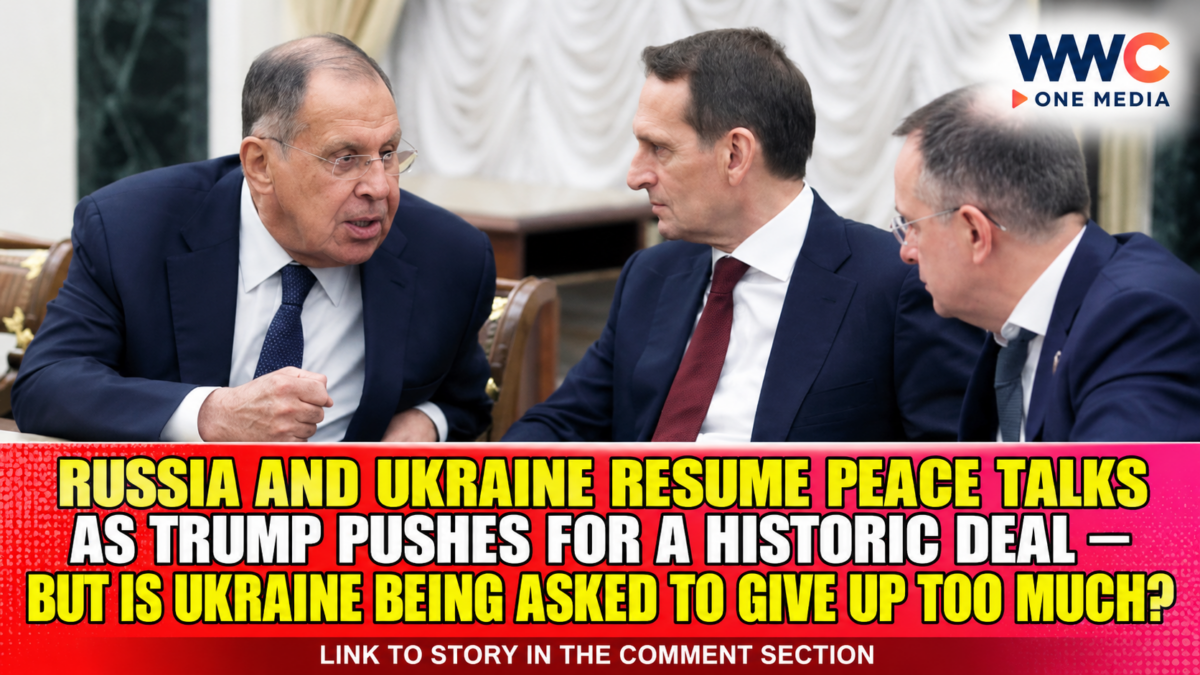
Russia and Ukraine are preparing for a crucial new round of United States-backed peace negotiations in Abu Dhabi, with US President Donald Trump expressing renewed confidence that a broad agreement could finally bring an end to the devastating war.
The two-day discussions, scheduled for November 10 and 11, mark the first major US-brokered meeting between Russian and Ukrainian delegations since February. The negotiations are expected to address territorial disputes, post-war security guarantees, humanitarian concerns and the possibility of de-escalating the conflict.
However, despite Washington’s optimism, the road to peace remains complicated. Russia continues to demand control over the entire Donbas region in eastern Ukraine, while Ukrainian President Volodymyr Zelenskyy has repeatedly rejected surrendering territory defended by Ukrainian forces.
The negotiations could become an important turning point in the conflict, but neither side has publicly agreed to the concessions that would be necessary for a lasting settlement. AsiaOne+2
Trump Says a Bigger Agreement Could End More Than the Ukraine War
Trump has suggested that the negotiations could lead to an agreement extending beyond the immediate conflict between Moscow and Kyiv.
Speaking about the diplomatic initiative, he indicated that discussions could involve broader European security arrangements, potentially reshaping relations between Russia, the United States and European countries.
The proposal reflects Washington’s view that ending the war may require addressing wider security concerns that have contributed to tensions between Russia and NATO.
Trump has repeatedly claimed that the conflict could be resolved through negotiations. However, previous expressions of optimism have not produced a final agreement, and the fundamental disagreements between Russia and Ukraine remain unresolved.
US officials are now attempting to turn renewed diplomatic engagement into a concrete negotiating framework. AsiaOne+2
Abu Dhabi Becomes the Centre of a High-Stakes Diplomatic Mission
The United Arab Emirates is hosting the latest round of negotiations, bringing together representatives from Russia, Ukraine and the United States.
US special envoy Steve Witkoff and Jared Kushner, Trump’s son-in-law and diplomatic representative, are expected to lead Washington’s efforts.
Russia’s delegation will again be headed by Kremlin aide Vladimir Medinsky. Deputy Foreign Minister Sergei Ryabkov and senior military officer Yuri Zhigarlovsky are also expected to participate.
Ukraine’s delegation is led by Rustem Umerov, who has emphasized the importance of ensuring that European countries remain involved in the diplomatic process.
The discussions are expected to begin on November 10, with separate meetings also planned between Ukrainian representatives and European allies.
The choice of Abu Dhabi is significant because the UAE has previously provided a venue for diplomatic contacts involving Russia and Ukraine, including discussions on humanitarian matters. AsiaOne+2
Donbas Remains the Biggest Obstacle to a Peace Agreement
The most difficult issue facing negotiators is territory.
Russia has continued to demand that Ukraine surrender the entire Donbas region, which includes parts of Donetsk and Luhansk. Moscow considers control over the area a central condition for a settlement.
Ukraine, however, has rejected giving up territory that its military has defended throughout the war.
Zelenskyy has argued that Ukraine’s battlefield position is strengthening its negotiating leverage. He pointed to recent military developments in Donetsk and said Ukrainian forces were improving the country’s position ahead of the talks.
A US official told Reuters that both sides had privately shown some flexibility regarding possible territorial arrangements. Washington believes a compromise could potentially be explored after progress on other major issues.
But a senior Ukrainian official strongly denied that Kyiv was prepared to make territorial concessions under the proposed arrangement. Ukraine’s position is that territorial questions must be addressed at the level of national leaders and alongside credible security guarantees.
The difference between Washington’s assessment and Kyiv’s public position highlights how difficult it will be to reach an agreement. AsiaOne+2
Ukraine Wants Security Guarantees Before Making Any Concessions
For Kyiv, ending the fighting is only one part of the challenge. Ukraine also wants assurances that Russia will not launch another invasion after a ceasefire or peace agreement.
One proposal under discussion involves security guarantees resembling NATO’s Article 5 principle, under which an attack against one member is treated as an attack against all.
However, the precise form of any guarantee remains unsettled. Ukraine is not simply seeking a temporary pause in hostilities; it wants an arrangement capable of protecting its sovereignty and preventing another major conflict.
The proposed framework could also include a roadmap toward European Union membership, giving Ukraine a political and economic path toward deeper integration with Europe.
These issues are particularly important because a ceasefire without credible enforcement could leave Ukraine exposed to renewed military pressure.
US officials have indicated that security arrangements must be addressed before negotiators can realistically resolve the most sensitive territorial questions. Reuters+2
Europe Demands a Seat at the Table
Another major complication is the role of European governments.
France, Germany and the European Commission are sending representatives to Abu Dhabi, but Russia has made clear that it does not want European officials participating directly in the trilateral negotiations.
Instead, Ukrainian representatives are expected to brief European allies separately on the discussions.
Ukraine wants Europe involved because European countries are central to its financial, military and diplomatic support. Any agreement involving Ukraine’s future security would also have direct consequences for the wider European continent.
French Foreign Minister Jean-Noël Barrot previously confirmed that European representatives would be present in Abu Dhabi.
European governments are particularly concerned that Washington and Moscow could discuss the future security of the continent without giving European countries a meaningful role.
That concern is rooted in Russia’s earlier demands for changes to NATO’s military presence in Europe. Before its full-scale invasion of Ukraine in February 2022, Moscow demanded restrictions on NATO forces in countries that joined the alliance after 1997. NATO rejected those demands.
The latest negotiations could therefore become about more than Ukraine’s borders. They may also influence the future relationship between Russia and the European security system. AsiaOne+2
Fighting Continues Despite Renewed Diplomatic Efforts
While diplomats prepare for negotiations, military operations have continued.
A temporary understanding announced by Trump concerning attacks on energy infrastructure quickly collapsed. Ukraine has increased strikes against Russian oil refineries, while Russian forces have continued attacking Ukrainian electricity infrastructure and cities.
The continued attacks underline the difficulty of negotiating a peace agreement while both countries remain engaged in military operations.
The humanitarian consequences also remain significant. Civilians continue to face the dangers of missile and drone attacks, damage to essential infrastructure and disruption to everyday life.
The situation has reinforced calls for de-escalation measures that could protect civilians and critical facilities even before a comprehensive peace agreement is reached. AsiaOne+2
US Diplomacy Has Tried Before — But No Lasting Breakthrough Has Emerged
The latest diplomatic push follows months of negotiations and meetings involving Trump’s representatives, Russian officials and Ukrainian leadership.
WWC ONE MEDIA previously reported on the September diplomatic mission in Trump’s Envoys Meet Putin in Moscow — But Will Their Secret Peace Plan Finally End the Ukraine War?.
Another report, Putin Meets Trump Envoys in High-Stakes Ukraine Talks — But What Was Really Agreed Behind Kremlin Doors?, examined the discussions between Putin, Witkoff and Kushner and the absence of a breakthrough.
The publication also covered the announcement of the November diplomatic initiative in US to Bring Russia and Ukraine Back to the Table in Abu Dhabi — But Can Trump’s New Peace Push Finally Break the Deadlock?.
These earlier meetings demonstrate that direct communication between Washington and Moscow has continued, but diplomatic contact alone has not been enough to resolve the conflict.
The latest negotiations will test whether the parties are finally prepared to move beyond discussions and consider specific compromises.
What Could Happen After the Abu Dhabi Talks?
Even if the November 10–11 discussions produce progress, a final peace agreement is unlikely to be completed overnight.
Negotiators still face several difficult questions:
- Whether Russia and Ukraine can agree on a territorial arrangement.
- What security guarantees Ukraine would receive.
- Whether a ceasefire can be monitored and enforced.
- How European countries would participate in post-war security arrangements.
- What role sanctions, reconstruction funding and humanitarian measures would play in a settlement.
US officials have indicated that further high-level discussions could follow if the Abu Dhabi meetings make sufficient progress.
The possibility of additional meetings involving Trump, Putin and Zelenskyy could also become part of the diplomatic process, although no final leaders’ summit has been confirmed.
For now, the negotiations are an opportunity to test whether the positions of Moscow and Kyiv can be brought closer together. AP News+2
The World Is Watching — But Peace Is Still Not Guaranteed
The return of Russia and Ukraine to US-backed negotiations has created renewed hope that the conflict could eventually move toward a political settlement.
Trump believes a broader agreement may be possible. Washington says it sees signs of flexibility. European governments want their security concerns addressed, while Ukraine insists that any agreement must protect its sovereignty.
Russia, meanwhile, has not publicly abandoned its central territorial demands.
That leaves the Abu Dhabi talks facing a difficult test: whether diplomatic momentum can overcome years of mistrust, military confrontation and competing national interests.
For millions of Ukrainians affected by the war, a lasting agreement would mean more than a diplomatic achievement. It could offer the possibility of returning home, rebuilding destroyed communities and living without the constant threat of further attacks.
But until Russia and Ukraine agree on territory, security and the conditions for ending hostilities, the prospect of peace remains uncertain.
The biggest question is no longer simply whether Trump can bring both sides to the negotiating table. It is whether Putin and Zelenskyy are prepared to accept a settlement that neither side considers a defeat.