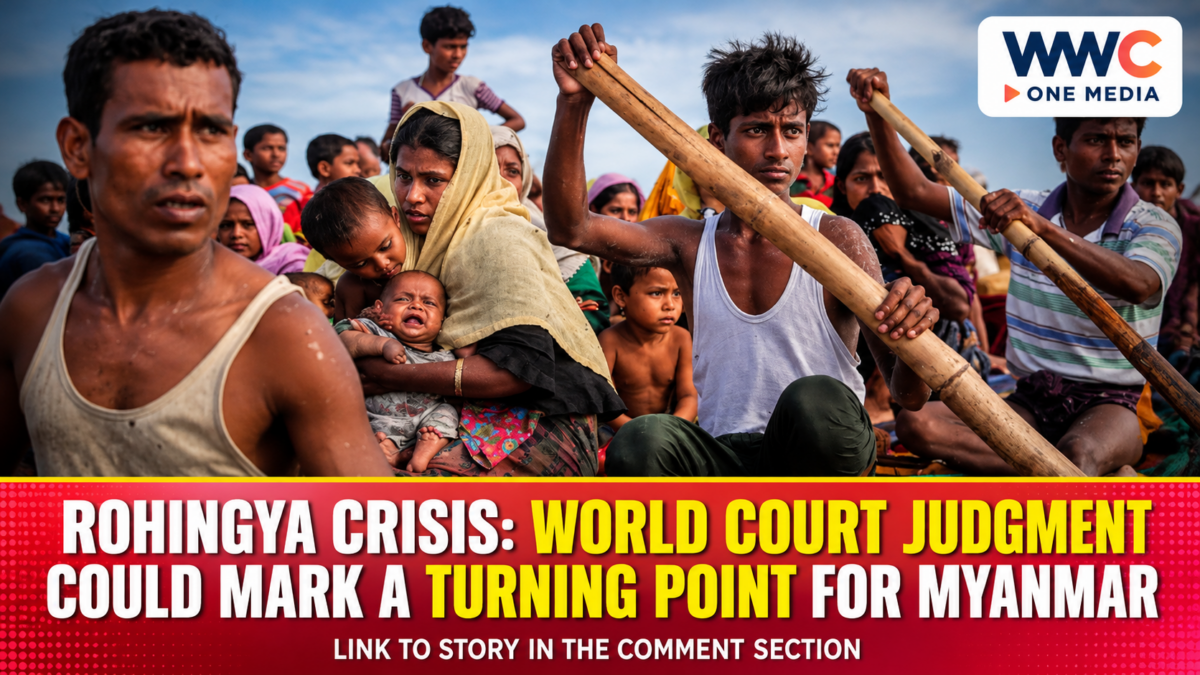
The International Court of Justice is scheduled to deliver its judgment on Nov. 19, 2026, in a case brought by The Gambia accusing Myanmar of violating the Genocide Convention through its treatment of the Rohingya. The ruling is due at a public sitting in The Hague at 10 a.m. local time, or 5 p.m. in the Philippines.
The decision comes more than nine years after Myanmar’s military operations in Rakhine State triggered a mass exodus into Bangladesh. It could establish an important legal finding on a state’s responsibility under the Genocide Convention, but the lives of displaced Rohingya will still depend on security, citizenship, humanitarian assistance and whether safe return becomes possible.
Rohingya crisis: How the 2017 displacement began
The events that led to the case intensified on Aug. 25, 2017, when the Arakan Rohingya Salvation Army launched coordinated attacks on a military base and security force outposts in northern Rakhine State.
A United Nations Human Rights Council fact-finding mission documented the attacks and the military response that followed. Its September 2018 report described the security forces’ operations as immediate and grossly disproportionate, and said they spread across hundreds of villages.
By mid-August 2018, nearly 725,000 Rohingya had fled to Bangladesh, the mission reported. It also documented killings, injuries, sexual violence, destruction of villages and restrictions affecting those who remained.
The mission concluded that serious crimes under international law warranted criminal investigation and prosecution. It said the available information was sufficient to warrant investigation of senior military officials for possible genocide, leaving a competent court to determine individual liability.
These findings formed part of the wider international record surrounding the crisis. They are not, by themselves, the judgment now being considered by the ICJ.
Why The Gambia brought Myanmar before the court
The Gambia filed its case on Nov. 11, 2019, alleging that Myanmar failed to fulfil its obligations under the 1948 Genocide Convention.
The case is unusual because The Gambia is not the country where the alleged crimes occurred. It brought the proceedings on behalf of the 57 members of the Organisation of Islamic Cooperation, invoking the shared obligations of states that are parties to the convention.
In January 2020, the ICJ ordered Myanmar to take measures within its power to prevent acts covered by the convention and preserve evidence relevant to the proceedings. Myanmar was also required to report periodically on its compliance.
In 2022, the court rejected Myanmar’s preliminary objections to its jurisdiction. It recognised The Gambia’s right to initiate proceedings under the convention’s shared purpose of preventing and punishing genocide.
The case concerns the responsibility of Myanmar as a state. It is not a criminal trial in which the ICJ can convict or sentence individual military officers.
What the judges have been asked to decide
The case moved through years of written submissions, procedural decisions and interventions by other countries.
Several states sought to participate because the interpretation and application of the Genocide Convention affect all parties to it. The court admitted interventions from a number of countries, including Canada, Denmark, France, Germany, the Netherlands, the United Kingdom, the Maldives, Slovenia, the Democratic Republic of the Congo, Belgium and Ireland.
Public hearings on the merits took place from Jan. 12 to 29, 2026. The proceedings included oral arguments and the examination of witnesses and an expert called by the parties.
The court announced on Jan. 29 that it had begun deliberations. On Nov. 3, it set Nov. 19 as the date for the public delivery of its judgment.
The central legal question is whether Myanmar breached its obligations under the Genocide Convention. A finding of genocide requires more than evidence of widespread violence: the legal test also concerns the specific intent to destroy, in whole or in part, a protected national, ethnic, racial or religious group.
That makes the court’s assessment of evidence and intent particularly significant. The judgment will determine the legal conclusions reached in this state-to-state case, not the criminal guilt of named individuals.
The refugee crisis continues beyond the courtroom
The legal proceedings have advanced, but conditions facing Rohingya communities remain severe.
A report by the UN Secretary-General covering Aug. 1, 2025, to July 31, 2026, said Bangladesh hosted more than 1.2 million Rohingya refugees. Almost 80 per cent were women and children dependent on humanitarian assistance.
The report also described continued insecurity in Rakhine State, including conflict, movement restrictions, forced recruitment and other protection risks. It said conditions for voluntary, safe, dignified and sustainable returns did not exist.
Humanitarian resources are another pressure point. In May, the United Nations and its partners appealed for US$710.5 million to meet critical needs among Rohingya refugees and Bangladeshi host communities in 2026. The appeal was 26 per cent lower than the amount requested in 2025, despite continued needs.
The scale of displacement is also regional. Rohingya refugees have sought protection in countries including Malaysia, where questions about possible returns to Myanmar have become part of the wider debate. WWC has covered Malaysia’s proposed talks with Myanmar over Rohingya repatriation and the start of Malaysia’s programme to send Myanmar nationals home.
The court case therefore has implications beyond the parties appearing before the judges. Any legal finding will enter a regional environment in which refugees still need protection and host countries continue to manage long-term displacement.
What a judgment can — and cannot — change
A judgment by the ICJ would carry legal weight because the court settles disputes between states under international law. It could clarify Myanmar’s obligations under the Genocide Convention and address the legal claims brought by The Gambia.
But a court ruling does not automatically provide refugees with homes, citizenship, freedom of movement or secure conditions for return. Nor does it directly operate humanitarian services in Bangladesh or resolve the armed conflict in Myanmar.
The court also has no police force of its own. Implementation and compliance depend on the legal framework governing the case and the actions of states and international institutions.
For the Rohingya, the practical significance of the decision will therefore be measured not only by its legal conclusions but also by whether it contributes to accountability and conditions that allow people to live safely and exercise their rights.
The continuing concerns surrounding repatriation are reflected in the calls to halt unsafe Rohingya returns. The central issue remains whether any return can be genuinely voluntary and sustainable.
What happens next
The ICJ is scheduled to deliver its judgment at 10 a.m. in The Hague on Nov. 19. At the time this article was prepared, the public sitting had not yet taken place, so the court’s findings remain pending.
After the judgment, attention will turn to its legal conclusions, any obligations identified for Myanmar and the response of the parties and other states. The longer-term humanitarian situation will also remain a major concern.
For the Rohingya, a court decision may represent an important step in the search for accountability. It will not, on its own, end displacement or make a safe return possible.
Frequently asked questions
What is the ICJ case against Myanmar about?
The Gambia alleges that Myanmar violated the 1948 Genocide Convention through its treatment of the Rohingya, particularly during the military operations in Rakhine State in 2016 and 2017.
When is the ICJ judgment scheduled?
The court scheduled the public delivery of its judgment for Nov. 19, 2026, at 10 a.m. in The Hague, equivalent to 5 p.m. in the Philippines.
Who filed the genocide case against Myanmar?
The Gambia filed the case on Nov. 11, 2019, invoking obligations under the Genocide Convention.
Can the ICJ prosecute Myanmar’s military leaders?
No. The ICJ resolves legal disputes between states. It does not conduct criminal trials or sentence individual people.
How many Rohingya refugees are in Bangladesh?
A 2026 report by the UN Secretary-General said Bangladesh hosted more than 1.2 million Rohingya refugees.