
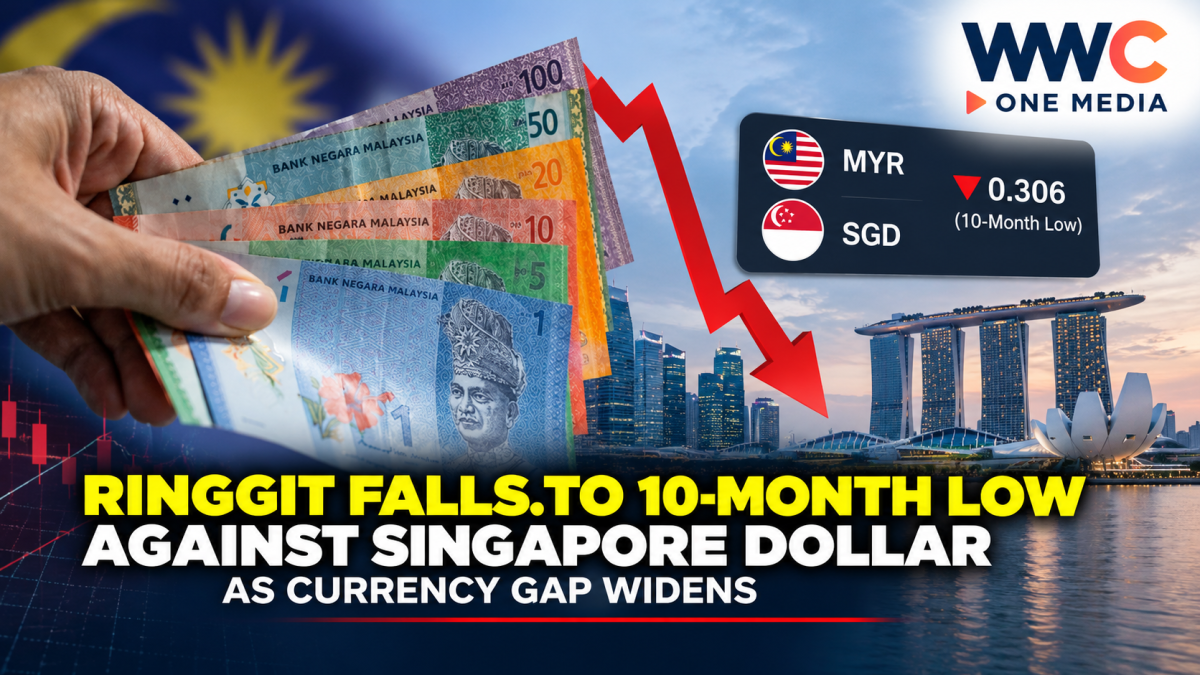
SINGAPORE — The Malaysian ringgit has slipped to a 10-month low against the Singapore dollar, giving Singaporeans even more spending power across the Causeway as currency markets react to rising global uncertainty.
The ringgit fell 0.2 per cent to 3.2162 against the Singapore dollar on Sept. 9, its weakest level against the Singdollar in 10 months, according to Bloomberg data cited by AsiaOne.
The latest move means one Singapore dollar is now buying more Malaysian ringgit, potentially making shopping, dining and travel in Malaysia more attractive for Singaporeans.
Why Is the Singapore Dollar So Strong?
Analysts say the Singapore dollar continues to benefit from its reputation as a relatively stable currency during periods of global uncertainty.
Wee Khoon Chong, a senior market strategist for Asia-Pacific at BNY, told Bloomberg that investors may continue to see the Singapore dollar as a safer place to park their money.
He said the Singdollar’s strength reflects its relative advantage over an otherwise supportive ringgit.
Maybank’s head of FX research and strategy, Saktiandi Supaat, told The Business Times that the Singapore dollar is also supported by the Monetary Authority of Singapore’s exchange-rate framework, along with strength in major currencies such as the Japanese yen and positive sentiment towards Singapore equities.
Rising Oil Prices Add Pressure
The ringgit’s weakness comes as global markets face fresh uncertainty over soaring energy prices and the escalating Middle East conflict.
Brent crude settled above US$100 a barrel, raising concerns about inflation and the economic impact on countries across Asia.
AsiaOne reported that Malaysian investors have also been proceeding cautiously following Prime Minister Anwar Ibrahim’s restoration of subsidised fuel quotas amid rising energy prices.
The combination of higher oil prices, geopolitical tensions and uncertainty over future interest rates has added volatility to currency markets.
Could the Ringgit Fall Further?
DBS senior currency economist Philip Wee told The Business Times that the ringgit could weaken further against the Singapore dollar if the US Federal Reserve raises interest rates as markets expect and the Middle East conflict pushes crude oil prices back above US$100 a barrel.
That threshold has now been crossed, with Brent crude settling at US$101.21 on Sept. 9 amid escalating concerns over energy supply disruptions.
However, currency movements can change quickly depending on central bank decisions, global oil prices and developments in the Middle East.
A Boost for Singaporeans Crossing the Causeway?
For Singaporeans planning trips to Malaysia, the weaker ringgit could mean greater purchasing power.
A stronger Singapore dollar may make certain expenses in Malaysia — including food, shopping, accommodation and other travel costs — more affordable when converted from Singapore dollars.
But travellers are still likely to see different exchange rates at banks, money changers and digital payment platforms, meaning the market exchange rate may not be the exact rate available to consumers.
The latest fall has nevertheless renewed attention on cross-border spending, particularly among Singaporeans who regularly travel to Johor Bahru and other parts of Malaysia.
Ringgit Had Previously Rebounded
The Malaysian currency had strengthened following the ASEAN Summit hosted by Malaysia in October last year, according to Philip Wee.
But the latest decline shows how quickly global market conditions can shift.
The ringgit is now facing a stronger Singapore dollar at a time when investors are becoming increasingly cautious about geopolitical risks, rising energy costs and the direction of major central banks.
The Bottom Line
The Malaysian ringgit has fallen 0.2 per cent to 3.2162 against the Singapore dollar, marking its weakest level against the Singdollar in 10 months.
The move is being driven by a combination of factors, including the Singapore dollar’s relative strength, investor caution, rising energy prices and wider global uncertainty.
For Singaporeans, the weaker ringgit could make a trip across the Causeway more tempting.
But with Brent crude back above US$100 and currency markets highly volatile, the big question is whether the ringgit will stabilise — or fall even further against the Singapore dollar.
For now, the Singapore dollar remains firmly in the driver’s seat.
WWC ONE MEDIA J.M.D




Leave a Reply