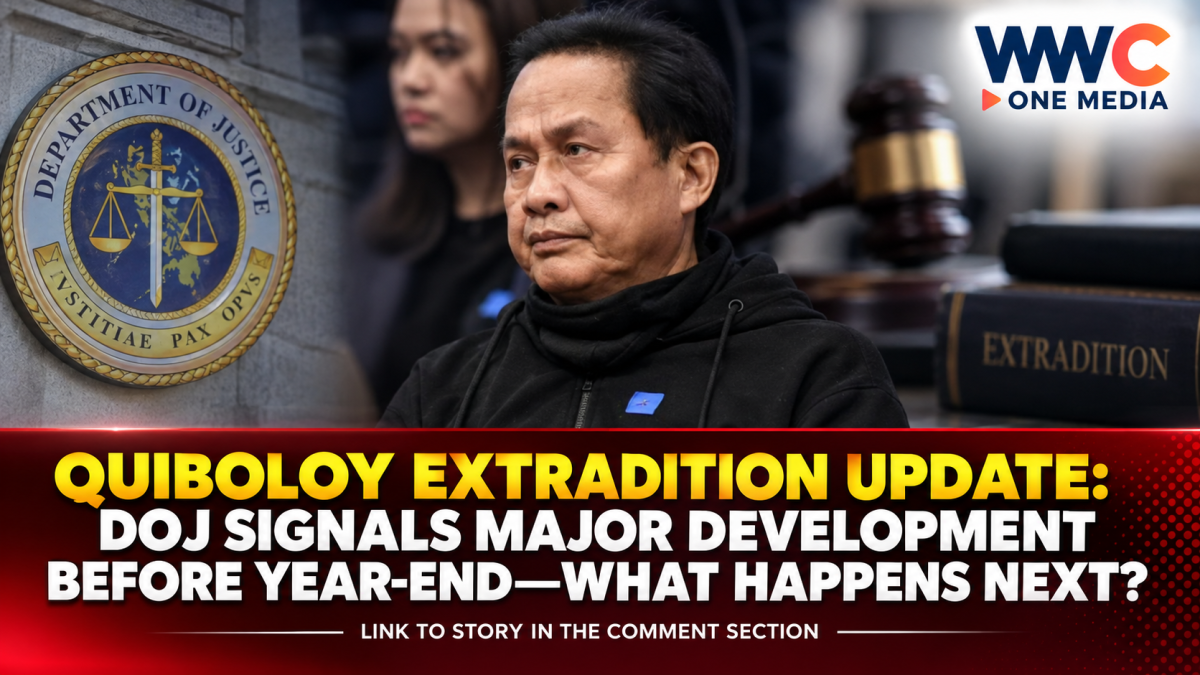
MANILA, Philippines — The Philippine Department of Justice is expected to make significant progress this year on the United States’ request to extradite Kingdom of Jesus Christ (KOJC) founder Apollo Quiboloy, as government officials continue reviewing the extensive documents submitted by Washington.
For more Philippines legal and policy briefs, see our Philippines hub and Politics desk.
The development was disclosed during House budget deliberations on September 18, when Quezon 4th District Rep. Keith Micah Tan, the Department of Justice’s budget sponsor, said the DOJ sees a “major” development within the year concerning the U.S. extradition request.
The latest update does not mean that Quiboloy has already been ordered extradited. The request remains under review, with the DOJ assessing whether the U.S. submission complies with the Philippines-U.S. extradition treaty and applicable Philippine law.
Why the DOJ review matters
The United States formally sought Quiboloy’s extradition after the Philippine government received the request in August. The Department of Foreign Affairs subsequently endorsed the request to the DOJ, which serves as the Philippines’ central authority for extradition matters.
The DOJ has said the documents are extensive and must be carefully examined before any petition is filed in court.
Earlier in August, DOJ Chief State Counsel Dennis Chan said officials were checking whether the U.S. request satisfies the requirements of the Philippines-U.S. extradition treaty and Philippine extradition law.
Among the issues being examined are the identity of the person sought, the offenses cited by the requesting government, the supporting facts and documents, and whether the alleged offenses meet the treaty’s requirements for extradition.
The DOJ has also indicated that the principle of double criminality is relevant to the review. This generally requires the conduct underlying the extradition request to constitute a criminal offense under the laws of both countries.
What charges does Quiboloy face in the US?
Quiboloy was indicted by a federal grand jury in California in 2021 in connection with allegations including sex trafficking involving children, conspiracy-related offenses and other federal charges. Philippine and international reports have also identified allegations involving fraud and bulk cash smuggling.
Quiboloy has denied wrongdoing.
The U.S. extradition request is separate from the criminal proceedings he faces in the Philippines.
Why the case is complicated
Quiboloy has been detained in the Philippines since his arrest in September 2024 and is facing local criminal proceedings involving qualified human trafficking and child abuse and exploitation allegations.
That creates an important legal issue: even if a Philippine court eventually grants an extradition request, his existing Philippine proceedings may affect when and how a surrender to U.S. authorities could take place.
The DOJ previously explained that under the applicable extradition rules, proceedings may be postponed so that an extraditee can face prosecution or serve a sentence in the Philippines. A temporary surrender mechanism may also be available under certain circumstances.
What happens next?
The DOJ must first complete its evaluation of the U.S. request.
In September, Justice Secretary Fredderick Vida said the department was prioritizing the voluminous extradition documents and hoped to complete its evaluation within roughly two weeks, after which the appropriate filing could be made.
The latest House budget-deliberation update indicates that the review remains ongoing and that officials expect a significant development before the end of 2026.
If the DOJ determines that the requirements are satisfied and proceeds with an extradition petition, the matter would then move through the judicial process. The court would examine whether the requirements under Philippine law and the treaty have been met.
The DOJ itself explains that it serves as the Philippines’ central authority for extradition and processes requests under the Philippine Extradition Law and applicable treaties. The Philippines has an extradition treaty with the United States.
For now, therefore, the key development is the expected progress of the DOJ’s review—not a completed extradition.
The next major question is whether the DOJ will finish its evaluation and move the U.S. request into the next stage of the legal process before the end of the year.