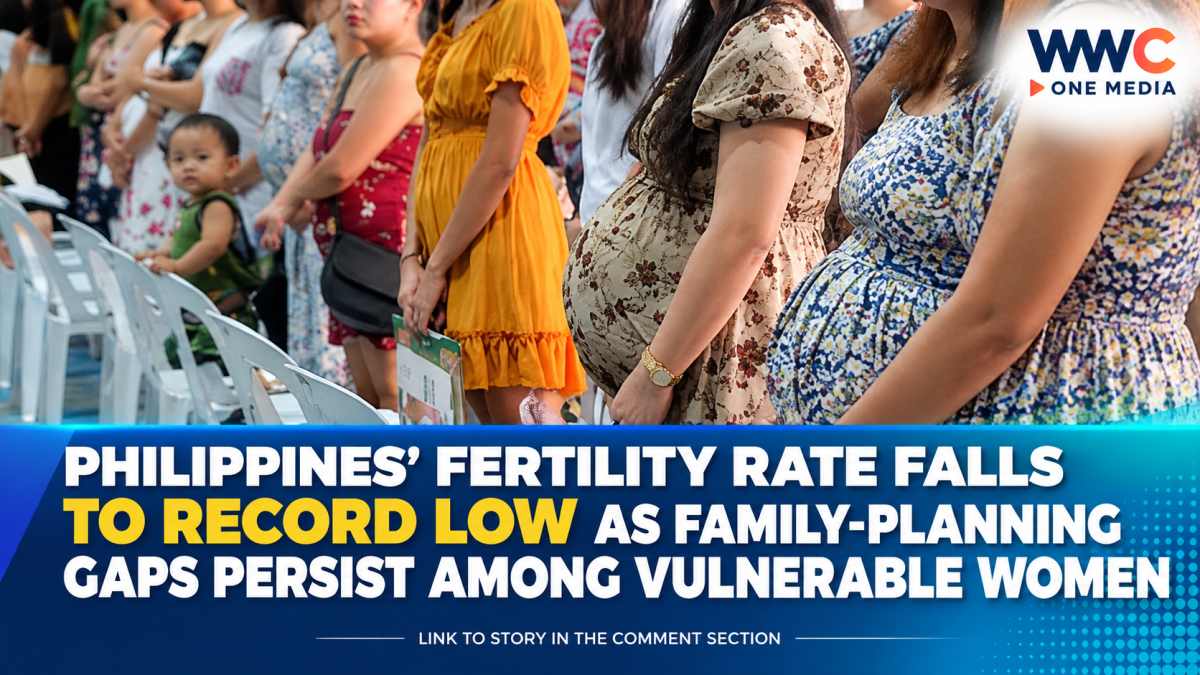
MANILA — The Philippines is experiencing a historic decline in fertility, but the latest demographic data reveal a second challenge: access to family-planning services and information remains uneven across the country.
The Commission on Population and Development (CPD) said Thursday that the country’s total fertility rate fell to a record-low 1.7 children per woman in 2025, according to findings from the Philippine Statistics Authority’s 2025 National Demographic and Health Survey.
But CPD officials emphasized that the national average masks substantial differences among communities, particularly among poorer, less-educated and rural women.
Fertility Falls, But Inequality Remains
CPD Deputy Executive Director Lolito Tacardon said fertility levels vary considerably across geographic and socioeconomic groups.
The fertility rate was as low as 1.3 in Calabarzon but reached 2.4 in the Bangsamoro Autonomous Region in Muslim Mindanao, according to the data cited by CPD.
The broader PSA survey also found that fertility remains higher among poorer households. Earlier CPD reporting based on the same survey placed average fertility at 2.8 children among women in the poorest household group, compared with 1.1 among those in the richest group.
Officials say socioeconomic conditions, education and changing marriage patterns are among the factors associated with the country’s long-term fertility decline.
Modern Family-Planning Use Continues to Rise
The latest figures also show progress in the use of modern family-planning methods.
Among currently married women aged 15 to 49, modern contraceptive use increased to 44.5% in 2025, up from 41.8% in 2022 and 40.4% in 2017, according to the PSA.
At the same time, use of traditional methods declined from 16.5% in 2022 to 14.1% in 2025.
However, CPD said access is still not equal, particularly for women living in rural areas and those facing socioeconomic or educational disadvantages.
Why the Numbers Matter
The country’s fertility rate is now below the commonly cited replacement level of 2.1 children per woman. The PSA says the 1.7 figure represents a substantial decline from 4.1 children per woman in 1993.
But officials caution that a falling national fertility rate does not mean every Filipino family has the same opportunities to make informed decisions about family size.
The policy challenge therefore involves both sides of the demographic picture: ensuring people who want to have children can make informed choices while also ensuring those who want to delay or avoid pregnancy can access appropriate information and services.
Government Faces a Two-Sided Demographic Challenge
CPD officials have called for more localized approaches to family planning, stronger coordination between national agencies and local governments, and greater participation by men in family-planning decisions.
The agency has also highlighted the continuing need to address pregnancies among very young adolescents, while stressing that programs should focus on information, voluntary decision-making and access to appropriate services.
The latest data ultimately paint a more complicated picture than a simple “birth-rate crisis.”
The Philippines is having fewer children than ever recorded in recent decades — but the biggest demographic question may now be whether every community has the same ability to make informed choices about its future.
WWC ONE MEDIA G,A