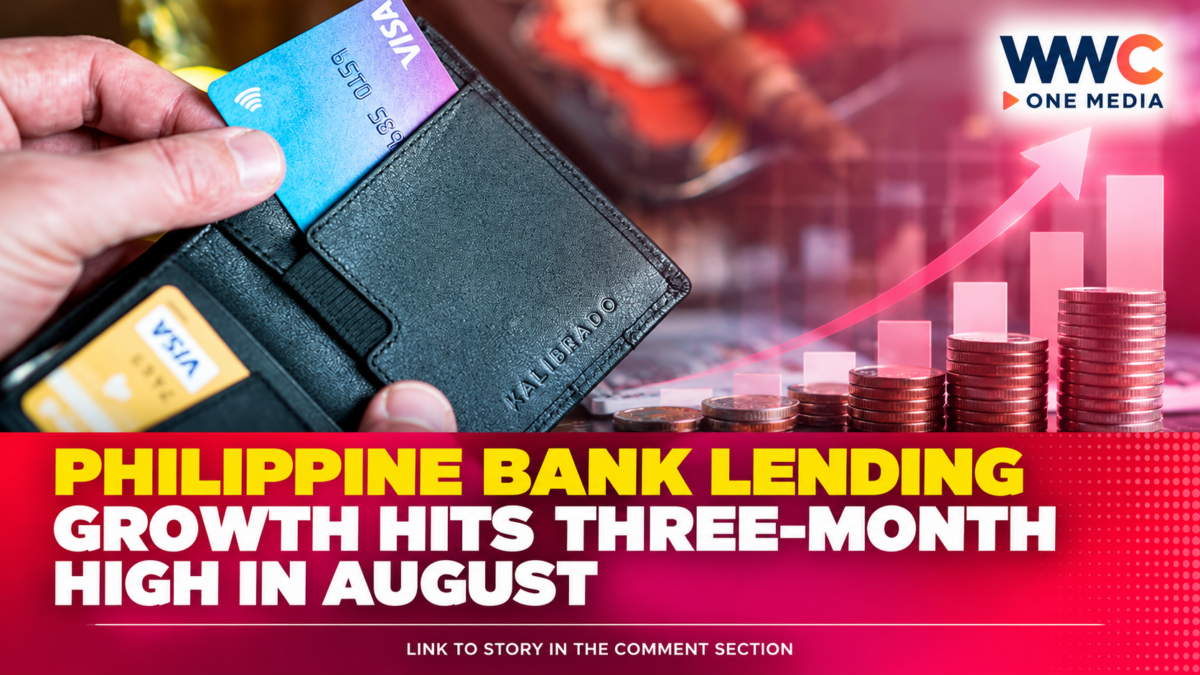
Philippine banks saw lending growth accelerate in August, with loans to businesses and consumers expanding at the fastest pace in three months as demand for credit remained firm.
Outstanding loans of universal and commercial banks, excluding reverse repurchase agreements, increased by 11% year on year to ₱15.121 trillion at the end of August, according to Bangko Sentral ng Pilipinas data. The growth was faster than the 10.4% recorded in July and marked the strongest expansion since the 12.1% increase reported in May.
The central bank said the increase reflected sustained demand for bank credit, particularly from businesses. The latest figures suggest companies continued to borrow to support operations, investments and other financing requirements despite an economic environment marked by cost pressures and changing interest-rate conditions.
The August acceleration also extended the recovery in bank lending after growth moderated earlier in the year. Loan expansion slowed to 9.8% in June before improving to double-digit growth in July and then strengthening further in August.
Business loans remained an important driver of the increase. Credit extended to companies across major sectors helped support overall loan growth, reflecting continued financing requirements from firms involved in trade, services, utilities, finance and other economic activities.
Consumer borrowing also contributed to the banking sector’s credit expansion. Household loans include financing for purchases such as vehicles, credit-card spending and other personal borrowing, making consumer credit an important indicator of household demand and financial activity.
The stronger lending performance comes as Philippine banks operate against a backdrop of evolving monetary conditions. Interest rates influence the cost of borrowing for companies and households, while changes in credit demand can provide an indication of how businesses and consumers are responding to broader economic conditions.
For businesses, stronger access to credit can provide additional funding for working capital, expansion and investment. For households, bank financing can support major purchases and other expenses, although the cost of servicing debt remains an important consideration.
The latest figures also show that the banking system continued to channel substantial amounts of credit into the economy. With outstanding loans reaching more than ₱15 trillion by the end of August, the banking sector remains a significant source of financing for Philippine businesses and consumers.
The continued acceleration in lending will be closely watched in the coming months as policymakers assess credit conditions, domestic demand and the broader economic outlook. For now, the August data point to sustained demand for bank financing and a notable improvement from the slower growth recorded earlier in the year.