
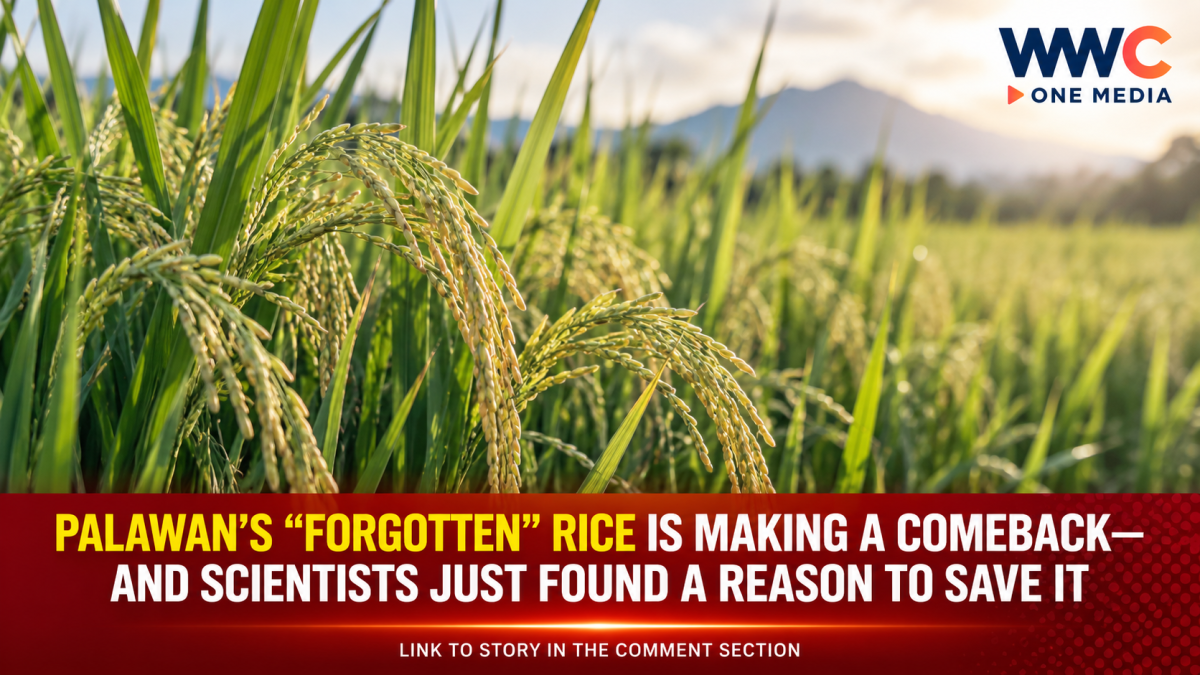
PUERTO PRINCESA CITY, Palawan — Rice varieties long preserved by Indigenous communities in Palawan are getting a second chance as the Department of Agriculture (DA) intensifies efforts to collect, document and conserve the province’s heirloom rice.
The initiative could prove important not only for protecting Palawan’s agricultural heritage but also for finding rice traits that may help Filipino farmers cope with pests, extreme weather and changing growing conditions.
The DA has collected 300 rice varieties from Indigenous communities in Palawan, sending the samples to the Philippine Rice Research Institute (PhilRice) for examination. Of those collected, more than 180 were identified as original varieties, according to DA Palawan.
The collection effort began in 2025, with the goal of preserving traditional rice varieties that could otherwise disappear as farmers increasingly shift toward commercially available modern and hybrid varieties.
Why Palawan’s old rice varieties matter
For Indigenous farming communities, heirloom rice is more than a crop. The seeds represent generations of agricultural knowledge and adaptation to local environments.
DA officials said some of the traditional varieties collected in Palawan have shown resistance to pests, a characteristic that could become increasingly valuable as farmers confront changing pest pressures and environmental conditions.
The department plans to identify varieties with useful characteristics and return suitable seeds to Palawan communities for continued cultivation.
DA Agriculture Program Coordinating Office officer-in-charge Eleanor Lotivo said the agency is studying the varieties not simply for preservation but also for their potential usefulness to future generations.
Some varieties may also have different names in different Indigenous communities, making scientific identification and characterization particularly important.
A national race to unlock traditional rice genetics
Palawan’s conservation effort comes as Philippine scientists are taking a much broader look at the country’s traditional rice genetic resources.
The 1,001 Philippine Rice Genome (1k1RG) Program, led by PhilRice and the University of the Philippines Los Baños, is sequencing and analyzing traditional Philippine rice varieties to identify traits that could be useful in future rice breeding.
Researchers have already identified three traditional rice varieties that mature in fewer than 100 days under dry-season conditions. Earlier harvests could potentially reduce farmers’ exposure to droughts, typhoons and other extreme-weather risks.
Another 22 traditional varieties recorded at least a 95% germination rate under flooded conditions, suggesting potential for rice breeding aimed at improving crop establishment in waterlogged environments.
Scientists are also examining nutritional characteristics, including zinc, iron, protein, essential amino acids and phytic acid, as part of efforts to understand the wider potential of traditional rice varieties.
Palawan’s Indigenous communities remain central to the effort
The preservation program also highlights the role of Indigenous communities in maintaining agricultural biodiversity.
The DA is providing assistance through its Kabuhayan at Kaunlaran ng Kababayang Katutubo (4K) program, which supports farmers and fisherfolk within ancestral domains.
In Palawan, assistance has included planting materials, agricultural tools, livestock and training designed to help communities strengthen sustainable agricultural activities.
The approach is significant because conserving heirloom rice cannot depend solely on storing seeds in a laboratory or genebank. Keeping farmers involved in growing and maintaining the varieties helps preserve the knowledge and practices associated with them.
Earlier agricultural research has likewise documented the importance of Indigenous knowledge in maintaining Philippine rice landraces. Studies involving Palawan’s Tagbanua communities have linked traditional farming practices with the conservation of rice biodiversity and cultural heritage.
It is not just about preserving the past
The renewed attention to heirloom rice reflects a growing realization that traditional varieties could provide useful genetic resources for the future.
PhilRice researchers say many traditional varieties possess unique characteristics but remain underutilized because of production constraints. Modern genetic analysis could help researchers identify valuable genes and traits that can eventually be incorporated into improved rice varieties.
The Department of Agriculture has similarly emphasized that traditional varieties can serve as important sources of traits such as pest resistance and other characteristics useful to rice breeding.
This means the seeds being collected in Palawan could have value far beyond the communities where they originated.
They may help scientists understand how generations of Filipino farmers developed rice adapted to particular environments—and potentially provide genetic building blocks for varieties better suited to the challenges of tomorrow.
From endangered seeds to a possible agricultural resource
The challenge now is ensuring that conservation translates into actual community benefit.
Collecting seeds is only the first step. The varieties must be properly identified, conserved, evaluated and, where appropriate, multiplied and returned to farmers.
Other Philippine heirloom-rice conservation programs illustrate how difficult that task can be. In the Cordillera, for example, DA research identified hundreds of heirloom rice landraces, including varieties that had disappeared from some communities but survived elsewhere.
Palawan is now undertaking a similar race against time.
With hundreds of traditional varieties already collected and more than 180 confirmed as original by PhilRice, the province is effectively opening a genetic archive of its agricultural past.
And hidden inside those seeds may be characteristics that could help Philippine agriculture face the future.
For Palawan, saving heirloom rice is no longer simply about remembering what Filipino farmers used to grow. It could be about discovering what Philippine farmers may need to grow next.
WWC ONE MEDIA J.M.S

Leave a Reply