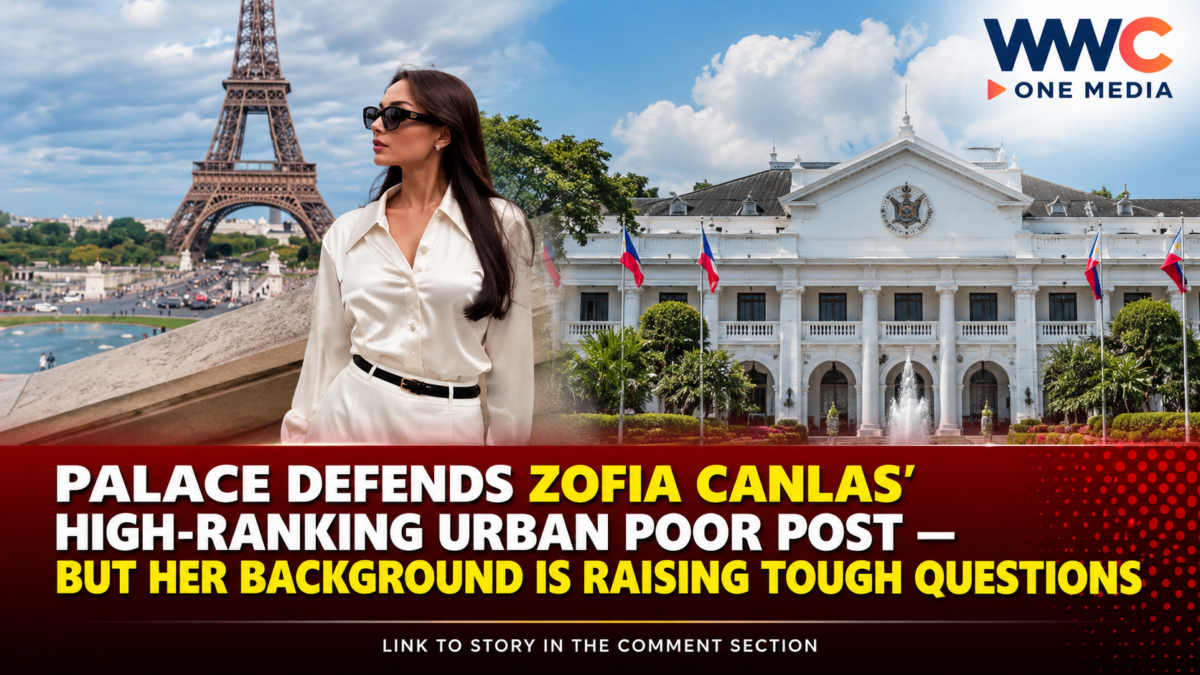
Malacañang is standing by the appointment of 27-year-old Zofia Canlas as commissioner of the Presidential Commission for the Urban Poor (PCUP), insisting that dedication, competence and experience in government service matter more than a person’s age, educational background or social status.
But the appointment has triggered public debate over whether Canlas has the qualifications and professional experience needed for a government agency tasked with protecting the interests of some of the country’s most vulnerable communities.
The controversy gained attention after reports highlighted Canlas’ 2024 graduation from De La Salle University with a degree in Biology, major in Medical Biology, as well as photographs of her travels to international destinations. Critics on social media have questioned whether her background and lifestyle align with the responsibilities of an agency serving low-income Filipinos.
Why is Malacañang defending Canlas?
Palace Press Officer Claire Castro defended the appointment during a briefing on October 20, saying President Ferdinand Marcos Jr. prioritizes the ability and willingness of government officials to serve the public, regardless of their socioeconomic background.
Castro also pointed to Canlas’ previous experience within the PCUP. Before becoming a commissioner, Canlas had served as chief of staff to the commission’s chairperson, meaning she was already familiar with the agency’s operations and mandate, according to Malacañang.
The Palace urged the public to give Canlas an opportunity to demonstrate her capabilities instead of judging her prematurely based on her age or social media posts.
Its position is that public officials should ultimately be assessed on their performance, dedication and ability to carry out their responsibilities.
What does the Presidential Commission for the Urban Poor do?
The PCUP serves as a link between urban poor communities and the national government. Its work includes helping address the concerns of informal settler families and facilitating coordination and negotiations involving communities affected by eviction and relocation.
According to the Philippine News Agency, Castro emphasized that the commission has a role in engaging affected families before eviction orders are implemented, helping ensure that relocation arrangements do not impose an undue burden on vulnerable residents.
That mandate makes the controversy particularly significant: the commission’s work directly affects families facing housing insecurity, displacement and uncertainty over where they will live.
For critics, the central question is not simply whether Canlas is young or holds a Biology degree. It is whether her qualifications, experience and record demonstrate that she can effectively represent the needs of urban poor communities.
Canlas’ political and professional background draws scrutiny
Reports from the Philippine Daily Inquirer, Philstar and Philstar Life provide additional context about Canlas’ career before her appointment.
She was the first nominee of the Batang Quiapo party-list during the 2025 midterm election period, although the group did not win a House seat. She later served as chief of staff to PCUP Chairperson Michelle Anne Gonzales beginning in July 2025, according to published reports.
Her appointment has also attracted attention because of her family’s connections to government service. The Inquirer reported that her father, Jose Marcell Canlas, is listed in the Office of the President’s online directory as an assistant secretary under the Office of the Executive Secretary. That fact has added to public scrutiny, but it does not by itself establish that her appointment was improper.
Meanwhile, photographs from trips to destinations including France, Italy, Greece and the United States have fueled online discussion about her lifestyle. These images are part of the public controversy, but they do not independently establish whether she is qualified or unqualified for the position.
Does the position require a law degree?
One issue raised in the debate is whether Canlas needs a legal background to perform her duties.
Castro argued that the position does not necessarily require a law degree because the PCUP also negotiates with affected communities and coordinates with government agencies. She distinguished these responsibilities from legal proceedings, which require appropriate legal expertise.
That explanation addresses one part of the criticism, but it does not settle every question about the appointment. Public scrutiny can reasonably extend to the appointee’s relevant experience, knowledge of housing and poverty issues, ability to work with vulnerable communities, and measurable performance.
The key test will be whether Canlas can translate her previous government experience into effective action for the people the commission is supposed to serve.
Why this appointment matters to ordinary Filipinos
The debate goes beyond one government official. It raises broader questions about how senior public appointments are made, what standards should apply to government appointees, and how the public can assess whether officials are delivering results.
The PCUP’s responsibilities involve communities that may face eviction, demolition, relocation and difficulties accessing government assistance. For these families, the effectiveness of the agency can have direct consequences for their homes, security and livelihoods.
Malacañang’s position is that Canlas should be judged by her work rather than her age or personal lifestyle. Critics, meanwhile, are asking whether her credentials and experience justify the appointment.
Both the government’s defense and the public’s scrutiny make transparency important. Clear information about her official responsibilities, relevant experience, performance targets and accomplishments would help the public assess her suitability based on evidence rather than assumptions.
For now, the central question remains: Will Canlas demonstrate that she can effectively represent the urban poor, and will her performance answer the concerns surrounding her appointment?
That question will ultimately be answered not by social media photographs or political defenses, but by her record in public service.