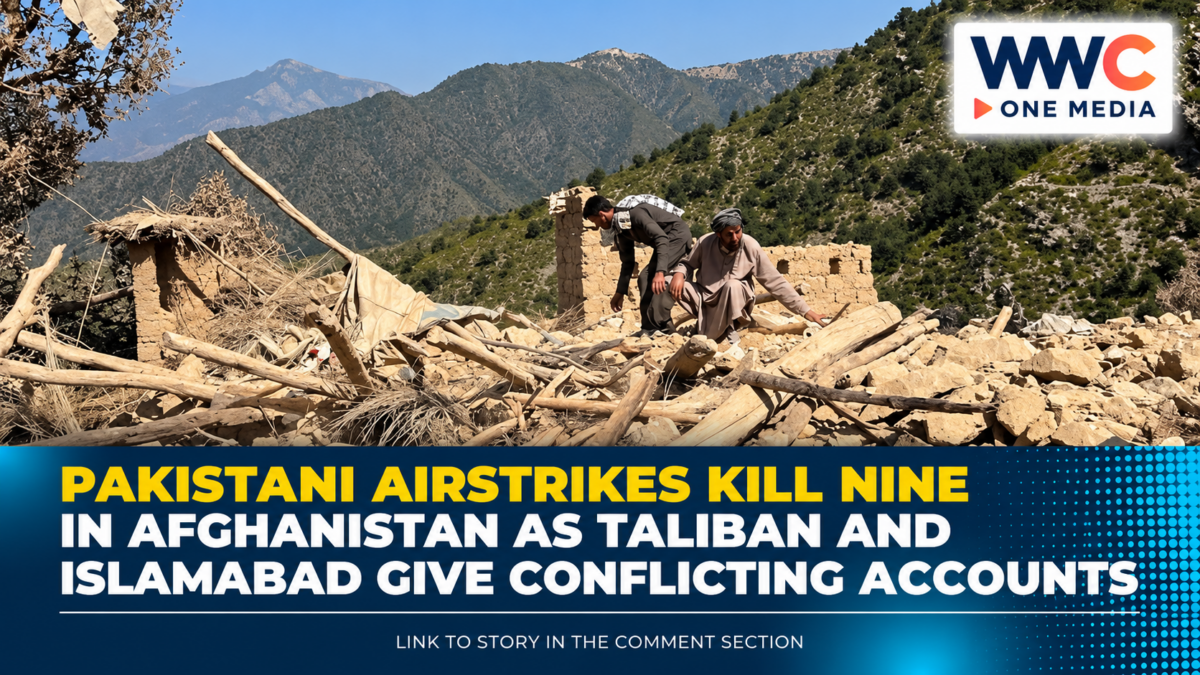
Pakistani airstrikes hit parts of Afghanistan on Thursday, October 1, killing at least nine people and injuring 11 others, according to Afghanistan’s Taliban government, as Islamabad said its forces had targeted militant hideouts and killed 22 alleged militants.
The strikes reportedly hit three houses in Afghanistan’s Kunar and Helmand provinces. Taliban spokesperson Zabihullah Mujahid said the dead included women and children and accused Pakistan of carrying out attacks against civilian homes. He condemned the strikes as an act of aggression and said the attacks destroyed residential properties.
Pakistan’s Information Ministry gave a sharply different account, saying the military operation was based on what it described as credible intelligence and targeted terrorist camps and hideouts at two locations. Islamabad said 22 militants were killed and that weapons and ammunition stored at the sites were also destroyed. The casualty claims from both sides could not be independently verified.
The United Nations Assistance Mission in Afghanistan reported an even higher civilian toll, saying at least 10 civilians were killed, most of them children, while nine others were injured. The UN called for de-escalation, dialogue, respect for international law and measures to prevent further civilian casualties.
The latest strikes add to growing tensions between the two neighboring countries, which have repeatedly exchanged accusations over militant activity along their shared border. Pakistan has accused the Taliban government of allowing militant groups, including the Pakistani Taliban or Tehrik-e-Taliban Pakistan, to operate from Afghan territory and launch attacks inside Pakistan. Kabul has denied providing militants with a safe haven and has argued that militancy inside Pakistan is an internal issue.
The attacks follow a renewed deterioration in relations after a period of relative calm. A militant assault on a police facility in northwestern Pakistan last month killed 24 people and contributed to renewed tensions between Islamabad and Kabul. The two countries had already experienced some of their heaviest fighting in years earlier in 2026.
Pakistan has carried out several airstrikes inside Afghanistan in recent weeks, saying the operations were directed at militant infrastructure. Afghan authorities, however, have repeatedly reported civilian casualties from the attacks. The competing accounts have made the exact toll and circumstances of individual strikes difficult to independently establish.
The dispute has also been accompanied by increased cross-border military activity. Afghan authorities recently said their forces killed 28 fighters and wounded 32 after a group they said included Islamic State militants crossed from Pakistan. Islamabad rejected those allegations.
The United Nations has previously warned about the broader humanitarian impact of the fighting. UNAMA said it had documented more than 1,100 civilian deaths and injuries in Afghanistan from cross-border violence so far this year, highlighting the growing risks for communities living near the frontier.
With both governments maintaining conflicting accounts of the latest strikes, the incident underscores the continuing security dispute between Pakistan and Afghanistan and the risks faced by civilians as cross-border hostilities persist.