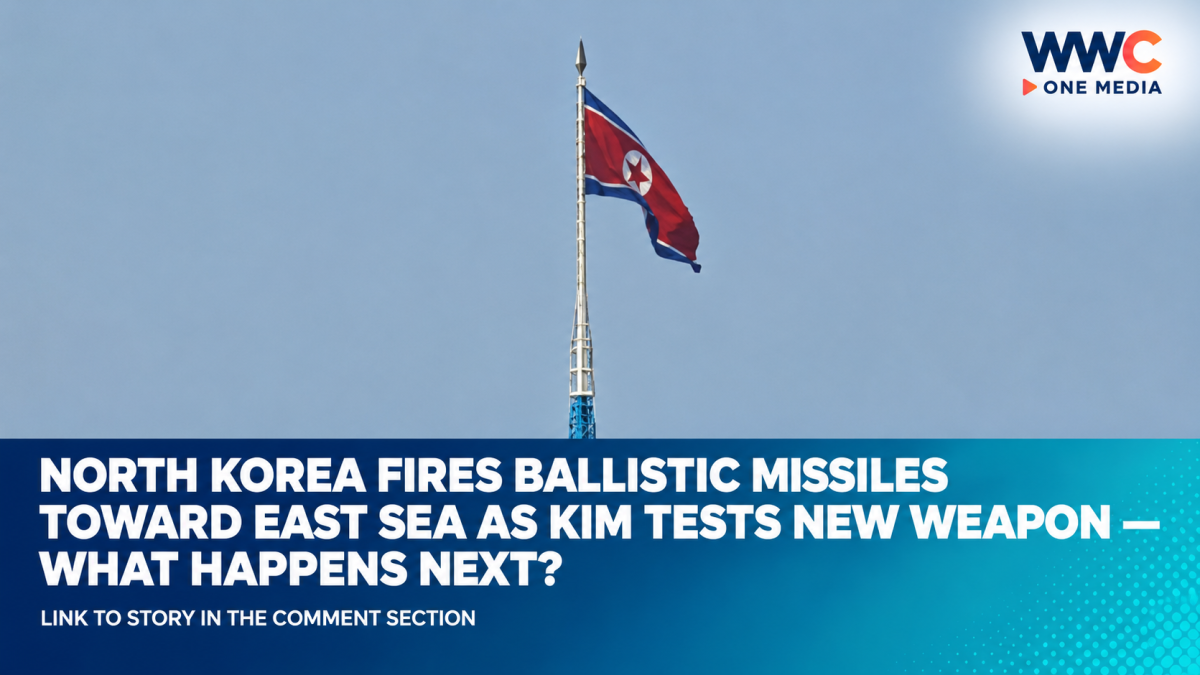
North Korea fired two short-range ballistic missiles toward waters off its eastern coast on Sept. 20, prompting condemnation from South Korea and Japan as regional tensions remain elevated.
South Korea’s Joint Chiefs of Staff said the first missile was launched from the Wonsan area at about 3pm and travelled roughly 450km. A second missile was fired about three hours later and flew more than 600km toward the East Sea, according to South Korean and Japanese authorities. Both landed outside Japan’s exclusive economic zone.
The launches were the second North Korean missile test in about a week. Pyongyang had also fired several short-range ballistic missiles on Sept. 12, following a series of US-led military exercises involving South Korea and Japan.
Seoul’s National Security Council condemned the latest launches as violations of UN Security Council resolutions and called on Pyongyang to stop its ballistic missile activity. Japan also lodged a protest over the launches.
The missile tests have now been followed by a new announcement from Pyongyang. North Korean state media said on Sept. 22 that leader Kim Jong Un had overseen the successful test of a new combat weapon system.
North Korea described the weapon as having major military significance and said its development would strengthen the country’s war readiness. Images released by state media showed a missile system that outside analysts linked to a weapon previously associated with North Korea’s efforts to develop hypersonic capabilities.
However, claims about the weapon’s capabilities remain North Korean assertions. South Korean and US authorities are continuing to analyse the launches, while outside experts have questioned whether North Korea can consistently achieve the performance associated with a fully operational hypersonic weapon.
The latest developments also come as senior diplomats from South Korea, the United States and Japan met in New York during the UN General Assembly. The three countries reaffirmed their commitment to the complete denuclearisation of North Korea while saying that the path to dialogue remains open.
The timing highlights the difficult balance facing the region. While Washington, Seoul and Tokyo are publicly keeping diplomatic channels open, North Korea continues to develop and test weapons that the three governments regard as a threat to regional security.
North Korea has repeatedly objected to US-led military activities in the region, arguing that such exercises threaten its security. South Korea, the United States and Japan maintain that their military cooperation is defensive.
For now, the latest missile launches and weapons announcement show that Pyongyang is continuing to advance its military capabilities while diplomatic efforts remain unresolved.
The bigger question is whether North Korea’s latest weapons tests will lead to another cycle of military pressure — or whether the renewed calls for dialogue can eventually bring Pyongyang back to negotiations.