
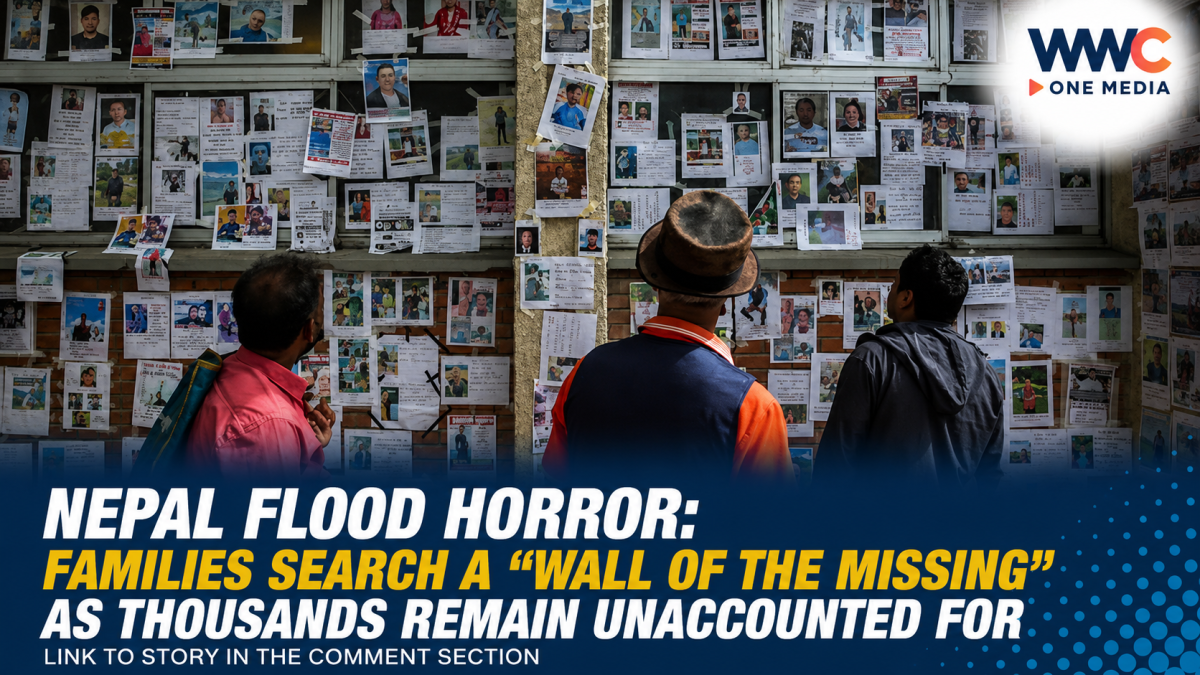
For families across Nepal, the devastating floods of August 26 have turned hospitals, police stations and walls covered with photographs into places of desperate hope.
At Tribhuvan University Teaching Hospital in Kathmandu, relatives are scanning hundreds of photographs of missing people and unidentified bodies, searching for even the smallest clue that could reveal what happened to their loved ones.
The disaster, believed to have been triggered by a glacier collapse, sent massive amounts of water, mud and debris through parts of Nepal’s Himalayan border region, destroying homes, roads, bridges and other infrastructure.
More than 4,200 people still missing
According to Nepal’s Ministry of Foreign Affairs, 1,252 bodies had been recovered and around 4,200 people remained missing as of September 3. Nearly 590 foreign nationals from 34 countries were still reported missing, although the figures continue to change as authorities verify reports.
Nepal’s disaster authorities have deployed more than 21,000 security personnel for search, rescue and relief operations. Thousands of people have been rescued, while displaced survivors remain in temporary shelters across affected districts.
The situation is particularly difficult because some of the hardest-hit areas remain difficult to reach.
The “wall of the missing”
At the teaching hospital in Kathmandu, families have posted photographs, names and contact information on walls in the hope that someone can provide information about their missing relatives.
Some photographs show people who disappeared during travel, while others belong to workers, drivers, pilgrims, security personnel and residents caught in the disaster.
For families who cannot find their relatives among those rescued, the photographs of unidentified victims can become their only remaining lead.
Authorities are also collecting DNA samples from relatives to help identify bodies that cannot be identified visually.
Family members living overseas can also provide DNA profiles through authorities in their home countries for comparison with recovered remains.
Hope is fading for some families
The search has already become a painful race against time.
Some families continue visiting hospitals and police facilities every day, refusing to give up while others have begun holding symbolic funeral ceremonies for relatives whose bodies have not been recovered.
The emotional toll is enormous. Families of missing foreign nationals have also travelled to Nepal, while embassies and governments are working with Nepali authorities to identify and locate their citizens.
Rescue teams face another major challenge
The search is not limited to homes and river valleys.
Around 900 people are believed to be unaccounted for at hydropower facilities, with some potentially trapped inside tunnels buried beneath mud and debris. International teams from India, China, South Korea and other countries are assisting Nepali rescuers with specialized equipment and tunnel operations.
At the Upper Trishuli 3A hydropower site, rescuers have been working through blocked passages, while heavy debris and huge rocks continue to complicate access.
A disaster that has changed Nepal
The floods have left communities struggling not only to find missing relatives but also to restore basic services.
Roads and bridges were destroyed, telecommunications infrastructure was damaged and thousands of survivors have been forced into temporary shelters. The government is simultaneously dealing with emergency relief, body identification and the enormous task of rebuilding affected communities.
The tragedy is also threatening Nepal’s tourism sector, particularly because several missing people were foreign pilgrims and travellers who had been visiting the Himalayan region.
For now, however, the priority remains clear: find the missing, identify the dead and give families answers.
And every day, people continue returning to that wall of photographs in Kathmandu — still searching, still waiting, and for some, still hoping for a miracle.
WWC ONE MEDIA J.M.D



Leave a Reply