
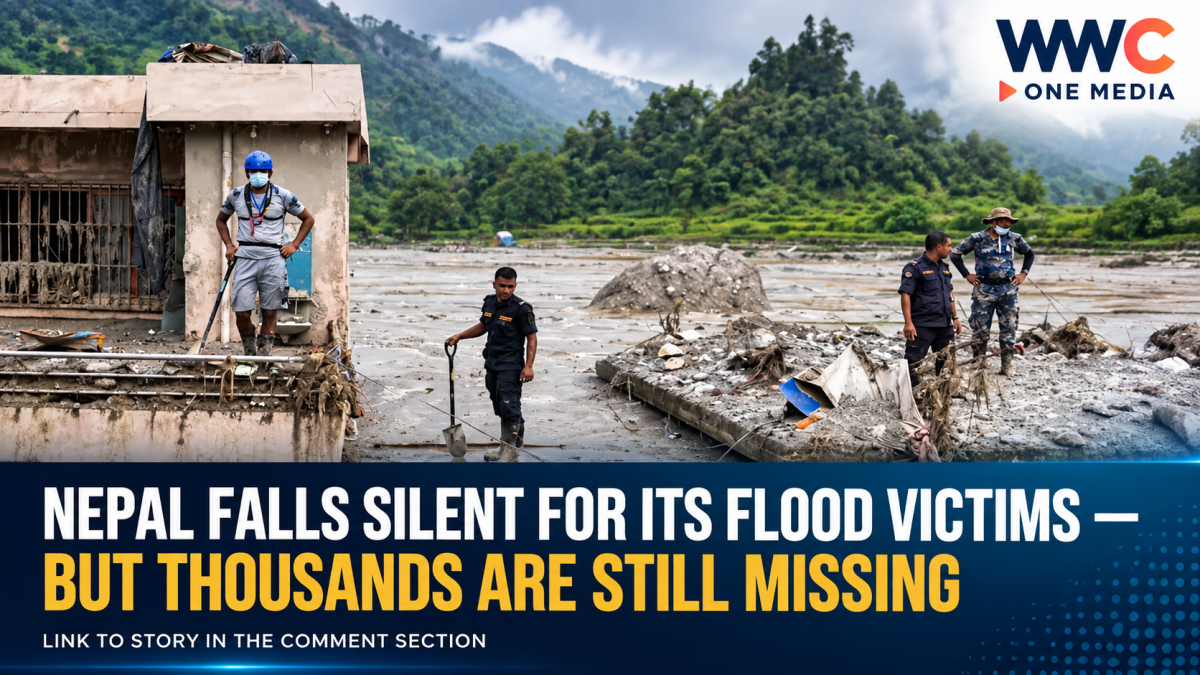
KATHMANDU, Nepal — Nepal observed a national day of mourning on Monday, September 7, as the country continues to grapple with the devastating aftermath of the catastrophic August 26 floods that killed more than 1,300 people and left thousands still missing.
Government offices across Nepal and Nepali embassies and diplomatic missions abroad flew the national flag at half-mast to honor the victims of one of the country’s deadliest recent natural disasters.
The day of mourning falls on the 13th day after the tragedy, following the traditional Hindu mourning period. But even as families performed rituals and remembered their loved ones, search and rescue teams continued digging through massive fields of mud, debris and destroyed infrastructure — hoping that more survivors could still be found.
According to the latest figures reported by Nepalese authorities, 1,342 bodies have been recovered, while the number of people still missing varies as authorities continue to verify reports and update their records. Some official reports put the number of missing at nearly 5,000 people.
A Nation Mourns, But the Search Is Not Over
The disaster struck on August 26 after what preliminary reports described as a massive rock-and-ice avalanche or glacial collapse in the Himalayan region, triggering an enormous surge of water, mud and debris through river valleys along the Nepal-China border.
Communities in and around Rasuwa, Nuwakot and Dhading, as well as areas along the Bhotekoshi-Trishuli river corridor, suffered devastating damage. Homes, roads, bridges and major infrastructure were swept away or buried under thick mud and debris.
The scale of the destruction has also raised major concerns about Nepal’s hydropower sector. Reports indicate that several hydropower facilities were damaged, with hundreds of workers initially reported missing or feared trapped around affected projects. The disaster damaged a significant portion of Nepal’s electricity generation infrastructure and forced the country to reassess the vulnerability of projects built in fragile Himalayan river valleys.
Miraculous Rescues Bring Hope
Despite the enormous death toll, a series of remarkable rescues in recent days has given desperate families hope that survivors may still be found.
Rescuers recently pulled several people alive from the disaster zone, including hydropower workers and a Chinese national trapped near a damaged tunnel. In another extraordinary case, an elderly Nepali woman was found alive inside an air pocket in her collapsed home days after her family had already begun mourning her presumed death.
Those rescues have encouraged authorities to continue searching, particularly around damaged hydropower tunnels and heavily buried communities.
International teams and specialists have also joined Nepalese rescue forces as operations continue in difficult terrain where damaged roads, unstable slopes and enormous amounts of debris have complicated access.
Thousands Still Missing
The true human toll could still rise as search teams continue recovering bodies and verifying reports of missing people.
Reports from multiple international news organizations show that casualty and missing-person figures have changed rapidly as authorities expand their searches and reconcile records from different disaster-hit areas, including regions on both sides of the Nepal-China border.
Reuters reported on September 7 that at least 1,380 people had been killed across the disaster zone, while more than 5,500 remained missing across Nepal and affected areas of Tibet. Other Nepal government figures released the same day reported 1,342 recovered bodies and thousands still unaccounted for. The differences reflect continuing recovery operations and the challenge of compiling figures across the vast disaster area.
Authorities have also reported thousands of injuries and the rescue of more than 13,000 people from affected areas. More than 21,000 security personnel have reportedly been mobilized for search, rescue and relief operations.
A Disaster That Could Change Nepal’s Future
Beyond the immediate humanitarian crisis, the floods have triggered difficult questions about climate risks, Himalayan infrastructure and the future of development in one of the world’s most environmentally vulnerable regions.
The destruction of homes, roads, bridges and hydropower facilities could require years of reconstruction. Reuters reported that authorities expect around 20,000 homes in flood-hit areas to require rebuilding.
Environmental experts have also warned that rapidly changing Himalayan conditions could increase risks from glacial and ice-related disasters, while the devastation has renewed calls for stronger monitoring systems and more resilient infrastructure planning.
For now, however, Nepal’s attention remains focused on the missing.
Across the country, families are mourning those confirmed dead while refusing to give up hope for relatives who have yet to be found.
Nepal may have declared a national day of mourning — but for thousands of families, the disaster is still not over.
WWC ONE MEDIA J.M.S

Leave a Reply