
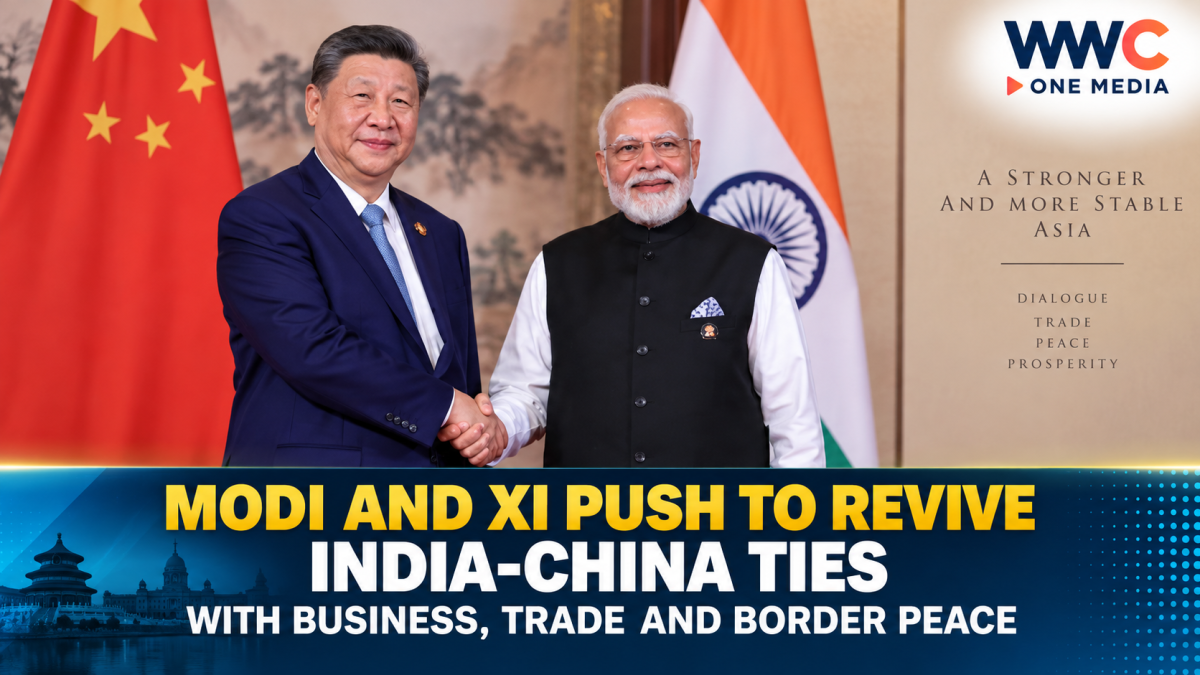
India and China are taking cautious steps towards rebuilding relations, with Prime Minister Narendra Modi and Chinese President Xi Jinping agreeing to strengthen business, transport and people-to-people links while stressing the importance of peace along their disputed Himalayan border.
The leaders met on the sidelines of the BRICS summit in New Delhi on Sept. 12, marking Xi’s first visit to India in seven years. Their meeting comes after years of strained relations following a deadly border clash in 2020.
According to India’s foreign ministry, Modi and Xi agreed on the need to expand cultural exchanges, business links and mobility between the two countries. They also discussed longstanding economic problems, including India’s large trade deficit with China, supply-chain issues and the need for more predictable market access.
The two Asian powers have strong economic ties despite their political tensions. Bilateral trade reached a record US$155.6 billion in 2025, according to Chinese customs data. China has become India’s largest source of imports, with Indian purchases reaching about US$132 billion in the 2025/26 fiscal year.
That trade relationship, however, remains heavily tilted towards China. India’s exports to China are significantly smaller, leaving New Delhi with a trade deficit of more than US$100 billion. Indian businesses have also complained about restrictions and difficulties obtaining Chinese equipment and components needed for manufacturing and infrastructure projects.
The latest talks suggest both governments see economic cooperation as an important part of stabilising their broader relationship. India has already begun easing some restrictions introduced after the 2020 border confrontation, including measures affecting Chinese investment and business activity.
Direct flights between the countries have also resumed, while India has taken steps to speed up business visa approvals for Chinese professionals. The traditional Kailash Mansarovar pilgrimage has also been revived.
But the diplomatic thaw remains fragile.
The relationship deteriorated sharply after Indian and Chinese troops fought in the Galwan Valley in Ladakh in June 2020. At least 20 Indian soldiers and four Chinese soldiers were killed, marking the countries’ deadliest military confrontation in decades.
Although the two sides reached a disengagement agreement in October 2024 and subsequently pulled troops back from several confrontation points, substantial military deployments remain along the roughly 3,800km disputed frontier.
Modi told Xi that peace and tranquillity in the border areas were essential for continued development of bilateral relations. Both sides also reiterated their commitment to resolving the boundary question through dialogue.
Xi, meanwhile, said China views its relationship with India from a strategic and long-term perspective. Chinese state media quoted him as saying the two countries should regard each other as partners rather than rivals and pursue cooperation based on mutual development.
The meeting is significant not only for bilateral relations but also for the wider geopolitical landscape. India and China are both members of BRICS, and their leaders are increasingly seeking greater cooperation within the expanded grouping as global trade tensions, supply-chain disruptions and strategic competition intensify.
Yet major obstacles remain. India remains wary of Chinese involvement in sensitive sectors such as telecommunications, defence and finance, while territorial disputes continue to fuel mistrust. China’s close relationship with Pakistan, India’s long-standing rival, is another source of tension.
Businesses also continue to face bureaucratic hurdles, visa delays and restrictions on industrial equipment, illustrating the gap between improving political rhetoric and a full restoration of commercial ties.
For now, the Modi-Xi meeting represents a cautious reset rather than a complete reconciliation. Both governments appear to recognise that restoring economic and transport links could benefit their economies, but lasting progress will depend heavily on whether they can maintain peace along their disputed border.
After years of confrontation, India and China are once again testing whether greater trade and engagement can coexist with their unresolved strategic rivalry.



Leave a Reply