
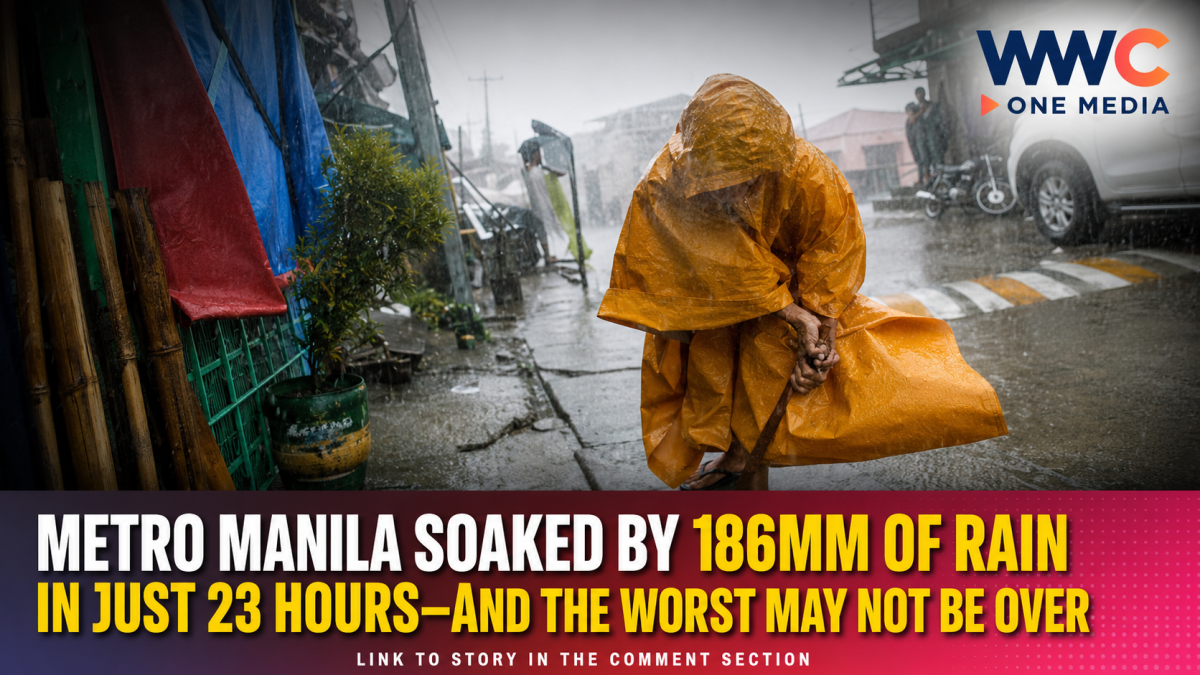
METRO MANILA, Philippines — Metro Manila was battered by an intense wave of monsoon rain after 186 millimeters of rainfall was recorded in just 23 hours, highlighting the relentless impact of the Southwest Monsoon, locally known as Habagat, across the capital region.
The Metropolitan Manila Development Authority (MMDA), citing data from the DOST-PAGASA Science Garden Station in Quezon City, said the massive rainfall total was recorded from 9 a.m. on August 29 until 8 a.m. on August 30, 2026.
The downpour came after an already punishing day of rain. Earlier data showed that 143.5 millimeters fell in Metro Manila within just nine hours on August 29, underscoring how quickly the weather system intensified and overwhelmed flood-prone communities.
Floods Hit Parts of Metro Manila
Heavy rains triggered flooding in several areas of the capital on Saturday, disrupting traffic and making some roads difficult or impossible for smaller vehicles to pass.
Reports showed waist-deep flooding in parts of Quezon City, while other low-lying areas across Metro Manila experienced rapidly rising water. Although the MMDA reported that flooding had subsided in some locations early Sunday, authorities continued monitoring conditions as the monsoon rains persisted.
The agency said it has been deploying mobile pumps, conducting declogging and dredging operations, and clearing garbage and debris from drainage systems to help reduce flooding in affected areas.
PAGASA Raises Red Rainfall Warning
The situation remained serious as PAGASA issued a Red Rainfall Warning for Metro Manila and several surrounding areas on Sunday, warning residents in flood-prone locations about the risk of serious flooding.
A Red Warning is the highest level in PAGASA’s heavy rainfall warning system and signals that intense rainfall poses a significant threat, particularly in vulnerable communities.
The enhanced Habagat has also affected other parts of Luzon, with heavy rains raising concerns over flooding and landslides in several provinces.
Why Is the Rain So Intense?
PAGASA had earlier warned that the Southwest Monsoon would continue to bring rains over large parts of Luzon. Weather disturbances east of Northern Luzon were also expected to enhance the Habagat, allowing more moisture-laden winds to bring prolonged rainfall to western sections of the country, including Metro Manila.
For millions of residents, the latest rainfall figures serve as a stark reminder that flooding can develop quickly—even after water levels appear to have subsided.
As weather conditions remain unstable, authorities are urging the public to stay alert, monitor official PAGASA and local government advisories, and avoid flooded roads and other high-risk areas whenever possible.
The rain may have eased in some places—but with the Habagat still influencing the country’s weather, Metro Manila residents are being reminded that the danger can return with the next heavy downpour.



Leave a Reply