
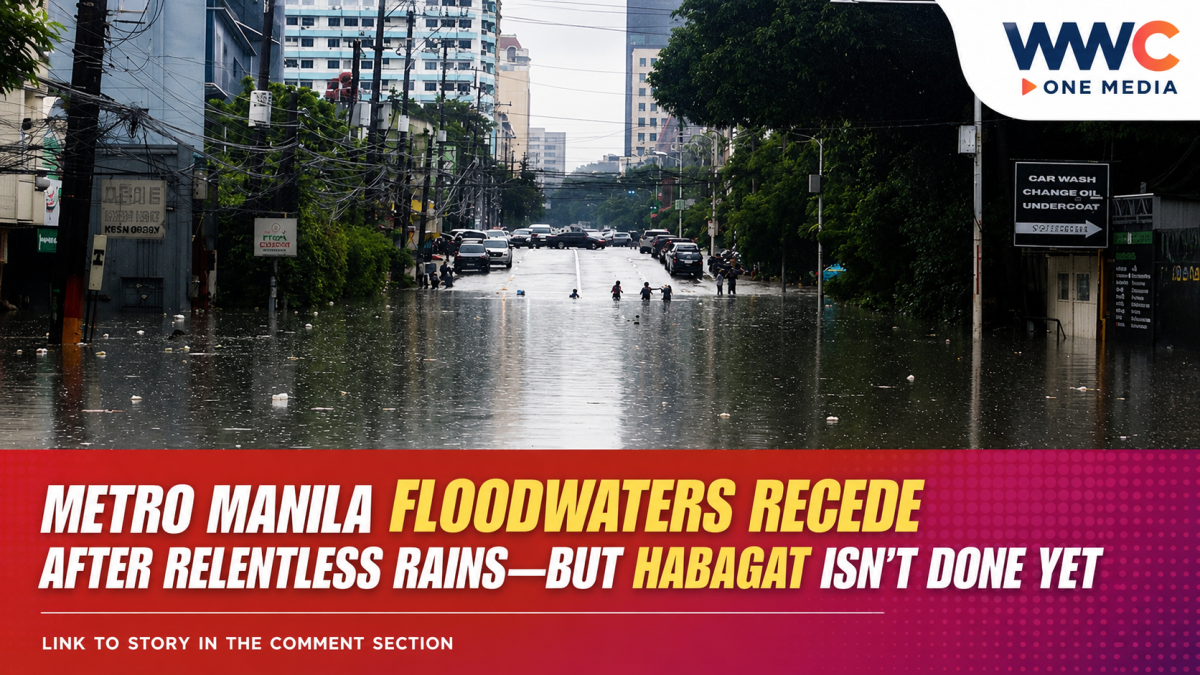
MANILA, Philippines — Floodwaters have started to subside in several parts of Metro Manila after hours of heavy rain battered the capital region on Saturday, but authorities are urging the public to remain alert as the Southwest Monsoon, locally known as Habagat, continues to bring rain across Luzon and parts of the Visayas.
The Metropolitan Manila Development Authority (MMDA) reported early Sunday that flooding in several affected areas had eased following Saturday’s intense downpour. However, the improvement comes as weather officials continue to warn of possible heavy rainfall and renewed flooding in vulnerable communities.
The situation was particularly severe on Saturday, when continuous monsoon rains inundated roads across Metro Manila. Reports from the MMDA and other local authorities showed flooding in parts of Las Piñas, Parañaque, Quezon City, Mandaluyong and other areas, disrupting motorists and commuters throughout the day.
At the height of the weather disturbance, PAGASA placed Metro Manila and several areas in Luzon under a Red Rainfall Warning, signaling the risk of serious flooding in flood-prone locations. Other news outlets, including Inquirer and ABS-CBN News, also reported widespread flooding across the capital as the Habagat unleashed persistent and at times torrential rain.
More Rain Could Still Be on the Way
Despite the receding floodwaters, residents should not let their guard down.
PAGASA said the Southwest Monsoon will continue affecting parts of Luzon and the Visayas on Sunday, with Metro Manila among the areas expected to experience continued monsoon rains. Earlier rainfall outlooks warned that significant rainfall could still affect parts of the capital and nearby provinces.
The threat is also evident beyond the streets of Metro Manila. The Marikina River reached the third alarm level late Saturday before its water level began to decline early Sunday, highlighting how quickly conditions can change during prolonged heavy rainfall. Under the city’s alert system, higher alarm levels trigger evacuation measures for communities at risk.
Meanwhile, the Office of Civil Defense reported that flooding from the ongoing weather disturbance has affected hundreds of areas across the National Capital Region, Central Luzon, Calabarzon and the Ilocos Region, with clearing and response operations continuing in affected communities.
Floodwaters May Be Down—But the Emergency Isn’t Over
The easing of floods in some Metro Manila areas offers temporary relief, but officials continue to stress the importance of monitoring weather advisories, especially for residents living near rivers, creeks, low-lying communities and flood-prone areas.
The Department of Social Welfare and Development has also been placed on heightened alert as government agencies prepare for the prolonged effects of the monsoon rains.
For motorists and commuters, conditions can change rapidly. A road that is passable in the morning may become flooded within hours if intense rain returns.
The water may be going down—but with Habagat still active, Metro Manila’s next weather challenge could be just one heavy downpour away.
Residents are advised to monitor official updates from PAGASA, the MMDA, local government units and disaster-response agencies, and to avoid flooded roads and waterways whenever possible.

Leave a Reply