
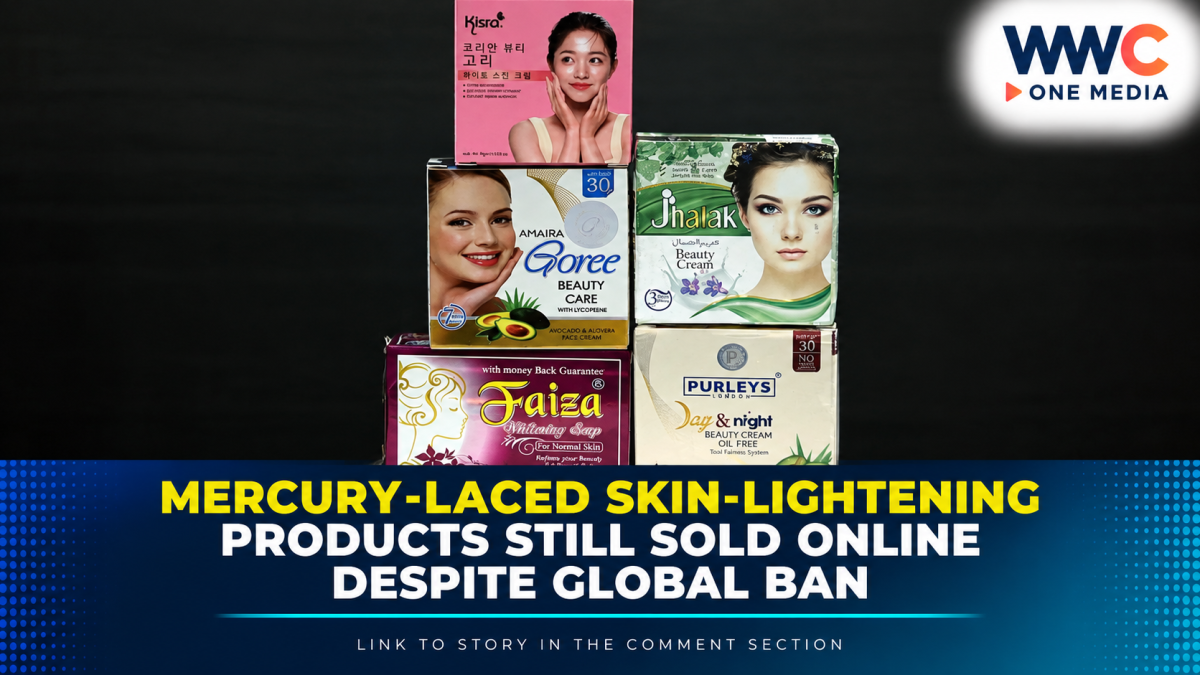
More than a decade after an international agreement restricted the manufacture, import and sale of mercury-containing cosmetics, products containing the toxic metal are still being offered through major online marketplaces, a Reuters investigation has found.
Reuters identified more than 20 skin-lightening products from regulatory warning lists that were available on third-party marketplaces operated by Amazon, Temu and TikTok Shop. The products were found across several markets, including the United States, France, India, the United Arab Emirates and Belgium.
The products did not list mercury as an ingredient, and Reuters said it could not independently confirm the presence of the toxic substance in every product it identified. However, several had previously been flagged by regulators as containing mercury.
The sale of such products persists despite the 2013 Minamata Convention on Mercury, an international agreement involving more than 150 countries that restricts mercury in cosmetics.
Mercury is used in some skin-lightening products because it can produce rapid changes in skin pigmentation. However, exposure can damage the kidneys, nervous system and brain, and the World Health Organization says there is no known safe level of exposure to mercury.
Reuters journalists were able to purchase several products from online marketplaces, including Pakistani-made creams, Mexican-made bleaching creams and bleaching soaps manufactured in the Philippines.
Some products that had previously been removed from online platforms also appeared to have been relisted under different names or by different sellers. In one case, a product flagged by US regulators was listed under another name, with its original name blurred in the product image.
Amazon, Temu and TikTok said their platforms prohibit the sale of the products identified by Reuters. The companies said they were taking steps to remove listings that violate their policies and applicable regulations.
Amazon said it uses seller verification, compliance documentation and laboratory testing in some cases and is continuing to improve its controls. TikTok said its rules prohibit products intended to bleach, whiten or lighten skin, while Temu said it would take action against listings that violate its rules.
Regulators nevertheless face difficulties in monitoring online marketplaces, particularly when sellers operate across borders or repeatedly relist products under new names.
The US Food and Drug Administration said it remains concerned about fraudulent mercury-containing products and has issued warnings to manufacturers and distributors. The WHO has also acknowledged that online and cross-border sales make enforcement more difficult.
Some governments have renewed efforts to remove the products. French authorities issued a recall notice in August for a mercury-containing skin-lightening cream that Reuters had found available online.
The continuing availability of these products highlights the challenges regulators face in enforcing restrictions in the rapidly expanding global e-commerce market, particularly when potentially dangerous cosmetics can be offered by third-party sellers under misleading descriptions.
Health authorities and consumer groups continue to urge shoppers to avoid unverified skin-lightening products and to check official safety warnings before purchasing cosmetics online.




Leave a Reply