
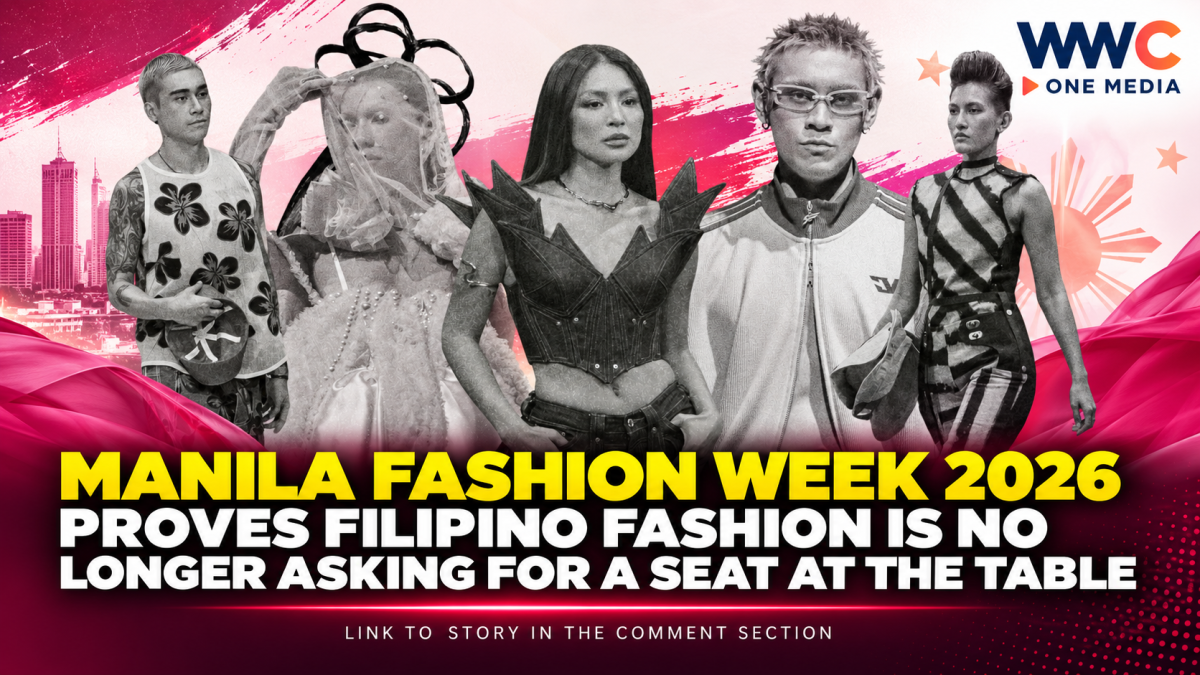
MANILA, Philippines — For four nights in September, Manila Fashion Week 2026 turned SMX Aura into a powerful showcase of Filipino creativity, bringing together established labels, emerging designers, celebrities and fashion personalities in one of the country’s biggest celebrations of local style.
But this year’s event was about more than clothes.
From Nadine Lustre’s major new role with Jag to deeply personal collections inspired by grief, mythology, climate change and self-discovery, Manila Fashion Week 2026 showed an industry increasingly confident in telling its own stories — on its own terms.
Four Days of Filipino Fashion
Manila Fashion Week 2026 ran from September 3 to 6, featuring runway presentations by some of the country’s most exciting names in fashion.
The four-day schedule included Nicolò, Yong Studio, Jag’s young designers showcase, Randolf, Jerome Lorico, Charlotte Folk, Antonina, HA.MÜ and Proudrace.
The result was a fashion week filled with contrasting ideas — from sculptural knitwear and experimental tailoring to elevated streetwear and everyday basics.
Yet one thing connected the collections: a distinctly Filipino point of view.
Nadine Lustre Makes a Splash for Jag
One of the event’s biggest crowd moments came when actress and singer Nadine Lustre appeared on the runway for Jag.
The iconic denim brand celebrated its 50th anniversary by launching Denim Gold, which gave five classic silhouettes a new interpretation.
Lustre was also officially introduced as the label’s newest face.
The presentation revisited Jag’s famous 1990s “Merman” campaign with a modern “Mermaid” concept, blending nostalgia with contemporary styling.
For many in the audience, Nadine’s appearance became one of the defining celebrity moments of the entire fashion week.
The Next Generation Takes Over
Manila Fashion Week also gave emerging designers a major platform through its NextGen showcase.
Kill Joy Studios brought a distorted and nostalgic vision of Manila, drawing inspiration from 1980s music and queer coming-of-age films.
Lilah Roché reimagined the world of classic Philippine action movies with a female version of Asiong Salonga through its “Sampaguita Queenpin” tailoring.
Meanwhile, Yana Kalaw Studios explored identity, femininity and the tension between conservative expectations and living authentically.
The message was clear: Filipino fashion’s next generation is not waiting quietly for its turn.
Fashion Meets Grief, Mythology and Self-Discovery
Some of the most powerful collections of the week came from deeply personal places.
Nicolò opened the festival with Flow State, a collection inspired by the myths of Sisyphus, Narcissus and Icarus. The looks evolved from structured, utilitarian workwear into more fluid and water-inspired designs.
Randolf’s The Waiting Room explored the emotional space between grief and hope. The collection was created during a period when the designer lost his grandfather while welcoming a new niece into the family.
The collection used recurring shedding and transformation motifs to reflect transition, memory and renewal.
It was fashion as storytelling — and fashion as therapy.
Antonina Says Taking a Break Is Also Progress
Antonina brought a different kind of message to the runway with her Spring/Summer 2027 collection, Not Here.
After years of working primarily with black, the designer introduced more nature-inspired colours and explored the idea that stepping away, slowing down and taking a pause can also be a form of progress.
Beauty queens and personalities Marina Summers and Michelle Dee appeared as muses.
The collection offered a reminder that in an industry constantly demanding the next big thing, sometimes choosing to stop can be its own powerful statement.
Climate Change Takes the Runway
Environmental concerns also found their way into fashion.
Yong Studio presented its largest collection to date, beginning with rich colours before gradually moving toward dry, El Niño-inspired earth tones.
The collection used significant amounts of deadstock fabric and reflected concerns about environmental degradation and a changing planet.
The visual transition from abundance to dryness became one of the show’s strongest messages.
Fashion, it seemed, was not just asking audiences to look at the clothes.
It was asking them to look at the world around them.
Jerome Lorico Brings His Knitwear Back Home
Knitwear designer Jerome Lorico made his long-awaited return to the Manila Fashion Week runway before preparing for an exhibition in Paris in October.
His work brought together his provincial roots and an experimental approach to knitwear.
Lorico has described his creative process as similar to “moulding water,” reflecting the flexibility, unpredictability and sculptural possibilities of working with yarn.
The collection stood out for its artistic approach and refusal to follow traditional commercial fashion formulas.
A Runway Turns Into a Hotel Lobby
Fashion also had fun at Manila Fashion Week.
Charlotte Folk transformed its runway into a bustling hotel lobby, creating an immersive presentation around elevated everyday clothing.
Performers Skusta Clee and Flow G added to the atmosphere as models showcased the brand’s designs.
The presentation was essentially a celebration of everyday life — including the humble basic T-shirt.
It was a reminder that fashion does not always need to be dramatic or overly serious to make an impact.
HA.MÜ Celebrates 10 Years — and a Commitment to Yourself
Closing one of the final presentations, HA.MÜ marked a decade of fashion with a three-act collection titled HA? HA.MÜ!.
The final segment featured a bridal concept that challenged traditional ideas about marriage and commitment.
Instead of focusing on committing to another person, the presentation encouraged a different kind of promise: committing to yourself.
Content creator and personality Mimiyuuuh appeared in the closing segment, delivering one of the week’s most memorable runway moments.
Proudrace Ends Fashion Week With Streetwear and Couture-Level Ambition
Proudrace closed Manila Fashion Week 2026 with a collection that challenged conventional ideas about streetwear.
Using draping, exaggerated proportions and couture-level construction techniques, the brand showed how everyday garments could be reimagined into something more experimental.
The label also highlighted its milestone as the first Filipino fashion brand to collaborate with adidas.
It was a fitting finale for a fashion week built around experimentation and confidence.
Filipino Fashion Is Building Its Own Future
Perhaps the biggest story of Manila Fashion Week 2026 was not any single celebrity appearance or individual collection.
It was the confidence of the industry itself.
Filipino designers are increasingly creating fashion rooted in local experiences while speaking to global audiences.
They are telling stories about family, identity, grief, climate change, heritage, gender, self-discovery and everyday life.
And they are doing it without trying to imitate someone else’s fashion capital.
Manila Fashion Week 2026 showed that Philippine fashion is no longer simply looking for international approval.
It is creating its own space.
The Bottom Line
Manila Fashion Week 2026 brought together four days of bold ideas, major celebrity moments and deeply personal storytelling from September 3 to 6 at SMX Aura.
Nadine Lustre became Jag’s newest face.
Young designers pushed conversations about identity and authenticity.
Established names explored grief, mythology and climate change.
HA.MÜ celebrated self-love.
And Proudrace closed the week by proving that Filipino streetwear can stand alongside high-fashion craftsmanship.
The biggest takeaway?
Filipino fashion is no longer asking for a seat at the table.
It’s building its own room — and the world is starting to pay attention.
WWC ONE MEDIA J.M.D



Leave a Reply