
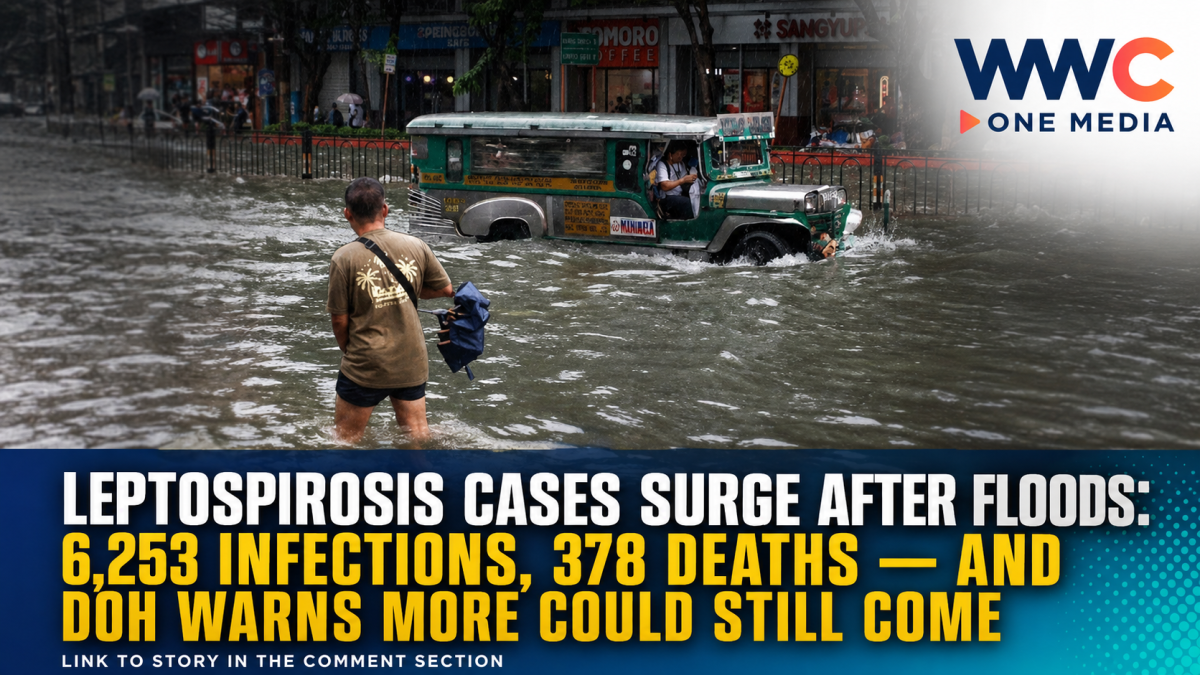
MANILA, Philippines — The Department of Health is warning Filipinos to remain on high alert for leptospirosis following weeks of widespread flooding, as thousands of infections have already been recorded nationwide and health officials expect cases to potentially increase further in the coming days.
The warning comes despite an important distinction: the Philippines has recorded fewer leptospirosis cases so far this year than during the same period in 2025. As of August 29, the DOH had documented 6,253 cases nationwide, about 12% lower than the comparable period last year. However, officials remain concerned about a possible post-flood increase because infections can appear days after exposure to contaminated floodwater.
The disease has also claimed 378 lives nationwide from January 4 through August 29, according to the DOH. Health Undersecretary Gloria Balboa said cases could continue rising over the next two weeks, making early consultation especially important for people who recently came into contact with floodwater.
Why floodwaters remain a major concern
Leptospirosis is caused by bacteria of the Leptospira group, commonly associated with the urine of infected animals, particularly rats. People can become infected when contaminated water or soil comes into contact with cuts or wounds, or with the eyes, nose or mouth.
The danger is particularly significant after flooding because contaminated water can spread through streets, homes and communities.
Philstar reported that 3,296 of the 6,253 nationwide cases — about 53% — involved flood exposure. In Metro Manila, the connection was even stronger: 72% of confirmed cases had a history of flood exposure.
Health authorities say symptoms may not appear immediately. The DOH has cited an incubation period of roughly five to 15 days, meaning someone exposed to floodwater may feel well initially and develop symptoms later.
Metro Manila remains under close watch
Metro Manila has recorded 2,333 leptospirosis cases from January 4 to September 1, an 18% decline from the 2,853 cases reported during the same period last year. Deaths also dropped, from 273 to 112.
But the lower numbers do not mean the threat has disappeared.
The DOH said nine Metro Manila cities have exceeded their epidemic thresholds: Caloocan, Malabon, Manila, Navotas, Parañaque, Pasig, San Juan, Valenzuela and Quezon City.
The region has also experienced repeated flooding. The Metropolitan Manila Development Authority recorded 662 flooding incidents as of September 2, with 405 occurring in August alone.
Hospitals prepare as admissions increase
Health officials have been preparing hospitals for a possible influx of patients.
GMA News reported that DOH hospitals in Metro Manila had 77 leptospirosis beds available, while 526 patients had already been admitted and another 33 were awaiting admission. Authorities said patient referrals and redistribution were being used to prevent several hospitals from becoming overwhelmed.
The DOH has also been using fast lanes, case tracking and inter-hospital referral systems, while positioning medical teams and supplies in areas considered vulnerable to increased transmission.
The national government previously said the DOH had around 3.1 million doxycycline capsules on standby as part of its response to possible increases in leptospirosis following flooding.
What symptoms should people watch for?
Leptospirosis can initially resemble an ordinary viral illness. Symptoms may include fever, chills, fatigue, nausea, dizziness and muscle pain.
But the disease can become severe if it progresses to major organs. Health authorities have warned of complications involving the kidneys and liver, including kidney failure, as well as meningitis and multi-organ failure in severe cases.
One warning sign is yellowing of the skin or eyes, which can indicate liver involvement. Dark urine may also signal kidney complications.
Health officials are urging people not to wait for symptoms to become severe before seeking medical attention, particularly if they have recently been exposed to floodwater.
Do not self-medicate
Doxycycline may be used as preventive treatment in certain circumstances, but health authorities stress that people should consult a doctor or health professional before taking it. The appropriate treatment and dosage depend on the individual’s circumstances.
The DOH has advised people exposed to floodwater to seek medical evaluation promptly. Earlier health guidance has emphasized consultation within 24 to 48 hours after exposure or when symptoms begin, depending on the circumstances.
The bigger warning
The latest figures show a complicated picture: leptospirosis cases nationwide are lower than last year, yet the immediate post-flood risk remains significant.
More than half of this year’s recorded infections have been associated with flood exposure, while several Metro Manila cities remain above epidemic thresholds. With leptospirosis symptoms potentially appearing days after exposure, health authorities are preparing for cases that may not yet have entered hospitals.
For Filipinos who recently walked, worked or traveled through floodwater, the message from health officials is straightforward: do not ignore even seemingly ordinary symptoms after exposure. Early medical consultation can help prevent a potentially serious infection from progressing.
WWC ONE MEDIA MJE



Leave a Reply