
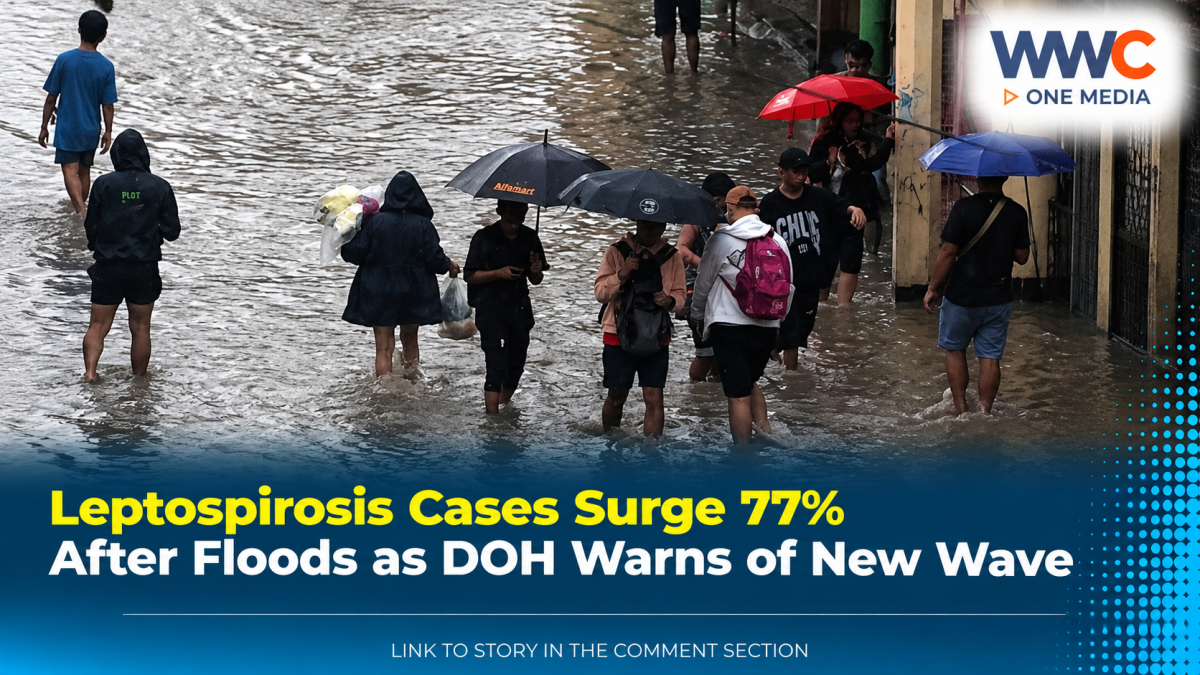
Leptospirosis Cases Surge 77% After Floods — DOH Warns Another Wave May Be Coming
MANILA, Philippines — The Department of Health is sounding the alarm after leptospirosis cases surged sharply in the wake of weeks of torrential rains and widespread flooding, with health officials warning that another wave of infections could still be on the way.
The latest figures show that 824 leptospirosis cases were recorded from Aug. 2 to 15, a staggering 77 percent increase from the 465 cases logged during the previous reporting period from July 19 to Aug. 1.
Health Secretary Edwin Mercado said the spike was significant enough for the DOH to intensify its monitoring across several regions.
But the numbers tell an even bigger story.
As of Aug. 29, the Philippines had recorded 6,253 leptospirosis cases nationwide and 378 deaths. While the cumulative total remains 12 percent lower than the same period in 2025, the recent post-flood surge has raised fears that more infections could emerge in the coming days.
The cases are rising — and floods are a major reason
Leptospirosis is a bacterial disease commonly associated with exposure to water or soil contaminated with the urine of infected animals, particularly rats.
The bacteria can enter the body through cuts and wounds, but health authorities have also warned that exposure can occur through the eyes, nose or mouth.
That makes widespread flooding particularly dangerous.
The DOH has said that a significant number of infections recorded this year were linked to flood exposure.
In Metro Manila, the connection is even more alarming, with 72 percent of confirmed leptospirosis cases linked to flood-related exposure, according to recent health data. Nationwide, thousands of recorded cases involved contact with floodwaters.
The message from health officials is clear:
Floodwater is not harmless water.
And after weeks of repeated flooding across parts of the country, more people may already have been exposed without realizing the danger.
DOH warns another surge could still be coming
The recent increase may not yet represent the full impact of the latest flooding.
Health officials have warned that leptospirosis has an incubation period, meaning people exposed to contaminated floodwaters may not develop symptoms immediately.
The DOH has said infections could continue rising in the weeks following major floods.
That means the country’s latest case count could still increase as people who were exposed during recent flooding begin to fall ill.
Officials have repeatedly urged anyone who waded through floodwaters to seek medical advice, even if they do not have obvious open wounds.
Six regions are under close watch
The DOH said it is closely monitoring several areas where cases have reached concerning levels.
Among the regions under intense monitoring are:
- National Capital Region
- Ilocos Region
- Central Luzon
- Calabarzon
- Northern Mindanao
- Davao Region
Health Secretary Mercado said these areas had reached the epidemic threshold twice during the previous four weeks.
The DOH is also monitoring rising trends in other parts of the country, including:
- Soccsksargen
- Central Visayas
- Western Visayas
- Cordillera Administrative Region
- Negros Island Region
- Bicol Region
- Cagayan Valley
The expanding list shows that the problem is no longer limited to one city or region.
Metro Manila hospitals feel the pressure
The surge is already putting pressure on hospitals.
Recent reports showed that several major facilities handling leptospirosis cases have experienced high admissions, while the DOH has worked to add surge capacity and redistribute patients.
At San Lazaro Hospital in Manila, health workers have faced mounting pressure as admissions exceed the number of beds originally allocated for leptospirosis patients.
The hospital had allocated 120 beds for leptospirosis cases, but admissions reportedly reached around 180, forcing staff to find additional space for patients.
The DOH has since reported more than 600 available beds for leptospirosis patients across 20 DOH hospitals in Metro Manila, including hundreds of additional surge beds.
The department has also been facilitating referrals and the redistribution of patients, particularly those requiring dialysis and higher levels of care.
Quezon City and other Metro Manila areas breach thresholds
The situation is also drawing concern at the local level.
Recent health data showed that several Metro Manila cities exceeded their epidemic thresholds following repeated flooding.
These include:
- Caloocan
- Malabon
- Manila
- Navotas
- Parañaque
- Pasig
- San Juan
- Valenzuela
- Quezon City
Quezon City alone recorded hundreds of cases this year, with a large proportion reported during August after major flooding events.
The figures underline a worrying reality: even though the country’s overall year-to-date case count remains below last year’s level, the disease is now spreading rapidly in areas heavily affected by recent floods.
Why informal workers face greater risk
Health officials have also highlighted the increased vulnerability of people who cannot simply stay indoors when floodwaters rise.
In Metro Manila, unemployed people and workers in the informal sector made up a significant share of reported leptospirosis infections.
Many workers have little choice but to travel through flooded streets to earn a living.
Drivers, delivery workers, vendors and other workers may find themselves exposed to contaminated water while trying to get to work or continue operating their businesses.
Health officials have urged employers to provide appropriate protective equipment and support workers who may be exposed to floodwaters.
DOH says medicine supplies are ready
Amid concerns about rising infections, the DOH has assured the public that medicines for leptospirosis are available.
Health Secretary Mercado said the department had already distributed medicines to different regions ahead of the wet season and continued prepositioning supplies in areas affected by flooding.
As of early September, the DOH had also distributed more than a million doxycycline capsules to regions affected by floods, while maintaining additional stocks across health offices and government hospitals.
Health officials have also opened leptospirosis fast lanes in selected hospitals to help manage patient flow and prevent overcrowding in only a few facilities.
What are the warning signs?
Leptospirosis can initially resemble other illnesses, making early consultation important after exposure to contaminated floodwaters.
People who develop symptoms after wading through floods should seek medical advice as soon as possible.
Health authorities have warned the public not to dismiss symptoms simply because they believe they had no open wounds during exposure.
The bacteria can enter the body through multiple routes, including the eyes, nose and mouth.
What to do after wading through floodwaters
The DOH has urged people exposed to floodwaters to take the risk seriously.
Key precautions include:
- Avoid wading through floodwaters whenever possible.
- Wear protective boots and appropriate clothing if exposure cannot be avoided.
- Wash thoroughly with clean water after exposure.
- Seek medical advice after significant exposure to floodwaters.
- Do not self-medicate without professional guidance.
- Watch for symptoms in the days following exposure.
- Seek urgent medical care if symptoms develop or worsen.
The DOH has emphasized that even people without visible wounds should consult a health professional after significant exposure to floodwaters.
The numbers may be lower than last year — but the danger is rising now
One of the most important details in the latest DOH data is the apparent contradiction.
Yes, the Philippines’ cumulative leptospirosis total remains lower than last year.
But recent infections are rising sharply.
From Aug. 2 to 15 alone, the number of cases jumped 77 percent compared with the previous reporting period.
That means a lower year-to-date total should not be mistaken for a declining immediate threat.
The country is dealing with a post-flood surge, and health officials are preparing for more patients.
A public health warning after weeks of flooding
The recent rains may have subsided in some communities.
The floodwaters may also have disappeared from many streets.
But for people exposed to contaminated water, the health risk may not have ended.
That is why the DOH continues to warn the public against complacency.
The latest surge is a reminder that the effects of flooding do not always end when the water recedes.
For some people, the danger may only begin days later.
With 6,253 cases and 378 deaths recorded nationwide as of Aug. 29, and recent infections jumping 77 percent between reporting periods, the country’s health authorities are now racing to prepare hospitals and medicines for what could be another wave of patients.
The floodwaters are gone for many communities. But the leptospirosis threat is still rising.
WWC ONE MEDIA J.M.D

Leave a Reply