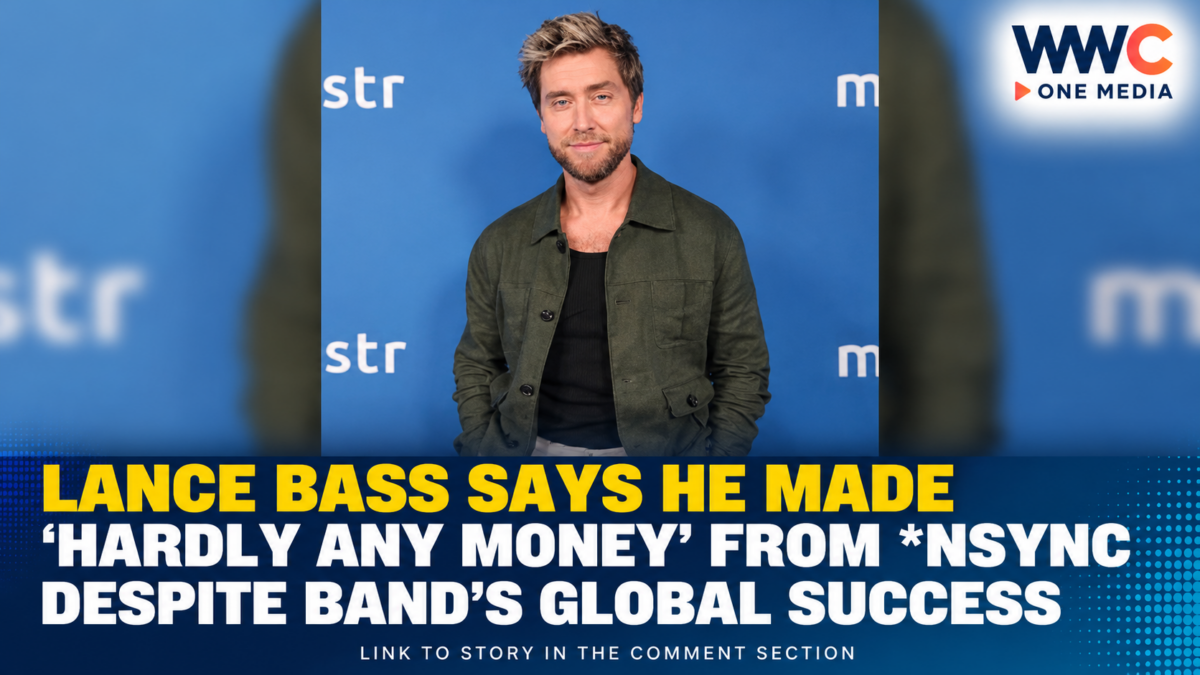
For millions of fans, *NSYNC’s chart-topping hits, sold-out tours and merchandise empire made the group one of the biggest pop acts of its generation. But according to member Lance Bass, the financial rewards he received during the band’s early years were far less glamorous than their fame suggested.
The 47-year-old singer recently revealed that he and his bandmates received just US$35 (about S$44.81) a day during the early stages of their career, despite working towards international stardom.
Speaking on The Zach Sang Show, Bass recalled that the group’s first cheque amounted to just US$10,000 after years of hit albums and sold-out concerts.
“Our first cheque was a US$10,000 cheque after years of number one albums, sellout tours,” he said, adding that merchandise sales had been substantial.
He said the group had effectively worked for two to three years without meaningful payment, making the eventual cheque seem surprisingly small compared with the success they had achieved.
‘I didn’t make money with *NSYNC hardly at all’
Bass also challenged the perception that his wealth today comes primarily from his time in the boy band.
Although the group’s music continues to generate residual income, he said the payments were relatively modest.
“It’s so weird how people think I’m so filthy rich from *NSYNC,” he said. “No. Not at all.”
He added that he had done well after the group’s hiatus and was proud of his subsequent work, but insisted that he had made very little money during *NSYNC’s peak years.
The comments offer a reminder that commercial success does not necessarily translate into equivalent earnings for performers, particularly when contracts, management arrangements and other business interests determine how revenue is distributed.
Lance Bass points to lack of protection for young performers
Bass also reflected on his frustration with the adults who were supposed to protect the group while its members were young.
He recalled being told that they could tolerate demanding schedules because of their age, even as they were expected to perform and work long hours.
Bass said he had previously felt resentment towards the group’s former manager, Lou Pearlman, and its record label because he believed the members had not been adequately protected.
He described Pearlman as one of the biggest scam artists of all time. Pearlman was sentenced to 25 years in prison in 2008 over offences including conspiracy and money laundering.
Bass’s comments also highlighted a broader concern about young entertainers entering an industry where they may have limited experience negotiating contracts or safeguarding their financial futures.
Starting over after *NSYNC
The group, comprising Bass, Justin Timberlake, JC Chasez, Joey Fatone and Chris Kirkpatrick, rose to international fame after forming in 1995. It entered an indefinite hiatus in 2002.
Bass said the members subsequently had to rebuild their careers while dealing with the stigma associated with being part of a boy band. At the time, he recalled, some people in the entertainment industry did not take the genre seriously.
His experience underscores the challenges performers can face when a group’s commercial momentum fades and individual members must establish themselves independently.
Despite the difficulties he described, Bass said he was proud of what he accomplished after *NSYNC. His account, however, raises a question that extends beyond one famous group: when young artists help build a multimillion-dollar entertainment business, how much of that success ultimately reaches them?