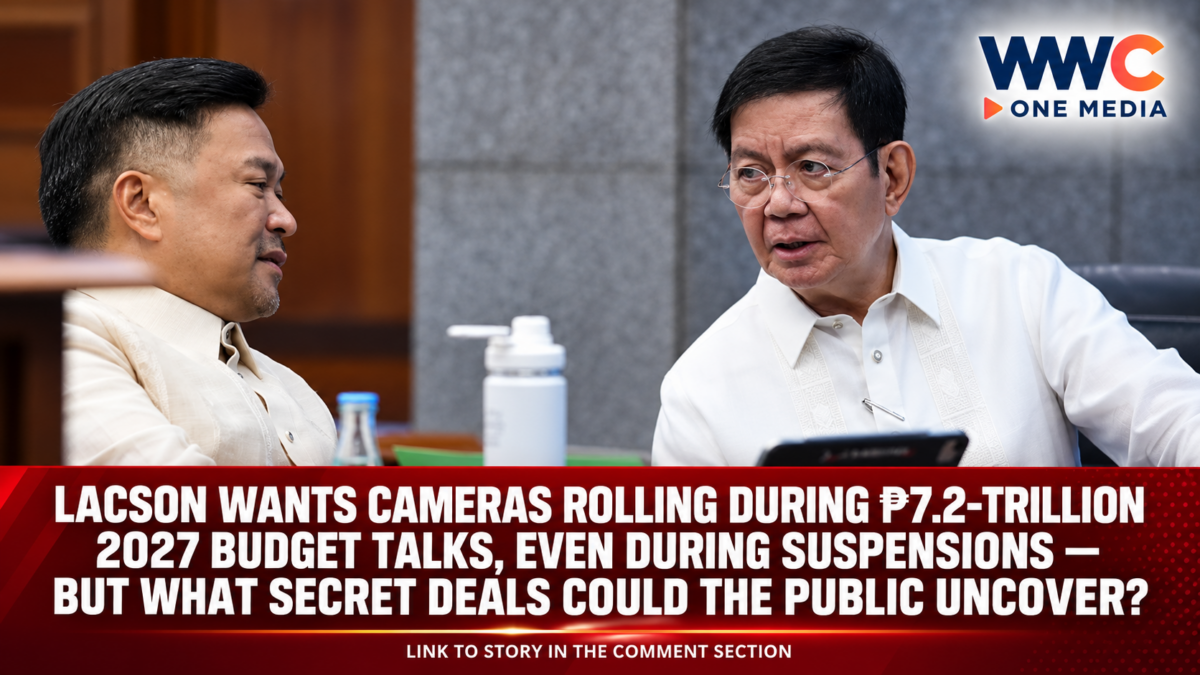
MANILA, Philippines — October 25, 2026 — Senator Panfilo “Ping” Lacson is pushing for greater transparency in the Philippine government’s proposed ₱7.2-trillion national budget for 2027, calling for livestream cameras to remain operational even when bicameral conference committee proceedings are suspended.
The proposal could change how Filipinos monitor one of Congress’ most critical responsibilities: deciding where trillions of pesos in taxpayers’ money will be spent.
Lacson warned that temporary suspensions during budget negotiations could create opportunities for private discussions, political bargaining, and questionable changes to government allocations away from public scrutiny.
His message is straightforward: If lawmakers are discussing public money, the public should be able to see how those decisions are made.
LACSON TARGETS PRIVATE TALKS DURING BUDGET SUSPENSIONS
In an interview with DWIZ radio on Saturday, October 24, Lacson expressed concern about what happens when bicameral conference committee meetings are temporarily suspended.
The senator recalled instances during previous budget deliberations when lawmakers allegedly gathered in corners for private conversations beyond the livestream cameras’ reach.
He proposed keeping cameras running during suspensions so the public could continue monitoring proceedings.
Lacson also urged lawmakers to minimize unnecessary breaks, arguing that suspensions should serve legitimate practical purposes rather than create opportunities for undisclosed negotiations.
His statements raise a larger question about the budget process: Can televised formal sessions guarantee transparency if important discussions occur when the cameras are off?
However, Lacson’s concerns do not establish that every private discussion or suspension involves wrongdoing. No specific illegal transaction arising from the suspensions cited in his latest remarks has been independently established.
₱7.2-TRILLION BUDGET NOW UNDER INTENSE SCRUTINY
The controversy comes as Congress reviews the proposed ₱7.2-trillion national budget for fiscal year 2027.
On October 12, the House of Representatives approved House Bill No. 10858, the proposed General Appropriations Bill, on its third and final reading.
The measure passed with 281 votes in favor, 13 against, and one abstention.
The House-approved version included approximately ₱116 billion in amendments and realignments intended to strengthen government programs, including education, healthcare, agricultural support, and infrastructure.
The Senate must conduct its own review and approve its version before disagreements between the two chambers can be reconciled through the bicameral conference committee.
For taxpayers, this means the budget is not yet a finished spending law.
Changes could still emerge as senators evaluate proposed allocations and as lawmakers eventually reconcile their respective versions.
WHY THE BICAM IS ONE OF THE MOST IMPORTANT STAGES OF THE BUDGET
The bicameral conference committee, commonly called the bicam, brings together representatives from the Senate and the House of Representatives to resolve differences between legislation approved by each chamber.
For the national budget, this stage is especially significant because it determines the final version of the spending measure that Congress will consider for ratification.
Funding decisions at this stage can affect public hospitals, classrooms, roads, disaster preparedness, agricultural assistance, and other essential services.
Concerns about budget insertions have repeatedly fueled calls for safeguards against questionable spending provisions.
Lacson has previously advocated stronger restrictions on inserting items into the final budget that were absent from both chambers’ approved versions.
His latest proposal would extend public scrutiny beyond formal discussions to include periods when the committee temporarily suspends proceedings.
DBM SUPPORTS PUBLIC ACCESS TO 2027 BUDGET NEGOTIATIONS
The Department of Budget and Management has already expressed support for livestreaming the 2027 bicameral budget deliberations.
In August, Acting Budget Secretary Kim de Leon welcomed greater public scrutiny of government spending, emphasizing accountability and transparency in the use of taxpayers’ money.
The proposed livestream would build on the precedent established in December 2025, when bicameral deliberations for the 2026 national budget were opened to the public through livestreaming.
But Lacson is advocating an additional safeguard: Keeping cameras operating even during suspensions, when discussions might otherwise escape public observation.
The distinction matters because livestreaming formal sessions does not necessarily reveal every discussion that influences the final budget.
LACSON’S ₱5-MILLION TESDA ALLEGATION ADDS TO BUDGET CONCERNS
The senator’s push for stronger oversight also comes amid a separate dispute involving an alleged ₱5-million allocation offer associated with the Technical Education and Skills Development Authority.
Lacson said an offer was communicated through his Senate staff earlier in the week and that he unequivocally rejected it.
He indicated that he intends to seek clarification during Senate deliberations on TESDA’s proposed 2027 budget.
However, TESDA Secretary and Director-General Jose Francisco “Kiko” Benitez denied authorizing anyone to make such an offer.
Benitez said the agency had ordered an immediate internal investigation to determine whether unauthorized individuals had made representations involving TESDA funds.
The allegations remain disputed, and no finding of misconduct has been established on the information publicly reported.
The separate TESDA controversy highlights why Lacson and other advocates argue that budget discussions should be documented and open to scrutiny.
WHAT COULD UNINTERRUPTED LIVESTREAMING CHANGE?
If adopted, Lacson’s proposal could make it easier for journalists, public-interest organizations, budget analysts, and ordinary citizens to follow how lawmakers negotiate changes to government spending.
A more transparent process could also discourage attempts to introduce questionable appropriations without sufficient explanation.
Still, keeping cameras running would not automatically prevent corruption.
Effective oversight would also require accessible budget documents, clear records of proposed amendments, identification of their sponsors, and detailed explanations for changes made during the legislative process.
Legitimate confidentiality concerns and procedural rules would also need to be addressed before implementing a continuous-camera policy.
THE BIG QUESTION: WILL CONGRESS AGREE?
The immediate issue is no longer simply whether bicameral budget deliberations should be livestreamed.
The debate now extends to what happens when formal proceedings stop.
Will lawmakers agree to remain publicly observable during suspensions, or will the proposal face resistance over privacy, procedure, and the conduct of legislative negotiations?
As the proposed ₱7.2-trillion budget moves through Congress, the challenge is ensuring that the final spending law reflects legitimate public priorities rather than undisclosed political arrangements.
For millions of Filipinos whose taxes fund government operations, the demand for transparency is not just about watching politicians on camera.
It is about knowing who makes spending decisions, how those decisions are justified, and where public money ultimately goes.
The question hanging over the 2027 budget is clear: If negotiations involve trillions in public funds, how much of the process should remain behind closed doors?