MANILA, Philippines — October 25, 2026
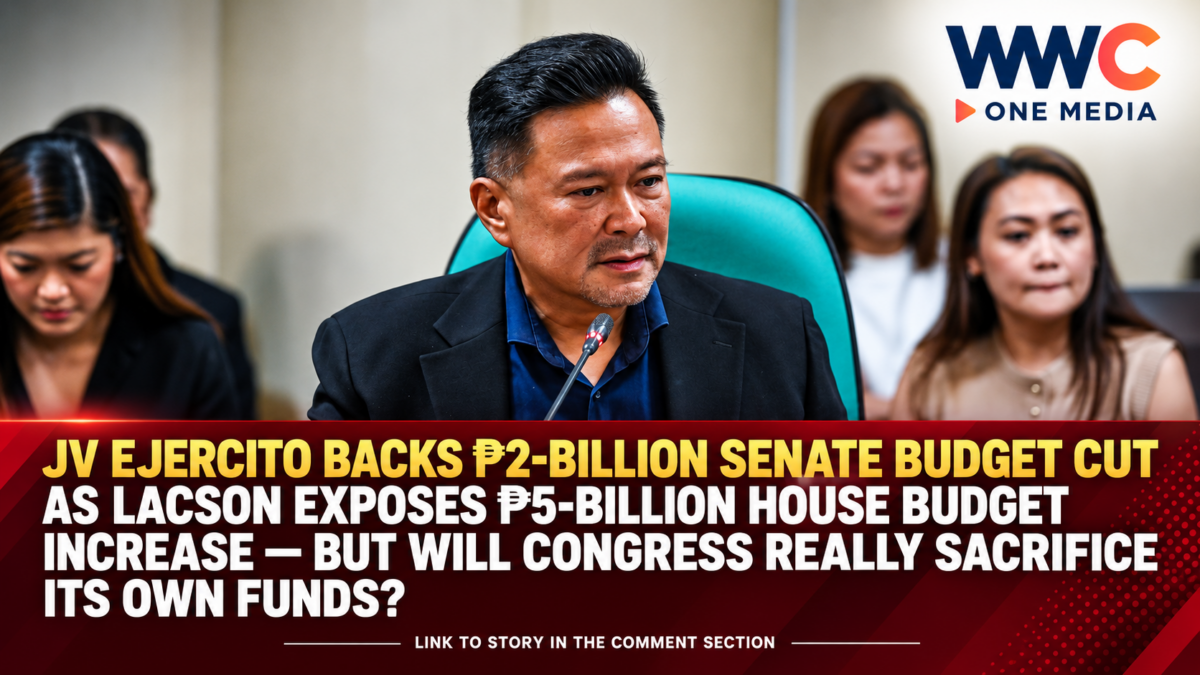
A major budget showdown is taking shape in Congress as Senator JV Ejercito signals his willingness to slash as much as ₱2 billion from the Senate’s proposed 2027 budget, intensifying scrutiny of government spending while fellow Senator Panfilo “Ping” Lacson challenges the House of Representatives over a reported ₱5-billion increase in its own proposed allocation.
The potential reduction could become a significant test of whether lawmakers are willing to impose the same financial discipline on Congress that they demand from government agencies.
Ejercito, chairman of the Senate Committee on Finance, said the chamber’s proposed ₱7.7-billion budget remains open to amendments even after securing approval at the committee level.
A possible ₱2-billion reduction would bring the allocation to approximately ₱5.7 billion, representing a cut of nearly 26%.
However, the reduction has not yet been finalized and remains subject to further Senate deliberations.
Senate Under Pressure to Lead by Example
The proposal comes as lawmakers face growing demands for transparency and accountability over the proposed ₱7.2-trillion national budget for 2027.
Ejercito has emphasized that the Senate must demonstrate responsible financial management rather than simply demand spending reductions from other government institutions.
His position follows Lacson’s proposal to reduce the chamber’s allocation by about ₱2 billion to encourage the House of Representatives to reconsider its own budget.
Lacson, who chairs the Senate Committee on Accounts, has raised concerns over a reported ₱5-billion increase in the House’s proposed allocation.
If both chambers adopt the proposed adjustments, the combined difference could reach ₱7 billion compared with the spending levels under discussion.
But that amount is not yet an actual government saving. Any reduction or reallocation must still pass through the legislative budget process.
Lacson Wants Potential Savings Redirected to Public Needs
In a development reported on October 25, Lacson suggested that potential savings from congressional budget reductions could help finance preparations for a possible severe El Niño episode.
The senator also identified healthcare, education, disaster preparedness and other essential government services as possible priorities for the funds.
His proposal highlights a broader issue facing Congress: whether money allocated for legislative operations could be redirected toward programs with more immediate benefits for Filipino households.
With agricultural production vulnerable to prolonged dry conditions, additional funding for irrigation, water management and disaster preparation could become particularly important.
However, no final decision has been announced regarding the amount of any savings or where they would ultimately be allocated.
Supreme Court Budget Ruling Adds Pressure
The proposed reductions come amid heightened scrutiny of the national budget following a Supreme Court decision concerning unprogrammed appropriations in previous national spending laws.
The ruling has raised questions about how Congress prepares and approves budget provisions, particularly those involving government expenditures dependent on additional funding sources.
Ejercito has pledged to examine the implications of the ruling while working with the Department of Budget and Management to prevent similar constitutional questions from affecting the 2027 budget.
The controversy has also prompted calls for greater transparency during congressional deliberations, especially when lawmakers introduce amendments or adjust allocations.
₱206 Billion in House Budget Realignments Draws Scrutiny
Beyond Congress’s own operating budgets, the Senate is reviewing substantial changes made by the House to the administration’s proposed spending program.
According to reporting by The Philippine Star, Ejercito raised concerns about approximately ₱206 billion in budget realignments, including roughly ₱130 billion in reductions affecting foreign-assisted projects.
Among the projects potentially affected are major transport and infrastructure initiatives supported by international development partners.
These include railway developments and other long-term infrastructure investments intended to improve mobility and economic activity.
Ejercito has warned that delays affecting foreign-assisted projects can create additional financial obligations for the government, including commitment fees.
The Senate must therefore weigh proposed savings against the potential consequences of reducing funding for projects with existing contractual or financing commitments.
Ejercito Rejects Last-Minute Budget Insertions
The Senate finance chairman has also stressed that amendments to the national budget should undergo public scrutiny rather than emerge as unexplained last-minute changes during bicameral negotiations.
He has argued that legitimate budget adjustments should be considered openly during plenary proceedings.
The position comes amid longstanding criticism of opaque spending changes and concerns that congressional amendments can weaken public confidence in government budgeting.
At the same time, Ejercito has warned against restarting the entire budget process, saying delays could jeopardize the timely approval of the 2027 spending measure.
Failure to enact a new national budget before the beginning of the fiscal year could force the government to operate under a reenacted budget, potentially complicating the implementation of new programs.
Will the House Follow the Senate’s Lead?
The proposed ₱2-billion Senate budget reduction is emerging as a political test for both congressional chambers.
For Ejercito and Lacson, cutting the Senate’s own spending could send a strong message that fiscal restraint must begin with lawmakers themselves.
But the larger question remains whether the House of Representatives will respond by reviewing its reported ₱5-billion increase.
For Filipino taxpayers, the real measure of success will not simply be the size of the announced cuts.
It will be whether Congress can show where public funds are going, explain why expenditures are necessary, and demonstrate that budget changes serve national priorities.
As lawmakers prepare for further deliberations on the ₱7.2-trillion national spending plan, one question could define the budget debate: Will Congress genuinely reduce its own expenses, or will the promise of austerity remain another political talking point?