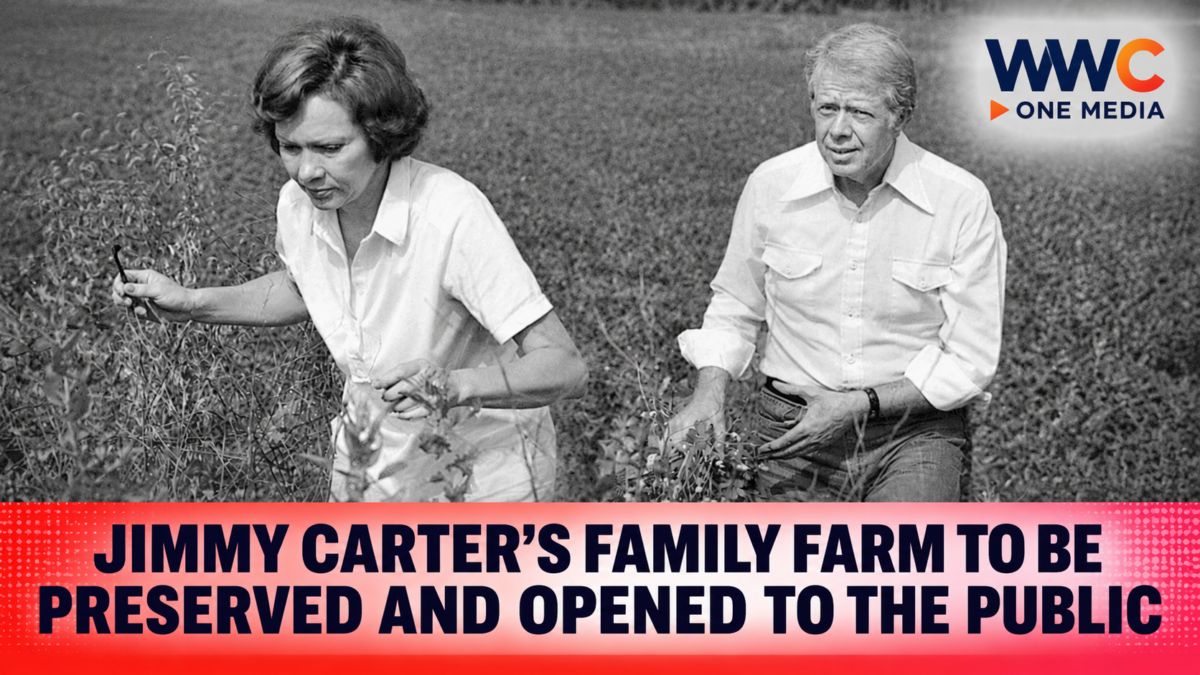
Jimmy Carter’s $8.5 Million Family Farm to Become Public Wildlife Haven — But What Happens to the Land That Shaped His Legacy?
PLAINS, GEORGIA, UNITED STATES — November 11, 2026
The historic Georgia farmland where former U.S. President Jimmy Carter spent his childhood working alongside his father has secured a new future after a conservation nonprofit acquired the property in an $8.5 million deal, setting the stage for its eventual transformation into protected public land.
The Conservation Fund announced that it had acquired approximately 2,458 acres near Plains, Georgia, including the Carter family farm and adjoining property. The organization plans to protect the landscape, preserve its wildlife habitats and eventually transfer ownership to the Georgia Department of Natural Resources.
Public access could begin as early as 2027, allowing visitors to enjoy outdoor activities such as hunting, fishing and other recreation. The planned transfer to state ownership is expected in 2028.
But beyond the financial transaction, the acquisition carries a deeper significance: it protects a landscape that remained close to Carter throughout his life and reflects the environmental values he championed during his presidency.
A Farm That Helped Shape a Future American President
Long before Jimmy Carter entered the White House, the land outside Plains was part of his everyday life.
Born in 1924, Carter grew up in rural Georgia, where his father, Earl Carter, operated the family’s agricultural business. The property supported crops including peanuts, corn and sugarcane.
As a young boy, Carter worked in the fields and explored the surrounding woods and waterways. Those experiences helped establish his lifelong connection to agriculture, nature and rural communities.
After leaving the U.S. Navy in 1953 following his father’s death, Carter returned to Georgia to take over the family business.
His relationship with the property continued long after he entered public service. Even after serving as governor of Georgia and becoming the 39th president of the United States from 1977 to 1981, he repeatedly returned to the countryside.
He and his wife, Rosalynn Carter, enjoyed walking through the woods, fishing at the farm’s pond and spending time away from political responsibilities.
According to reporting by The Washington Post, their daughter, Amy Carter, recalled that her father’s favorite place was the town and land where he grew up.
Carter died in December 2024 at the age of 100. Rosalynn died in November 2023.
Near the end of his life, he returned to the property for one final fishing trip to its pond.
That personal connection is now part of the reason the family’s decision to preserve the land has attracted attention.
Why The Conservation Fund Acquired the 2,458-Acre Property
The Conservation Fund, a nonprofit organization focused on protecting natural landscapes, acquired the property for $8.5 million, according to The Washington Post.
The acquisition includes approximately 2,458 acres of farmland and surrounding forest near Plains.
The organization intends to retain ownership and manage the property before transferring it to the Georgia Department of Natural Resources in 2028.
The long-term objective is to incorporate the land into the nearby Lanahassee Creek Wildlife Management Area.
Once the expansion is completed, the protected area is expected to cover nearly 7,000 acres.
The project will provide additional habitat for native wildlife while creating opportunities for public outdoor recreation.
Stacy Funderburke, vice president of the central Southeast region at The Conservation Fund, explained that the land helped shape Carter’s environmental outlook long before he became president.
The organization says the acquisition continues that legacy by ensuring the landscape remains available for wildlife and future generations.
What Wildlife Will Benefit From the Conservation Project?
The property is more than a historic agricultural landscape. Its forests, waterways and natural habitats also support a variety of wildlife.
One particularly important species is the gopher tortoise, Georgia’s state reptile.
These animals depend on suitable open longleaf pine ecosystems. Their underground burrows also provide shelter for other wildlife, making them an important part of the surrounding ecological system.
The property also supports deer, wild turkeys, quail and other native species.
Another important feature is its longleaf pine habitat.
According to The Conservation Fund, Carter had specifically requested that mature longleaf pines be retained on the property. Much of the land was also replanted with young longleaf pines as part of its restoration and management efforts.
This matters because longleaf pine ecosystems have declined significantly across the southeastern United States due to development, agricultural conversion and changes in forest management.
Protecting the remaining habitat can help support wildlife populations and improve the long-term ecological health of the region.
How the Land Will Become Part of a Nearly 7,000-Acre Wildlife Area
The acquisition is expected to strengthen the existing Lanahassee Creek Wildlife Management Area.
The Conservation Fund plans to work toward combining the newly acquired property with the nearby protected landscape, bringing the total area to nearly 7,000 acres.
Public access could begin as early as 2027, with hunting, fishing and other outdoor recreational opportunities expected under the proposed management arrangements.
The Georgia Department of Natural Resources is expected to receive the property in 2028.
However, the exact opening arrangements, access conditions and recreational regulations will depend on the implementation of the conservation plan and subsequent state management.
This distinction is important: the proposed public opening is not the same as an already completed transfer to state ownership.
A Separate Piece of Land From Jimmy Carter’s Boyhood Home
One detail that can easily be misunderstood is the difference between the newly acquired family farmland and the property already preserved as part of the Jimmy Carter National Historical Park.
The National Historical Park includes significant locations connected to Carter’s early life and political career, including his boyhood home in Archery, Georgia.
The newly acquired 2,458-acre property is a separate tract outside Plains.
The conservation purchase does not mean the National Park Service has acquired the entire family farm. Instead, The Conservation Fund is leading the process before the planned transfer to Georgia’s state wildlife management system.
The distinction matters because the two properties serve different purposes: one preserves important historical locations, while the other is intended to provide long-term wildlife conservation and public recreation.
Carter’s Environmental Legacy Extended Far Beyond Georgia
The protection of his family farmland also brings renewed attention to Carter’s broader environmental record.
During his presidency, Carter signed the Alaska National Interest Lands Conservation Act of 1980.
The legislation protected more than 100 million acres of federal land in Alaska, representing one of the largest expansions of protected public lands in American history.
He also supported wilderness protection, national recreation areas and stronger safeguards for natural landscapes.
His conservation efforts were not limited to government policy.
Carter maintained a personal interest in land management and environmental stewardship, particularly in the rural Georgia community where he grew up.
That makes the latest acquisition particularly meaningful: the property that helped shape his relationship with nature will now contribute to a larger conservation landscape.
Why This Story Matters Beyond the United States
The Carter family farm acquisition highlights a wider environmental issue: preserving historic properties can also protect valuable natural habitats.
Across the world, conservation organizations are exploring ways to combine environmental protection, community participation and sustainable land management.
WWC One Media has previously examined similar environmental developments:
- Environmental Groups Use AI to Save Wildlife as Data Centers Face Growing Environmental Pressure — How technology is helping conservationists monitor wildlife and protect threatened ecosystems.
- Green Samar Project Targets 120,000 Hectares of Degraded Forests — A Philippine forest restoration initiative demonstrating the scale of long-term habitat rehabilitation.
- Indonesia’s Conservation Experiment Pays Villagers to Photograph Wildlife Instead of Hunting — An alternative approach that gives local communities financial incentives to protect wildlife.
- Two Philippine Eagles Die in Three Days as the Philippines Turns to Czech Experts for Wildlife Protection — Why habitat protection, monitoring and international cooperation matter for endangered species.
Together, these developments demonstrate that conservation requires more than setting aside land. It also involves protecting habitats, managing natural resources and ensuring that future generations can benefit from healthy ecosystems.
The Bigger Question: Can Carter’s Legacy Live Beyond His Lifetime?
For the Carter family, the transaction represents more than the sale of an inherited property.
His grandson, Jason Carter, welcomed the conservation effort, describing the land as a place his grandparents treasured and a home that should remain protected for future generations.
The family’s decision also ensures that the property will not simply become another privately developed landscape.
Instead, the proposed arrangement gives it a future centered on conservation, wildlife protection and public access.
The coming years will determine how effectively the acquisition achieves those goals.
The expected 2027 opening and 2028 state transfer will be important milestones. The long-term success of the project will depend on responsible management, habitat protection and the implementation of appropriate public access rules.
For a former president who spent much of his life returning to the fields and forests of southwest Georgia, the outcome offers a fitting continuation of his environmental values.
The land where Jimmy Carter once worked as a young boy may soon welcome visitors, anglers and wildlife enthusiasts from across the country.
And perhaps the most meaningful part of the story is this: the place that once gave a future American president a sense of home could now become a lasting natural refuge for everyone.