
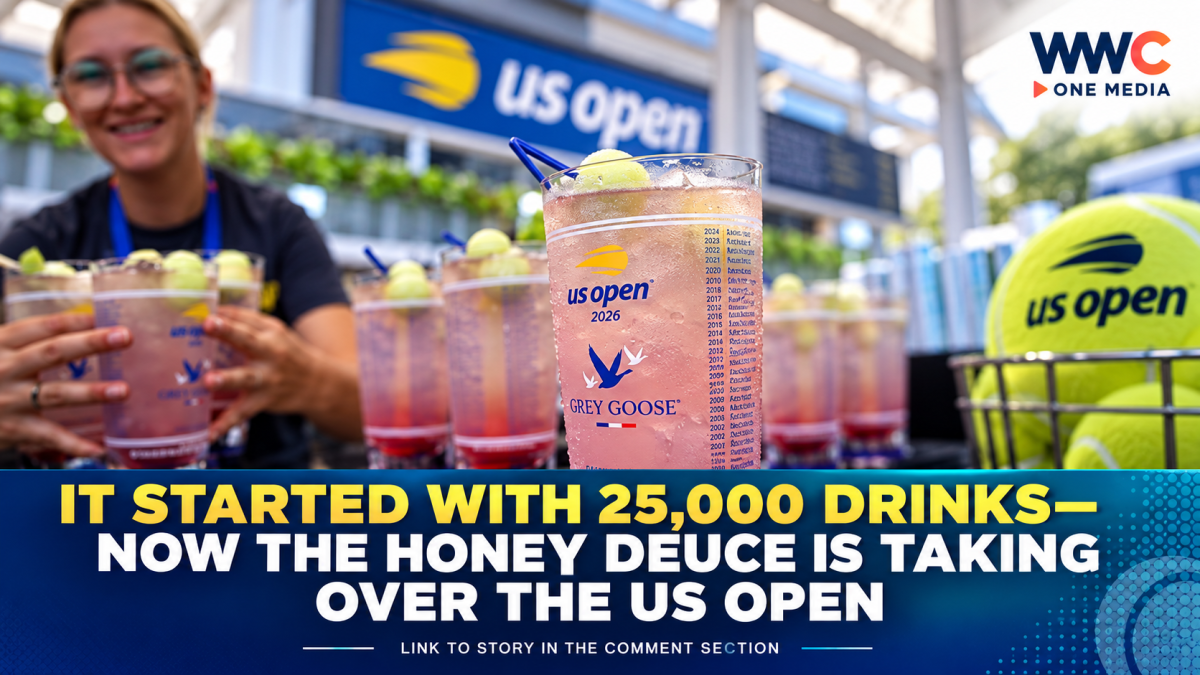
NEW YORK — It may not hit a single ace or win a championship trophy, but one of the biggest attractions at the 2026 US Open is once again stealing the spotlight.
The Honey Deuce, the US Open’s signature cocktail, is celebrating its 20th year as a cultural phenomenon at Flushing Meadows—proving that some of the tournament’s biggest winners are not always found on the tennis court.
What began as a modest run of 25,000 cocktails in 2007 has exploded into a multimillion-dollar tradition. Around 800,000 Honey Deuces were sold during the 2025 tournament, according to Reuters, with the drink now priced at about $23.
From 25,000 Drinks to a US Open Phenomenon
The cocktail was created by restaurateur Nick Mautone and combines vodka, lemonade and raspberry liqueur, topped with three honeydew melon balls designed to resemble tennis balls.
Its success, however, goes far beyond the recipe.
Each Honey Deuce is served in a collectible souvenir cup featuring the names of past US Open champions. Those cups have become prized memorabilia, with fans collecting different editions and some appearing on resale platforms online.
The original concept was partly inspired by another major sporting tradition: the Kentucky Derby’s famous mint julep.
USTA National Tennis Center Chief Operating Officer Danny Zausner recalled seeing Derby fans carrying multiple souvenir glasses—a sign that the drink had become part of the event itself.
That same idea would eventually transform the Honey Deuce into one of the most recognizable drinks in global sports.
The Social Media Effect Changed Everything
When the Honey Deuce debuted in 2007, social media was nowhere near the marketing powerhouse it is today.
Now, the drink has become one of the most photographed items at the US Open.
Tournament organizers accredited around 100 content creators in 2026, including approximately 20 creators focused specifically on food and beverages. That growing creator culture has helped turn the Honey Deuce—and other US Open food offerings—into viral content far beyond the tennis world.
For many visitors, posting the iconic pink drink and collectible cup has become almost as essential as watching a match on Arthur Ashe Stadium.
Millions of Melon Balls Behind the Scenes
The massive demand requires an enormous operation.
Reuters reported that teams prepare between 2.5 million and 3 million honeydew melon balls for the tournament. Hospitality partner Levy handles the large-scale preparation and batching needed to serve the cocktail throughout the US Open grounds.
The scale shows just how far the drink has come since its debut.
In 2007, organizers sold out their initial 25,000-drink run. Nearly two decades later, the Honey Deuce has become an event-defining business, souvenir and social media attraction.
More Than a Cocktail: The Honey Deuce Becomes a Brand
The Honey Deuce’s popularity has expanded beyond the cup itself.
The US Open now offers Honey Deuce-themed merchandise, while media reports show the drink inspiring cocktails, desserts and themed experiences across New York City during the tournament. ESPN also reported that the Honey Deuce has spawned branded merchandise ranging from apparel to accessories and novelty items.
Grey Goose has also attempted to replicate the formula elsewhere. At the Australian Open, the Grey Goose Lemon Ace, introduced in 2025, reportedly sold more than 100,000 units during its first year.
Even at $23, Fans Keep Buying
The Honey Deuce’s rising price has not slowed its popularity.
From luxury suites to outer courts, fans continue lining up for the drink, making it one of the most visible symbols of the modern US Open experience.
And while the tournament’s biggest tennis stars battle for Grand Slam glory, the Honey Deuce has quietly built a legacy of its own.
Twenty years after its debut, the cocktail remains one of the most successful examples of how sports, food, branding and social media can combine to create a cultural phenomenon.
At the US Open, there are plenty of champions.
But this one has been winning for two decades—and it doesn’t even need a racket.
WWC ONE MEDIA J.M.S




Leave a Reply