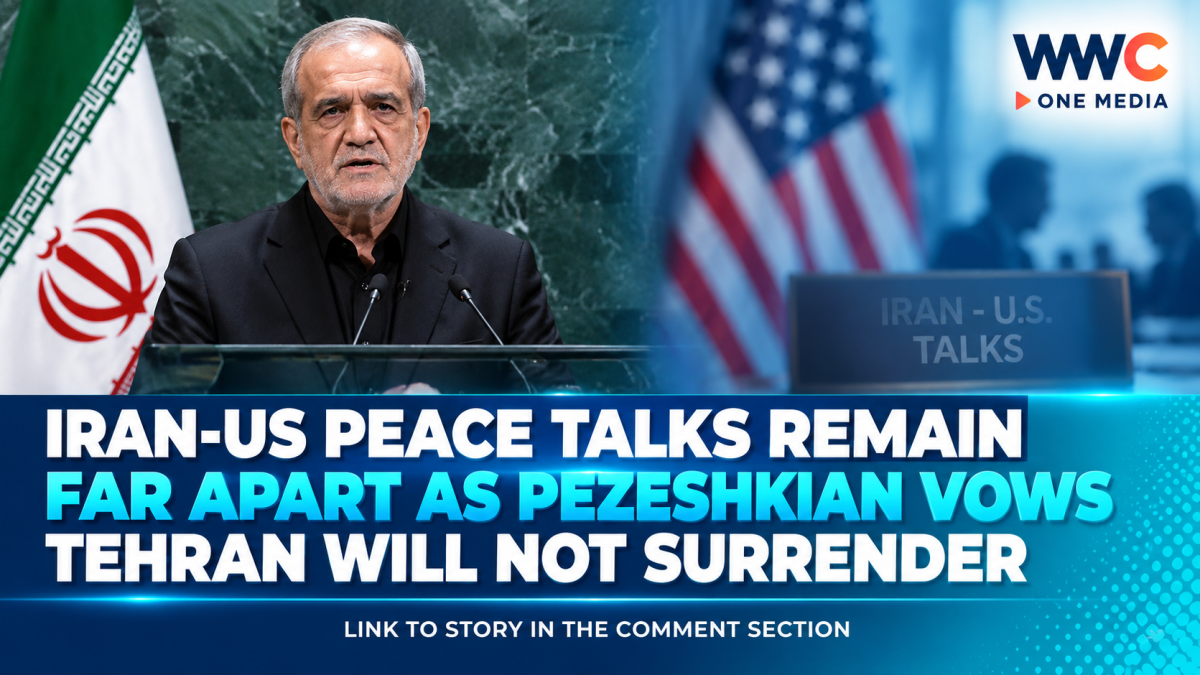
Iran and the United States remain sharply divided over how to end their war, despite renewed diplomatic contacts in New York, as Iranian President Masoud Pezeshkian told the United Nations that Tehran would not surrender to US pressure.
A senior Iranian official said Tehran was reviewing Washington’s response to Iranian proposals, but significant differences remained. The official said diplomacy was continuing, with Iran prioritising the lifting of the US naval blockade on its ports and the reopening of the Strait of Hormuz.
The comments came after the first known indirect US-Iran talks in months. Iranian Foreign Minister Abbas Araqchi and US envoys Steve Witkoff and Jared Kushner communicated through mediators on the sidelines of the UN General Assembly. Iranian officials said the discussions involved conditions including an end to the war, a halt to what Tehran calls US aggression and the release of frozen Iranian assets.
Pezeshkian struck a defiant tone during his UN address, accusing US President Donald Trump of using a “bullying mentality” and insisting that the Iranian people would not bow to pressure. At the same time, he said Iran remained open to negotiations, but rejected what Tehran sees as diplomacy conducted under military threats.
The dispute over the Strait of Hormuz remains one of the central obstacles. Iran has sought greater control over the strategic waterway and has linked its reopening to the removal of the US blockade and reduction of military pressure. Washington, meanwhile, has insisted that the strait remain open to international shipping.
The stakes extend well beyond the two countries. The Strait of Hormuz carried a significant share of global oil and liquefied natural gas shipments before the conflict, and continued disruption has placed pressure on energy markets. Oil prices rose nearly 2% on Wednesday as traders assessed the latest statements from Washington and Tehran.
US Secretary of State Marco Rubio described the latest discussions as significant but cautioned against viewing them as a breakthrough. He said reaching an agreement would require sustained negotiations, while Washington has continued to signal that military options remain available.
For now, the diplomatic channel remains open, but the public positions of both governments show that major obstacles remain. Iran is demanding concrete changes, including an end to the blockade, while the United States continues to press for conditions it considers necessary to end the conflict and prevent Iran from obtaining a nuclear weapon.
With negotiations continuing amid military pressure and disruptions around one of the world’s most important shipping routes, the next moves by Washington and Tehran could determine whether the latest diplomatic opening develops into a broader agreement or another dead end.