
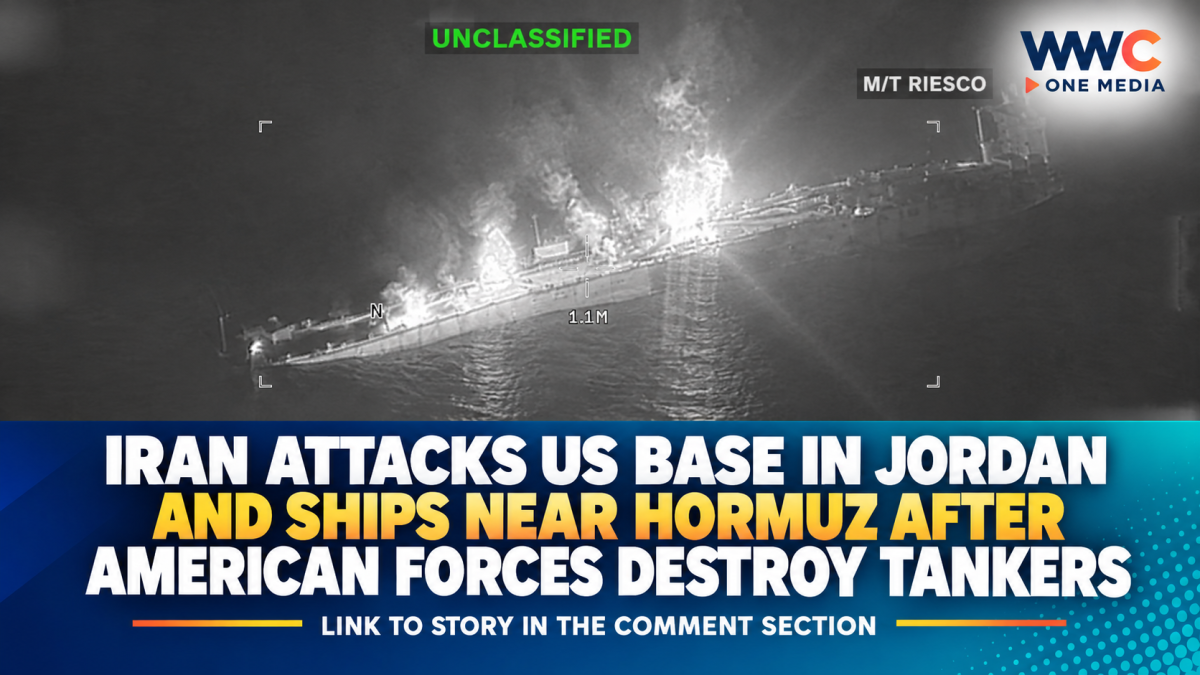
TEHRAN — Iran launched missile attacks on a US military base in Jordan and targeted ships near the Strait of Hormuz after American forces destroyed five Iranian oil tankers, marking a major escalation in the growing conflict between Washington and Tehran.
Iran’s Revolutionary Guard said the attacks were carried out in retaliation for US strikes against Iranian tankers that Washington said were linked to the Guard’s financing network.
The latest exchange has raised fresh fears of a wider regional conflict and further disruption to one of the world’s most important energy shipping routes.
Missiles fired at US base in Jordan
Iran launched ballistic missiles towards a US military base in Jordan, according to reports.
Jordanian forces said they intercepted most of the incoming missiles, with authorities reporting no casualties from the attack.
Iran claimed its strike caused significant damage, but US and Jordanian officials disputed the assessment and said the attack had limited impact.
The incident marked another direct confrontation involving Iranian and American forces as tensions continue to rise across the Middle East.
Five Iranian oil tankers destroyed
The Iranian retaliation came after the US military announced it had destroyed five Iranian oil tankers.
US officials said the vessels were linked to Iran’s Revolutionary Guard and that their crews had been instructed to abandon ship before the strikes were carried out.
The tankers identified in reports included the Kivik, Charminar, Horizon 1, Riesco and Derya.
The destruction of the vessels followed earlier Iranian missile attacks against a US Navy warship, further intensifying the cycle of military retaliation.
Ships targeted near Strait of Hormuz
Iran also launched attacks against vessels operating near the Strait of Hormuz.
The Revolutionary Guard said it had targeted multiple ships, including US vessels and commercial oil tankers, amid heightened tensions over control and access to the strategic waterway.
The Strait of Hormuz is one of the world’s most important maritime corridors for oil and other energy exports.
Any prolonged disruption to shipping through the area could have major consequences for global energy supplies and international trade.
Shipping traffic falls sharply
The escalating security situation has already affected maritime traffic.
Preliminary shipping data showed that only a small number of commodity vessels transited the Strait of Hormuz, well below the recent average.
Ship movements could change as more information becomes available, particularly because some vessels may switch off tracking systems.
Nevertheless, the decline reflects growing concerns among shipping companies and crews about the dangers of travelling through the conflict-hit region.
Oil markets react to rising tensions
The renewed fighting has also sent shockwaves through global energy markets.
Oil prices climbed as traders worried that further attacks could disrupt supplies from the Middle East.
Brent crude rose above US$100 a barrel as the conflict between Iran and the United States intensified and concerns grew over the safety of shipping through the Strait of Hormuz.
Energy markets remain highly sensitive to developments, with further escalation potentially pushing prices even higher.
Houthis widen regional tensions
The conflict has also spread beyond Iran and the United States.
Iran-aligned Houthi forces in Yemen launched drone and missile attacks on Saudi cities, with reports of civilian injuries and damage to oil-related facilities.
The attacks have added another layer of instability to a region already facing rising military tensions and threats to energy infrastructure.
The expanding conflict has increased concerns that more countries and armed groups could become directly involved.
A dangerous cycle of retaliation
The latest attacks underline how quickly the confrontation has intensified.
The recent sequence of events has included:
- Iranian attacks against US targets and vessels
- US strikes against Iranian oil tankers
- Iranian missile attacks on a US base in Jordan
- Attacks against ships near the Strait of Hormuz
- Increased threats to commercial shipping
- Rising oil prices
- Fresh attacks by Iran-aligned Houthi forces
With both sides continuing to respond militarily, fears are growing that the conflict could become even more difficult to contain.
The bottom line
Iran has attacked a US military base in Jordan and targeted ships near the Strait of Hormuz after American forces destroyed five Iranian oil tankers.
Jordan said it intercepted most of the missiles aimed at its territory, while Iran claimed its attacks caused significant damage.
The escalating confrontation has also disrupted shipping through the Strait of Hormuz and pushed oil prices higher as markets brace for possible supply shortages.
With military strikes now affecting bases, tankers, commercial vessels and energy infrastructure across the region, the conflict is raising fresh fears of a broader Middle East crisis.
WWC ONE MEDIA J.M.D




Leave a Reply