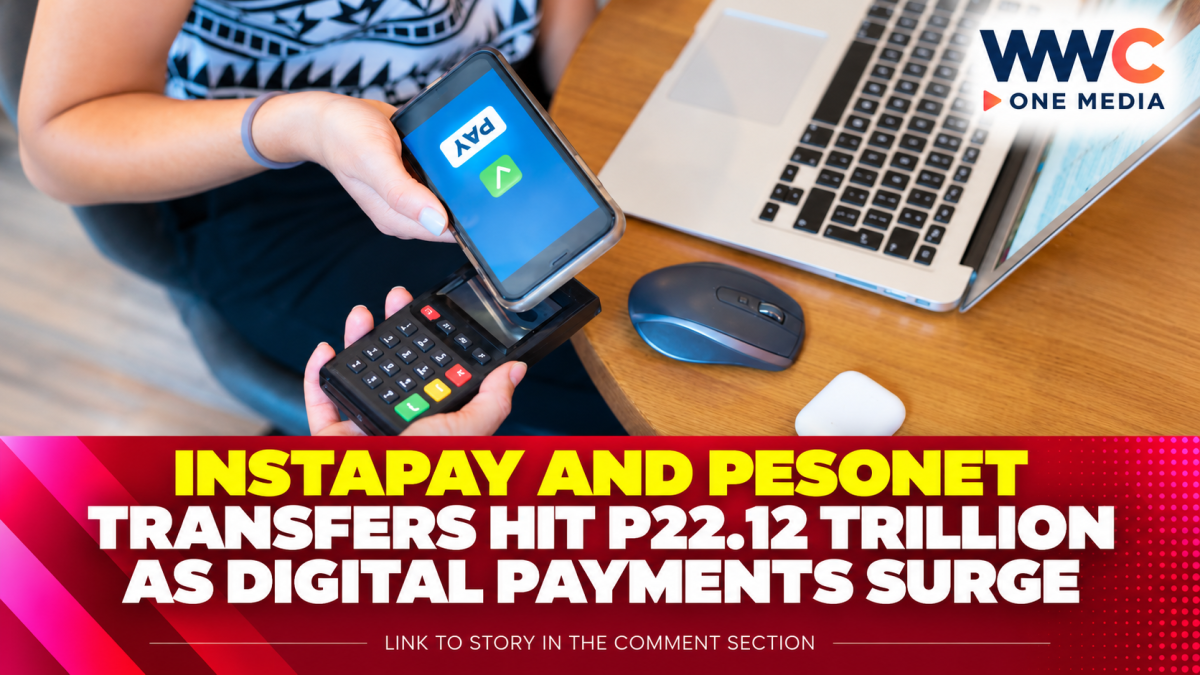
Digital payments in the Philippines continued to accelerate in 2026, with money transferred through InstaPay and PESONet reaching P22.12 trillion in the first eight months of the year as more Filipinos shift toward electronic transactions.
Combined transfers through the two automated clearing houses jumped 44.72% from P15.29 trillion during the same period in 2025, according to Bangko Sentral ng Pilipinas data. Transaction volume also more than doubled, reaching 5.77 billion from 2.38 billion a year earlier.
InstaPay accounted for P11.08 trillion of the total, up 59.9% from P6.93 trillion a year earlier. The instant-payment system also recorded 5.68 billion transactions during the January-to-August period, compared with 2.31 billion in the same period last year.
PESONet, meanwhile, handled P11.05 trillion worth of transfers through 87.1 million transactions. While its transaction volume is far smaller than InstaPay’s, PESONet is designed for larger-value electronic fund transfers that do not require immediate settlement.
The surge comes as banks and other financial institutions reduce or eliminate fees for digital fund transfers. The BSP has encouraged financial institutions to adopt fair and reasonable pricing for electronic fund transfers, with several major banks subsequently cutting or removing InstaPay and PESONet charges.
Lower fees can encourage customers to move more transactions from cash and over-the-counter channels to digital platforms. The BSP has also said that greater participation can create network effects, with a larger number of users making electronic payments more useful while higher transaction volumes can help lower the average cost of operating the payment infrastructure.
The growth was particularly strong in August. InstaPay and PESONet processed a combined P2.96 trillion during the month across about 791.2 million transactions. InstaPay accounted for P1.57 trillion from 780.6 million transfers, while PESONet handled P1.39 trillion through 10.7 million transactions.
The figures highlight the rapidly changing nature of the Philippine payments system. The BSP’s National Retail Payment System is designed to promote safe, reliable, efficient and affordable electronic payments, with InstaPay and PESONet serving as key components of the country’s retail payment infrastructure.
The rapid expansion also comes with new challenges. As more money moves instantly across banks and digital platforms, financial institutions face greater pressure to prevent scams, detect fraudulent transactions and identify money-mule accounts before funds can be moved through multiple channels.
The latest numbers show that digital payments are no longer a niche alternative to cash. With transaction values and volumes continuing to climb, the next stage of the Philippines’ digital-payment expansion will increasingly depend on keeping transfers affordable while strengthening security, fraud detection and the reliability of the systems handling billions of transactions.