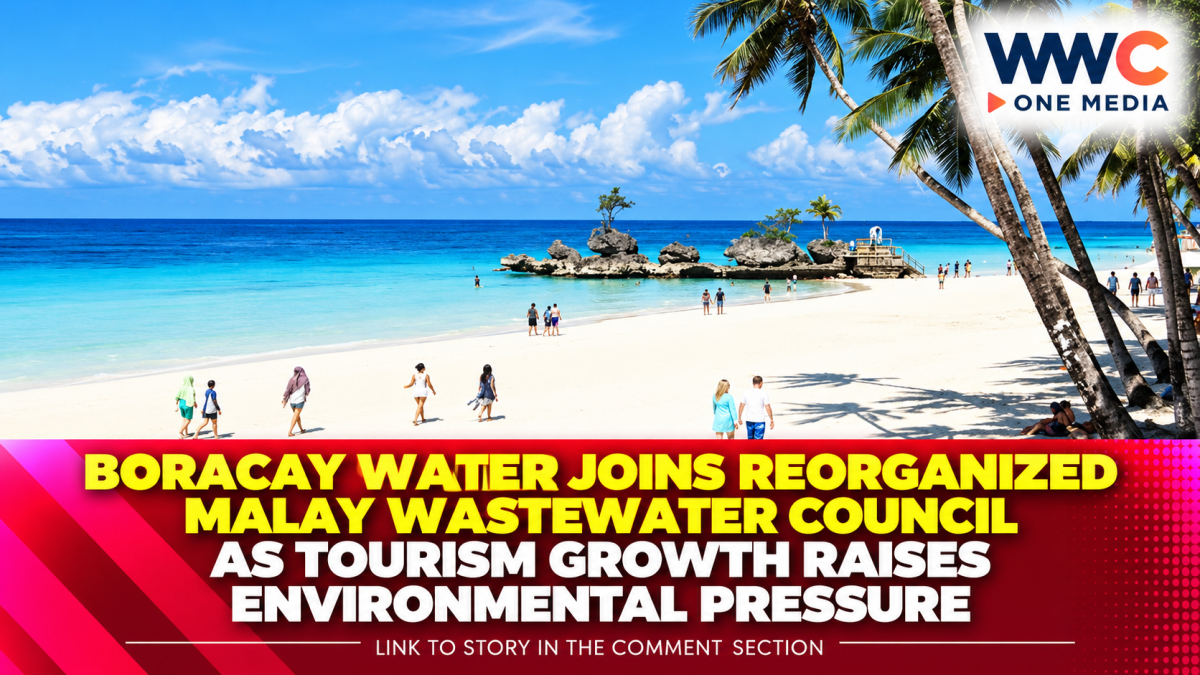
Boracay Water has joined the newly reorganized Wastewater Management Council of Malay, Aklan, as local authorities strengthen efforts to protect the island’s water resources amid continued population growth and tourism activity.
The council was reorganized through Executive Order No. 22, Series of 2026, signed by Malay Mayor Frolibar Bautista. It brings together representatives from government agencies, utility providers, barangays and environmental stakeholders to improve wastewater governance, environmental protection and public health across Boracay.
The Wastewater Management Council will serve as the municipality’s main coordinating body for wastewater-related concerns. Its responsibilities include monitoring sewerage connections, inspecting septic systems, checking compliance with wastewater effluent standards and enforcing Municipal Ordinance No. 550, Series of 2024.
The reorganization comes as Boracay continues to deal with the environmental pressures associated with a growing population and a large tourism industry. Proper wastewater treatment and disposal remain critical to protecting the island’s coastal waters and maintaining its status as one of the Philippines’ major tourism destinations.
Boracay Water, a Manila Water Non-East Zone operating unit and one of the island’s key water and wastewater service providers, said it would continue supporting Malay’s environmental objectives through investments in sewerage infrastructure and wastewater treatment facilities.
As of the first half of 2026, Boracay Water had 3,079 sewer service connections across the island, including 161 new connections added during the period. Its sewerage service covered 67.52% of Boracay’s population, while its sewer network extended across 67% of its service area.
Additional efforts include improvements to wastewater treatment facilities and programs aimed at expanding sewer connections. The company has also been working to ensure that wastewater from homes and establishments undergoes proper treatment before being discharged, supporting the broader objectives of the Philippine Clean Water Act.
The strengthened council is expected to give the local government and other stakeholders a more coordinated mechanism for identifying wastewater-management problems and addressing establishments or communities that fail to comply with environmental requirements.
For Boracay, the initiative highlights an issue that goes beyond tourism arrivals and infrastructure: managing the environmental impact of continued development. As visitor activity and the island’s population evolve, wastewater capacity, sewerage coverage and enforcement will remain important factors in protecting its beaches, marine environment and long-term tourism industry.
The reorganized council now faces the task of turning the new framework into sustained inspections, stronger compliance and wider wastewater-service coverage across Malay and Boracay.