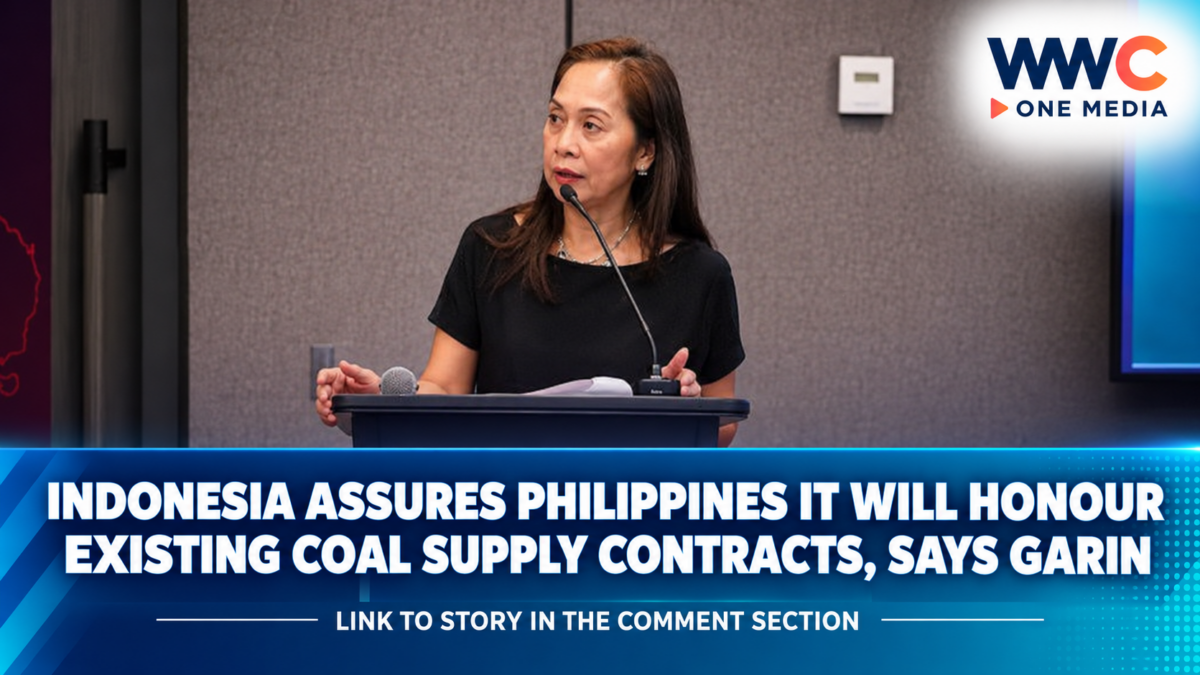
Indonesia has assured the Philippines that it will honour existing coal supply agreements, easing concerns over possible disruptions to fuel deliveries that could affect the country’s power generation and electricity costs.
Indonesia Assures Philippines It Will Honour Existing Coal Supply Contracts
Indonesia has assured the Philippines that it will honour existing coal supply agreements despite changes to its export policies, easing immediate concerns over possible disruptions to the fuel used by the country’s power plants.
Energy Secretary Sharon Garin said the assurance was given during discussions with Indonesian officials on the sidelines of the Singapore International Energy Week.
Garin explained that Indonesia’s planned changes involve reorganising and consolidating its export arrangements rather than deliberately restricting shipments to foreign buyers.
She said Indonesian officials had assured Manila that long-standing contracts would be respected. The Philippines also requested that the changes should not result in higher coal prices for Filipino buyers.
The development is important for the country’s energy sector because Indonesia supplies the overwhelming majority of the coal imported by the Philippines.
Philippines Depends Heavily on Indonesian Coal
Garin said approximately 95 percent of the Philippines’ imported coal comes from Indonesia, making the Southeast Asian neighbour a critical supplier for local power generators.
Coal remains a major component of the country’s electricity supply. Data cited during the discussions showed that coal accounted for 51.7 percent of electricity generation in September 2026.
This heavy dependence exposes the Philippines to potential supply disruptions, changes in export regulations and international price fluctuations.
Although Indonesia has provided assurances, Garin acknowledged that the government cannot rely on a single supplier indefinitely.
She said unexpected circumstances, including force majeure events, could affect deliveries even when long-term supply agreements are in place.
The government is therefore exploring ways to diversify its sources and strengthen the country’s ability to maintain stable electricity generation.
US, Russia and Australia Considered as Alternative Suppliers
The Department of Energy is exploring potential coal supplies from other countries, including the United States, Russia and Australia.
These discussions are part of a broader effort to reduce the country’s dependence on Indonesian imports and give power producers more options if supply conditions change.
Garin also revealed that the government is considering establishing a coal-blending facility in the Philippines.
The proposed facility would allow locally mined coal to be mixed with imported coal to achieve the quality and specifications required by existing power plants.
Much of the country’s domestic coal has limitations that prevent some facilities from using it efficiently on its own. Blending could help address those technical restrictions while creating additional demand for local production.
The Philippine National Oil Company-Exploration Corp. may potentially participate in the project alongside foreign companies or industry partners.
Mindanao is among the locations being considered, although discussions remain preliminary and no final investment arrangement has been announced.
Indonesia’s Export Policy Changes Raise Questions
Indonesia is reorganising its commodity export system to improve oversight, transparency and monitoring of transactions involving major natural resources.
The changes are intended to strengthen controls and address potential irregularities, including under-invoicing and transfer-pricing practices.
However, the restructuring has raised questions among international buyers and industries that depend on Indonesian supplies.
The Philippines is seeking clarity to ensure that existing commercial arrangements remain protected and that changes to export procedures do not unnecessarily increase costs.
Garin said the government had received assurances that the adjustments were primarily intended to improve Indonesia’s internal regulatory system rather than disrupt established trade relationships.
The concern is particularly significant because coal supply interruptions could affect power generation and potentially place additional pressure on electricity prices.
Energy Security Remains a Major Challenge
The latest discussions highlight the Philippines’ continuing challenge of securing reliable and affordable fuel for its electricity sector.
While Indonesia’s assurance provides some reassurance to local power producers, the country’s dependence on imported coal remains a significant vulnerability.
Diversifying suppliers, making better use of domestic coal and developing blending facilities could help reduce that exposure over time.
For Filipino households and businesses, the issue goes beyond international trade. Coal availability and prices can influence the cost of electricity, particularly because coal-fired power plants remain a major source of generation.
The government’s next challenge will be turning its diversification plans into concrete projects and supply arrangements before another disruption puts pressure on the country’s energy security.