
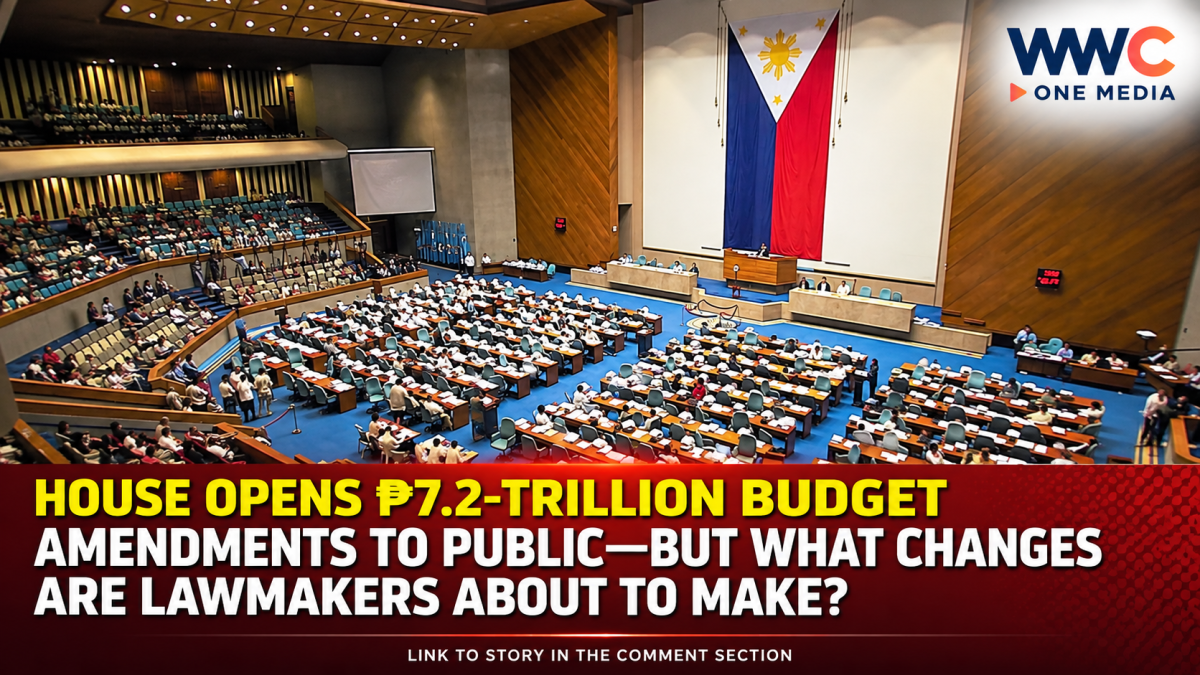
MANILA, Philippines — The House of Representatives is opening its discussions on proposed amendments to the ₱7.2-trillion 2027 national budget to public scrutiny, putting lawmakers’ planned changes to the government’s spending program under a brighter spotlight.
The move comes as the House begins its next stage of deliberations on the proposed 2027 General Appropriations Bill, with lawmakers preparing to examine and debate changes to the spending plan before it advances toward final approval.
The Budget Amendments Review Subcommittee (BARC) is expected to take up proposed amendments to House Bill No. 10858, the measure containing the proposed national budget, giving the public greater visibility into how lawmakers seek to modify the government’s original spending proposals.
The development is significant because the House has faced calls from civil society organizations and budget watchdogs for greater transparency and a more meaningful role for the public in the budget process.
Earlier in the budget cycle, several civil society groups complained that they were being sidelined from House budget discussions and that procedures for their participation were unclear.
From closed-door concerns to greater public scrutiny
The House’s latest move follows commitments from congressional leaders to make the 2027 budget process more transparent.
House Appropriations Committee Chair Rep. Mikaela Angela Suansing has pushed for reforms that would allow citizens to see proposed budget amendments, how lawmakers deliberate on them and which changes ultimately make it into the spending bill.
The House has also conducted a People’s Budget Review, where civil society organizations were invited to raise concerns and recommendations regarding the proposed national budget. On September 8, representatives from 13 civil society organizations participated in the latest cycle of the review.
The initiative represents an effort to move public participation beyond simply watching congressional hearings and toward allowing organizations to raise issues concerning government spending priorities.
The ₱7.2-trillion question
The proposed 2027 national budget totals approximately ₱7.2 trillion, making it one of the most consequential spending plans to pass through Congress.
The proposed budget was submitted to the House in August after the executive branch finalized the National Expenditure Program. The House subsequently conducted agency-by-agency hearings in which departments and government agencies defended their proposed allocations.
Those committee-level deliberations have now been completed, clearing the way for plenary discussions.
According to the Philippine News Agency, the House remains on track to approve the General Appropriations Bill on third reading by October 9, after which it is expected to be transmitted to the Senate.
Philstar likewise reported that plenary sponsorship and debates on the 2027 budget are scheduled to begin this week, with the House targeting completion of the plenary stage before the congressional recess.
Infrastructure spending already drawing attention
One of the areas under scrutiny is infrastructure.
The House is considering whether to increase the proposed ₱643.95-billion allocation for the Department of Public Works and Highways (DPWH), with lawmakers arguing that additional infrastructure spending could support economic growth, job creation and development projects.
That means the amendment process could have major implications for roads, bridges and other government infrastructure projects, as well as the communities and agencies that depend on those allocations.
Why transparency matters
The latest move also comes amid renewed public attention on how congressional amendments can affect the final national budget.
Budget watchdogs and civil society groups have previously questioned the transparency of congressional budget modifications, particularly when significant changes are made between the executive’s proposed spending plan and the final General Appropriations Act.
The House has sought to address those concerns through livestreamed hearings, the Budget Amendments Review Subcommittee and the People’s Budget Review.
House Speaker Faustino “Bojie” Dy III has also pledged that the chamber will scrutinize the proposed ₱7.2-trillion budget to ensure that public funds are properly allocated and translated into programs that benefit Filipinos.
The Department of Budget and Management has separately expressed support for making future bicameral budget deliberations more open, including livestreaming the process.
The bigger issue: What gets changed?
Opening the discussions to the public is only one part of the transparency equation.
The bigger question now is which amendments lawmakers will propose, which ones will survive the congressional process and how those changes will affect the final allocation of taxpayers’ money.
With the 2027 budget expected to be finalized before the end of the year, every proposed addition, reduction or realignment could attract scrutiny from lawmakers, watchdogs, civil society organizations and the public.
For Filipinos, the stakes are straightforward: the ₱7.2 trillion being debated is public money—and the amendments now being discussed will help determine where that money ultimately goes.
And as the House moves deeper into plenary debates, the attention will shift from whether the process is open to the public to the question that matters most:
What will lawmakers actually change?




Leave a Reply