
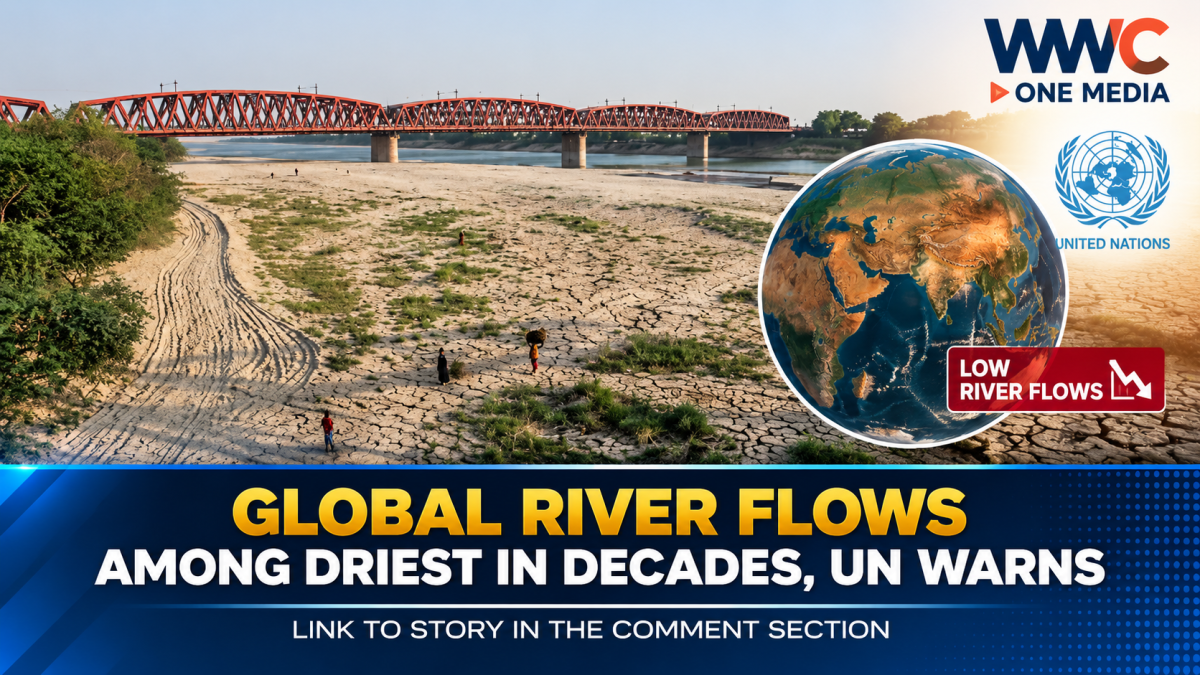
Rivers around the world experienced one of their driest years in more than three decades in 2025, according to the World Meteorological Organization (WMO), raising concerns about the long-term availability of freshwater.
The WMO’s latest State of Global Water Resources report found that more than a third of the world’s river basins recorded below-normal flows last year, making 2025 one of the driest years for global river discharge in 35 years of monitoring.
The findings are part of a broader decline in freshwater stored across the Earth’s land surface. Water held in groundwater, lakes, soil, vegetation, snow and ice has been declining for about a decade.
WMO Secretary-General Celeste Saulo warned that these reserves normally act as a buffer during periods of drought, but that the long-term decline means the world’s freshwater “savings account” is being depleted.
The report also found that river conditions have become increasingly unpredictable. For the seventh consecutive year, the proportion of river basins experiencing normal conditions remained below the long-term average, with some regions facing severe water shortages while others experienced excessive rainfall and flooding.
Groundwater is also showing signs of growing stress. Almost two-thirds of monitored wells around the world recorded conditions outside their historical range in 2025, highlighting changes in underground water supplies that can take years to reverse.
Glaciers continued to lose mass across all major regions for the fourth consecutive year. Their continued retreat poses longer-term risks because glaciers provide an important source of freshwater for millions of people, particularly during dry periods.
The WMO said Asia and Africa accounted for at least half of all recorded water-related extreme events and more than 80 per cent of associated deaths over the past five years.
The increasingly uneven distribution of water is also making planning more difficult for governments, farmers, communities and industries. Some areas are facing prolonged shortages, while others are dealing with increasingly severe floods.
Scientists say the changing pattern reflects a more erratic global water cycle, with climate-related changes contributing to greater swings between extreme wet and dry conditions.
The WMO warned that declining water storage could make future droughts more difficult to manage because fewer reserves would be available to compensate for periods of low rainfall.
The report highlights the importance of improving monitoring, sharing water data and strengthening management of freshwater resources as countries prepare for greater variability in water availability.



Leave a Reply