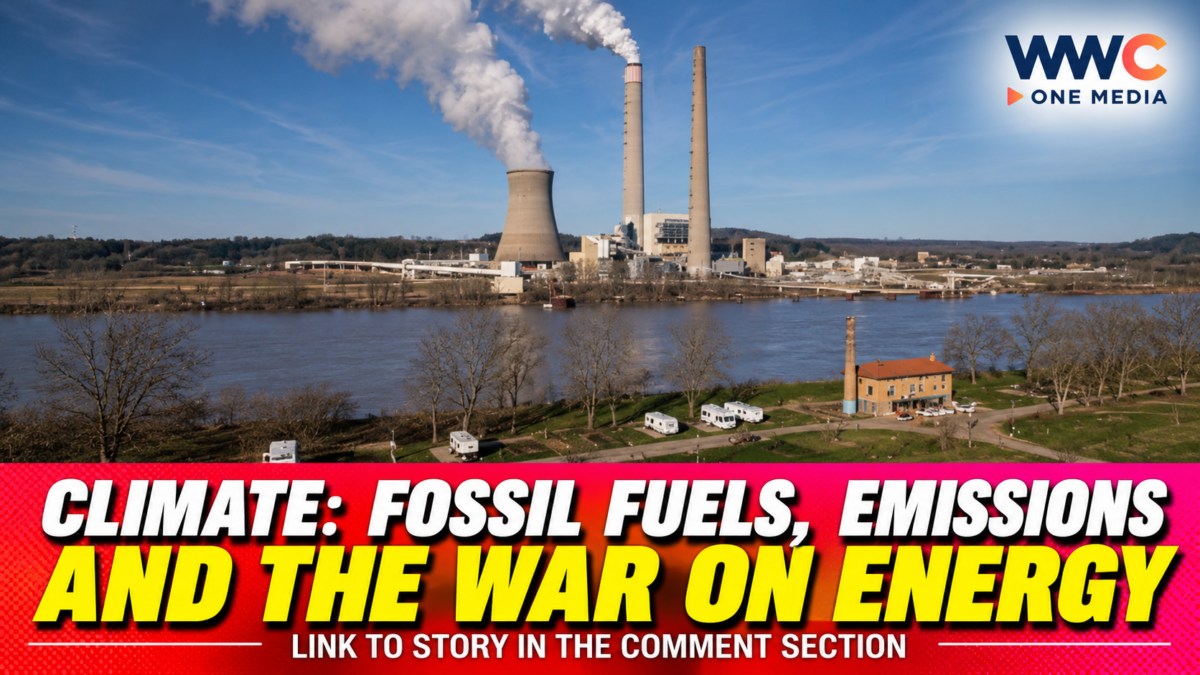
Global Fossil-Fuel Emissions Set to Fall in 2026 as Iran War Triggers Oil Shock — But Why Is Total Carbon Pollution Still Rising?
ANTALYA, Türkiye — The world may be approaching a rare turning point in fossil-fuel pollution, but scientists say the apparent progress comes with a troubling warning: the decline is being driven partly by an international energy crisis, while total global carbon dioxide emissions are still expected to reach a record high.
According to the latest Global Carbon Budget released by an international research team, carbon dioxide emissions from fossil fuels and cement production are projected to decrease by approximately 0.4% in 2026, reaching around 38.2 billion metric tonnes.
The forecast marks a significant interruption in years of rising fossil-fuel emissions. But researchers caution against celebrating too soon.
The disruption caused by the war involving Iran and the effective closure of the Strait of Hormuz have pushed energy prices higher, reducing oil consumption in several markets. At the same time, expanding renewable energy and electric vehicle adoption are helping limit emissions growth.
The bigger problem is that emissions from deforestation, peat fires and other land-use changes are expected to offset the improvement.
The result is a climate contradiction: fossil-fuel emissions could decline while the world’s overall carbon pollution continues climbing.
Iran War and Strait of Hormuz Disruption Drive Oil Emissions Lower
One of the biggest factors behind the projected decline is the disruption of global energy supplies following the Iran conflict.
The Strait of Hormuz is a critical shipping passage connecting the Persian Gulf with international markets. Disruptions to petroleum shipments through the route have placed pressure on oil supplies and contributed to higher energy prices.
For households, businesses and industries, expensive fuel creates an immediate incentive to reduce consumption, improve efficiency or consider alternatives.
The Global Carbon Budget estimates that oil-related CO₂ emissions will decline by approximately 1.9% in 2026. Natural gas emissions are projected to decrease by 0.3%, while coal emissions are expected to increase by 0.6%.
That difference matters.
Researchers say the sudden drop in oil emissions is consistent with an energy-price shock rather than a gradual, permanent transition away from fossil fuels.
In other words, the world is not necessarily reducing its dependence on oil because governments have successfully completed their climate strategies. Some of the reduction is happening because fuel has become more expensive and harder to obtain.
Carbon Brief’s analysis, written by climate researchers Zeke Hausfather and Pierre Friedlingstein, likewise identifies the Iran-related energy shock as a major factor behind the forecast.
The Guardian has also reported that higher oil and gas prices are encouraging consumers to look beyond conventional fossil fuels, including toward electric vehicles and renewable energy.
But if energy markets stabilize and prices fall, some of the temporary reductions could disappear.
Renewable Energy Is Helping — But It Has Not Solved the Problem
Despite the geopolitical crisis, the expansion of clean energy is another important part of the story.
Solar and wind power are increasingly supplying electricity that might otherwise have come from coal and natural gas. Electric vehicles are also reducing demand for petroleum-based transportation.
Research published alongside the Global Carbon Budget indicates that growth in solar power, wind power and electric vehicles is now offsetting around two-thirds of the emissions that would otherwise result from rising energy demand.
That is meaningful progress, but it does not mean the global energy transition is complete.
Electricity networks need upgrades to handle more renewable generation. Energy storage must expand to help manage fluctuations in solar and wind production. Governments also need policies and financing that make cleaner technologies accessible to households and businesses.
Without those changes, renewable energy may continue growing without producing the sustained global emissions reductions scientists say are necessary.
The challenge is especially important for developing economies, where energy demand is increasing and investment resources are often limited.
Total Global CO₂ Emissions Could Still Hit a Record High
The most alarming finding is the difference between fossil-fuel emissions and total carbon dioxide emissions.
The Global Carbon Budget projects that emissions from fossil fuels and cement will fall slightly in 2026. However, when emissions associated with land-use changes are included, total global CO₂ emissions are expected to reach approximately 43.3 billion metric tonnes, up from around 42.8 billion metric tonnes in 2025.
The increase is linked primarily to rising land-use emissions.
Deforestation, forest degradation and peat fires release carbon stored in trees, vegetation and soils. These sources can undermine progress made by reducing pollution from energy production.
Carbon Brief reports that peat fires and forest degradation in Southeast Asia are important contributors to the projected increase. The development of a strong El Niño event is also a concern because dry conditions can increase fire risks and weaken the ability of land ecosystems to absorb carbon.
This is why a small decline in fossil-fuel pollution cannot automatically be described as a global climate victory.
The atmosphere responds to the total accumulation of greenhouse gases, not just the performance of one sector in a single year.
China Shows Signs of Progress, While India’s Emissions Continue Rising
The latest projections also reveal significant differences among major economies.
Fossil-fuel emissions are expected to decline in several major regions:
- China: projected decrease of approximately 0.9%.
- United States: projected decrease of approximately 1.3%.
- European Union: projected decrease of approximately 1.5%.
- India: projected increase of approximately 4.4%.
China’s numbers are particularly important because the country accounts for a substantial share of global emissions.
Its rapid expansion of solar power, wind energy, electric vehicles and supporting infrastructure has strengthened hopes that its emissions may be approaching a sustained peak.
However, one year’s projected decline does not establish that a country’s emissions have permanently peaked.
India presents a different challenge. Its growing energy needs and continued reliance on fossil fuels mean its emissions are still projected to rise.
The contrasting trends show why global climate progress cannot depend on a single country’s actions. The transition requires cooperation, investment and practical solutions across both developed and developing economies.
The 1.5°C Climate Target Is Facing Increasing Pressure
The new findings also highlight how little room remains to keep global warming within the Paris Agreement’s 1.5°C goal.
The Global Carbon Budget estimates that the remaining carbon budget for limiting warming to 1.5°C, with a 50% probability, is approximately 150 billion metric tonnes of CO₂ from the beginning of 2027.
At current emission levels, that amount represents less than four years of emissions.
This does not mean the world will suddenly cross the 1.5°C threshold on a specific date. The carbon budget is an estimate of how much additional CO₂ can be emitted while retaining a particular probability of meeting the temperature goal.
But it demonstrates the urgency of the situation.
A small annual decline cannot compensate for decades of accumulated emissions. Scientists say the world needs rapid, sustained reductions rather than temporary drops caused by economic or geopolitical disruptions.
What the Findings Mean for the Philippines
For the Philippines, the global emissions debate is directly connected to energy security, climate adaptation and the cost of protecting vulnerable communities.
The country faces recurring typhoons, extreme rainfall, heat exposure, agricultural disruption and rising risks to coastal areas.
At COP31 in Antalya, the Philippine government is pushing for greater access to climate financing and technology transfer.
The Philippine News Agency reported that the country’s delegation plans to reaffirm its commitment to cut or avoid greenhouse-gas emissions by 75% by 2035. Of that target, 7% is unconditional, while the remaining 68% depends on international support.
The Philippines is also seeking grant-based funding for climate adaptation and easier access to assistance for communities affected by disasters.
The stakes are substantial. According to figures cited by the Department of Environment and Natural Resources, climate inaction across eight key sectors could cost the country approximately ₱645 billion annually in the 2030s.
For Filipino households and businesses, the transition to cleaner energy is therefore not just an environmental issue. It is also connected to electricity costs, energy independence, economic resilience and protection against increasingly severe climate impacts.
WWC One Media has also examined the country’s efforts to address powerful climate pollutants beyond carbon dioxide, including methane and black carbon, in its report on the Philippines’ evolving climate strategy.
COP31 Faces a Bigger Question: Can the World Turn a Temporary Decline Into Lasting Progress?
The latest emissions projections arrive as governments gather for COP31 in Antalya, Türkiye, where pressure is mounting to turn climate promises into measurable action.
The figures offer two very different messages.
On one hand, the expected 0.4% decline in fossil-fuel and cement emissions suggests that the world can reduce pollution even while energy demand remains high. Renewable power, electric vehicles and changes in consumption are contributing to that progress.
On the other hand, the Iran-related energy shock shows how fragile the decline could be if it depends heavily on disrupted supplies and high prices.
Meanwhile, rising emissions from land-use changes threaten to erase the gains, and the remaining carbon budget for the 1.5°C goal is shrinking.
The real test will come when oil markets recover and geopolitical pressure eases.
Will governments continue investing in renewable energy, electric transportation, stronger power grids and forest protection? Or will lower fuel prices encourage another return to fossil-fuel consumption?
The world may be witnessing a rare decline in fossil-fuel emissions in 2026. But unless that decline becomes a permanent transformation of the global energy system, the apparent progress could prove temporary.
The biggest question is no longer whether emissions can fall for one year. It is whether the world can keep them falling before the opportunity to limit the worst impacts of climate change slips away.