
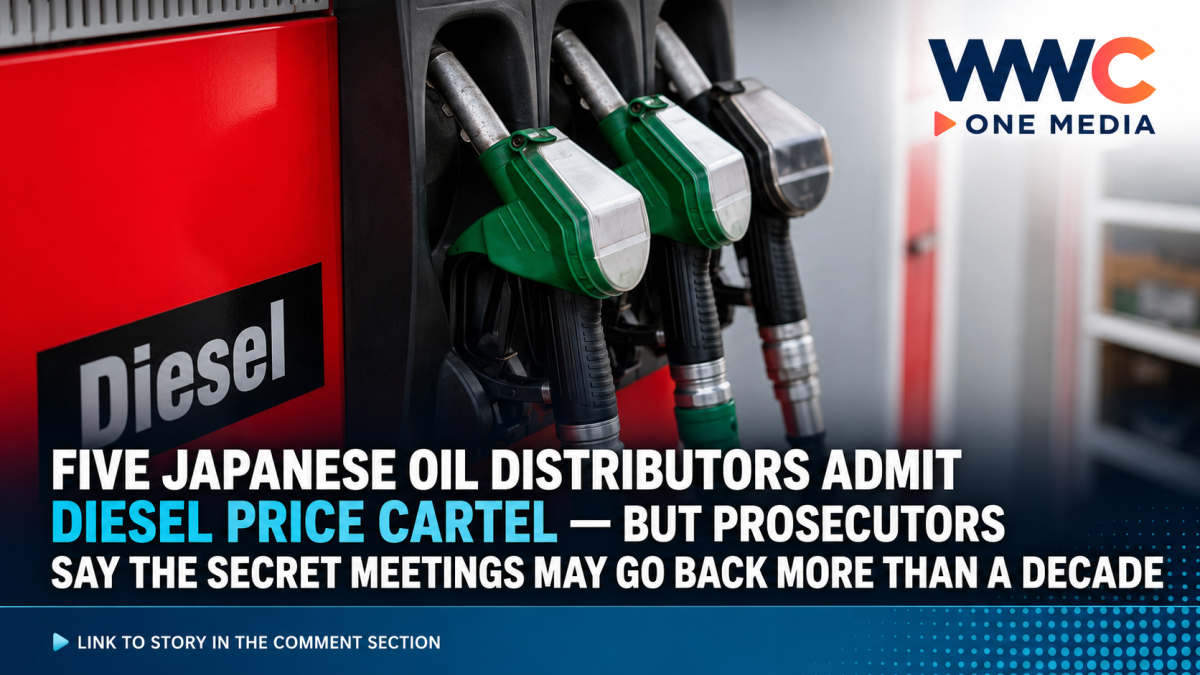
TOKYO — Five major Japanese oil distributors have admitted the charges against them in a diesel price-fixing case, but prosecutors say the conduct uncovered in court may be part of a much longer pattern of industry coordination stretching back more than a decade.
At their first hearing at the Tokyo District Court on Thursday, September 3, East Japan Usami, ENEOS Wing, Enex Fleet, Kitaseki and Kyoei Sekiyu all acknowledged the charges accusing them of violating Japan’s Antimonopoly Act by coordinating diesel prices for corporate customers. No individual executives or employees have been indicted in the case.
The companies are accused of coordinating prices for diesel sold mainly to transportation and other business customers whose negotiations were handled in Tokyo.
According to the indictment and Japan’s Fair Trade Commission, representatives of the companies met at restaurants in Tokyo during October, November and December 2024 and agreed on pricing targets designed to limit competition.
In October 2024, the companies allegedly agreed to aim for a ¥2-per-liter increase from the previous month. A month later, they sought to maintain existing prices and limit reductions. In December, they allegedly targeted another increase of ¥2.50 per liter, according to the JFTC’s account of the case.
But those three months may only represent the period prosecutors chose to charge.
Prosecutors Say Meetings Went Back Years
During opening statements on Thursday, prosecutors described what they said was a longstanding system of information-sharing within the fuel distribution industry.
According to prosecutors, regional gatherings known as “F-kai” had been taking place since around November 2012 or earlier, with participants exchanging information about average selling prices and negotiations with customers.
In the Tokyo metropolitan area, sales representatives from eight companies — including the five now on trial — allegedly began holding monthly meetings called “Chuo-kai” in private rooms at restaurants from October 2019.
TV Asahi reported prosecutors told the court the private rooms were used in part to avoid attracting attention and that discussions repeatedly focused on increases in diesel selling prices.
Prosecutors also alleged companies that sold diesel below agreed levels could face requests from the other participants to correct their pricing.
Perhaps most striking were statements attributed to company executives and sales staff and read during the court proceedings.
One person reportedly said the coordination was viewed as necessary when dealing with customers possessing strong bargaining power. Another said people inside the industry had become desensitized because the practice had become commonplace, according to Jiji Press reporting carried by The Japan Times and Nippon.com.
Those statements are significant because they suggest prosecutors are portraying the charged conduct not simply as three isolated monthly agreements, but as activity occurring against a much older culture of price coordination.
A Market Worth More Than ¥45 Billion
The Fair Trade Commission has treated the case as particularly serious.
The watchdog said the relevant diesel market exceeded ¥45 billion during the October-to-December 2024 period alone. That figure represents the size of the affected market — not a finding that consumers were overcharged by ¥45 billion or that the defendants made ¥45 billion in illegal profits.
The JFTC has also argued that price coordination in diesel can have consequences beyond fuel suppliers.
Because trucking and logistics businesses depend heavily on diesel, artificially restricting price competition can raise transportation costs, which may eventually contribute to higher prices for goods moving through the economy, the regulator said.
That concern has become even more sensitive as Japan faces broader pressure from elevated energy costs. The government has recently continued measures intended to hold regular gasoline prices around ¥170 per liter amid instability in global oil markets.
However, the cartel case concerns corporate diesel contracts negotiated in Tokyo, not nationwide retail gasoline prices, and the two issues should not be conflated.
How Authorities Built the Case
The Fair Trade Commission formally filed a criminal accusation against the five companies on April 17, saying investigators had found grounds to believe the Antimonopoly Act had been violated.
Tokyo prosecutors subsequently indicted the companies.
Three other companies investigated in connection with the matter were not prosecuted under Japan’s cartel leniency system. The Japan Times reported that Tokyo-based Taiyo Koyu was among them and was the company that first voluntarily reported the conduct to authorities.
That program is designed to encourage cartel participants to expose anticompetitive arrangements by offering favorable treatment to companies that come forward and cooperate.
The case has already prompted internal changes at some of the businesses involved.
ENEOS Wing said after its April indictment that it was strengthening governance and compliance procedures, establishing a dedicated risk-management unit and increasing training and internal controls. The company also apologized to customers and business partners.
Kitaseki similarly said it regarded the indictment seriously and had moved to strengthen its corporate governance and compliance framework.
Why the September 3 Hearing Matters
Thursday’s hearing substantially changes the posture of the case because all five corporate defendants have now accepted the allegations contained in the indictment.
What remains especially important is how the court evaluates the broader evidence presented by prosecutors — including claims that organized price discussions existed well before the specific October-to-December 2024 period covered by the charges.
The immediate criminal case centers on agreements made during those three months.
But the bigger question now facing Japan’s fuel industry is whether the conduct exposed in Tokyo represented an isolated cartel among several distributors — or the visible portion of a pricing culture prosecutors say had been developing for years.
That is the part of the story the trial may reveal next.
WWC ONE MEDIA MJE



Leave a Reply