
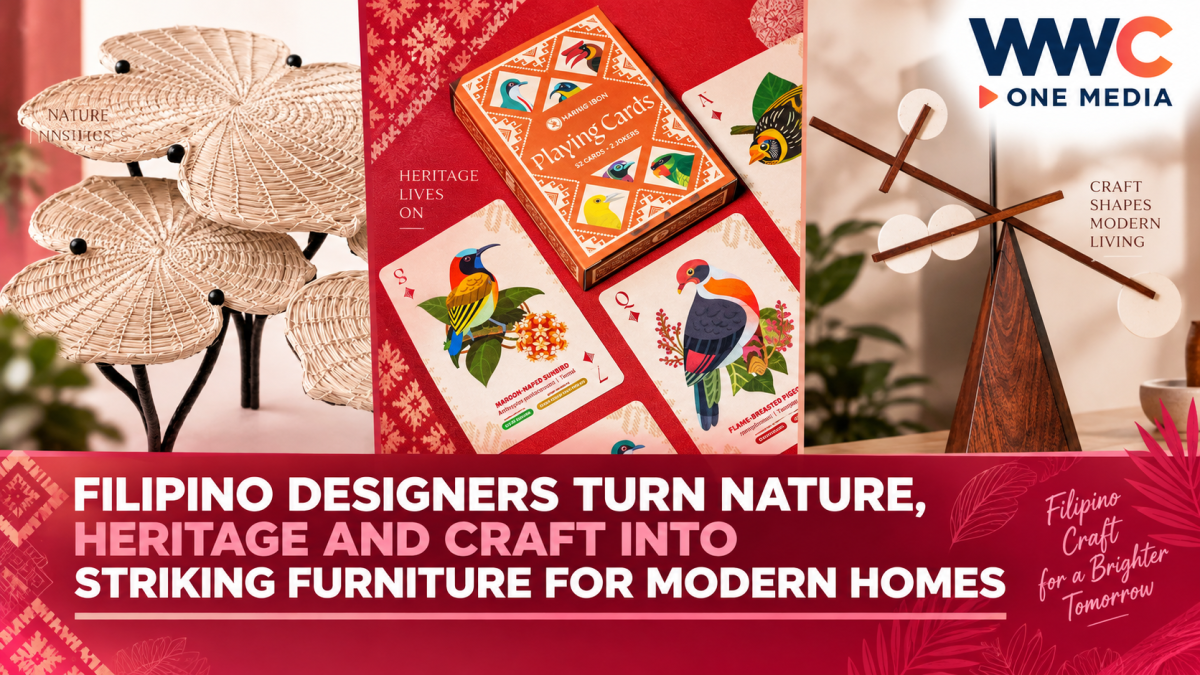
MANILA, Philippines — A new wave of Filipino furniture and product designers is bringing together natural materials, cultural memory and contemporary craftsmanship, creating pieces that blur the line between functional objects and works of art.
From coffee tables inspired by the sampaguita to lamps made from pineapple leaf fibre and sculptural chairs crafted from industrial materials, the latest selections highlight the diversity and creativity of Philippine design.
The common thread is a strong connection to nature, heritage, experimentation and Filipino identity.
Coffee Tables Inspired by the Sampaguita
Designer Deya Tsyna’s Ning-ning White Coffee Tables take inspiration from the sampaguita, the Philippines’ national flower and a symbol associated with humility, grace and devotion.
The design also draws meaning from the phrase “Sumpa kita,” or “I promise you,” transforming the idea into a more personal message of self-compassion and reflection.
Rather than serving as a purely practical household object, the tables are designed to bring cultural symbolism into everyday interiors.
Furniture Meets Sculpture in Jorge Yulo’s Sintesi Collection
Architect and designer Jorge Yulo explores the relationship between contrasting materials through his Sintesi collection.
The sculptural pieces combine brass and steel, deliberately allowing the different materials to remain visually distinct while creating a balanced composition.
The collection first appeared at Maison & Objet 2025 in Paris and has since expanded to include additional table designs.
The result sits somewhere between furniture and sculpture, reflecting a growing trend among Filipino designers toward more experimental and artistic forms.
A Serving Tray Inspired by Receding Tides
Uzel Alconera’s Ebb Tray transforms the movement of water into a sculptural serving piece.
The design uses flowing, repeated bands to suggest the rhythm of receding tides. Its layered structure creates depth and changing visual effects as light moves across the surface.
The piece demonstrates how natural landscapes can inspire functional objects without relying on overly decorative details.
Here, movement and repetition become part of the design itself.
Minimalism Takes Shape in the 123 Easy Chair
Designer Lilianna Manahan takes a minimalist approach with the 123 Easy Chair.
The chair is constructed from just three main parts, challenging the idea of how simple a piece of seating can become while remaining functional and structurally stable.
A customised metal mesh incorporates a weaving-inspired technique, giving warmth and visual movement to an otherwise industrial material.
The design shows how Filipino furniture makers are finding new ways to combine simplicity with craftsmanship.
Pineapple Leaves Become Sculptural Lighting
One of the most distinctive pieces in the collection is the Kabu Lamp by Jasser Aguila.
Inspired by the organic forms of fungi, the lamps are made using piña felt fibre, an innovative material created from pineapple leaves.
The fibre is layered by hand to build the lamp’s form and texture, while carefully treated edges create subtle variations in colour and character.
The design gives new life to an agricultural byproduct while presenting it as a contemporary lighting object.
It is an example of how Filipino designers are transforming familiar local materials into modern design pieces.
Stainless Steel Takes on a Softer Form
Belgian-based Filipino designer Racso Jugarap brings movement to stainless steel through his ribbon-like sculptural designs.
His pieces use layered metal bands that unfold into open forms suitable for displaying objects such as fruit or bread.
The construction allows light and air to pass through while creating curves that appear to capture motion.
Available in finishes including matte black and warm brass, the designs show how rigid industrial materials can be transformed into objects with a more fluid and expressive appearance.
Modular Furniture Encourages Play and Personalisation
The Totem Stacking Table from Bruce and Company Fossilstone Furniture takes a modular approach.
The sculptural table combines different geometric forms made with fossilstone inlay and arranged along a stainless steel rod.
Users can rearrange the individual components, allowing the final composition to change depending on personal preference.
The design balances natural stone textures with a more contemporary, interactive approach to furniture.
Reclaimed Wood Finds New Life
E-Lou Studio’s Tree in Motion, created by Edward Sibunga, continues an exploration of reclaimed materials.
The piece uses wood offcuts from the production process and transforms them into a dynamic sculptural form.
Inspired by the movement of mobile sculptures, the reclaimed fragments are carefully balanced so they can shift and settle naturally.
The concept builds on the designer’s earlier interest in finding new uses for woodworking waste.
Instead of treating leftover materials as rubbish, the design turns them into an essential part of the finished object.
Furniture With a Stronger Filipino Identity
The growing diversity of Filipino furniture reflects a broader shift in the country’s design industry.
Today’s designers are increasingly looking at:
- Natural and local materials
- Traditional craftsmanship
- Agricultural byproducts
- Filipino cultural symbols
- Reclaimed materials
- Contemporary metalwork
- Sculptural forms
- Sustainable design
Rather than simply reproducing traditional furniture styles, many designers are reinterpreting Filipino culture through modern forms and experimental materials.
This approach allows heritage and innovation to exist together.
The Bottom Line
The latest generation of Filipino furniture design is proving that modern interiors can carry a strong sense of place and cultural identity.
From sampaguita-inspired coffee tables and pineapple-fibre lamps to sculptural metal furniture and reclaimed wood installations, Filipino designers are finding inspiration in both the country’s natural environment and its cultural traditions.
The result is furniture that does more than fill a room — it tells stories about materials, memory, craftsmanship and the evolving identity of Filipino design.




Leave a Reply