Kyiv, Ukraine | October 25, 2026
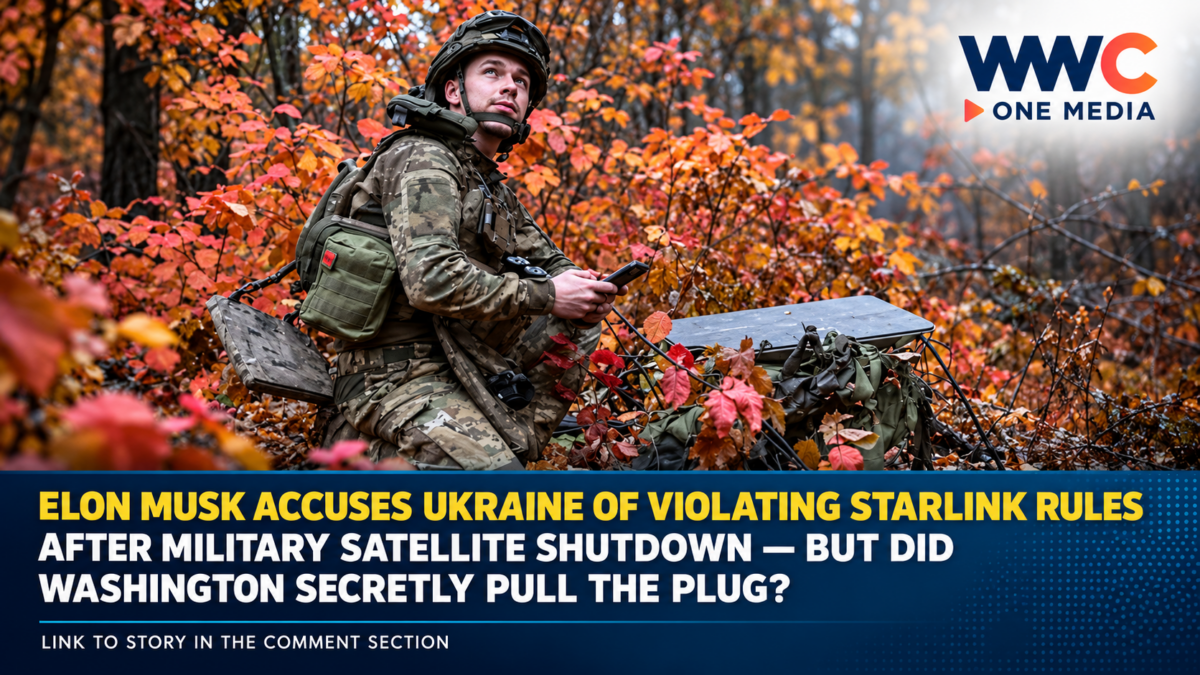
Ukraine’s critical battlefield satellite communications have returned to normal after more than a week of restrictions that disrupted military operations, but the restoration has triggered another explosive confrontation between Kyiv, billionaire Elon Musk and the United States.
Ukrainian President Volodymyr Zelenskyy confirmed on Saturday, October 24, that Starlink and its military-focused counterpart, Starshield, were operating at their previous speeds after limitations threatened Ukrainian drone missions and battlefield communications during Russia’s continuing invasion.
However, the apparent breakthrough was quickly overshadowed by accusations from Musk, the SpaceX chief executive, who alleged that Ukrainian forces had violated Starlink’s terms of service by using the satellite network for offensive drone attacks.
The dispute has raised a much larger question about the war: How vulnerable is Ukraine when essential battlefield technology depends on decisions made by Washington and a private American company?
Zelenskyy confirms Starshield restoration after week of disruption
Ukraine’s Defence Ministry reported that Starshield-supported operations were functioning at speeds above 400 kilometres per hour, compared with an earlier restriction that limited operations to approximately 160 kilometres per hour.
These figures refer to the operating speeds of moving platforms supported by the satellite service, not internet download speeds.
The restriction had reportedly prevented some Ukrainian drone missions from proceeding and complicated efforts to intercept Russian unmanned aircraft.
Zelenskyy said the restoration began overnight and credited American officials and international partners for helping address the disruptions.
The development offered relief to Ukrainian forces that increasingly rely on satellite communications to coordinate operations in an environment where conventional communications systems can be vulnerable to electronic warfare and destruction.
For Ukrainian commanders, however, the episode exposed a serious weakness: technological access can become a strategic vulnerability even when frontline equipment remains operational.
Elon Musk claims Ukrainian forces broke Starlink’s rules
Hours after Kyiv announced the restoration, Musk publicly accused Ukraine’s military of breaching SpaceX’s service conditions.
In a statement posted on X, Musk alleged that Ukrainian forces had used Starlink connectivity for offensive drone strikes that killed people.
He further claimed that SpaceX had closed the loophole enabling such activity during the preceding week.
The accusation immediately intensified questions about who ordered the restrictions and what specific military activities had triggered them.
Musk’s statement indicated that SpaceX had acted against what he characterized as unauthorized use of its technology, although the separate issue of who ordered limitations on the US-controlled Starshield service remained disputed.
Crucially, Musk’s allegation does not establish that Ukrainian forces violated their agreements. The precise contractual restrictions, disputed drone operations and full decision-making process have not been publicly established.
Ukraine rejects claims about long-range drone strikes
Ukrainian presidential adviser Serhiy Beskrestnov challenged Musk’s accusations, arguing that Ukraine was physically unable to use Starlink in the manner suggested for long- and medium-range attack drone operations.
He said Ukrainian long-range drones used against targets inside Russia, including oil refineries, typically operated at speeds of approximately 70 to 90 kilometres per hour and did not depend on Starlink for those missions.
The distinction matters because Ukraine has increasingly targeted Russian energy infrastructure to disrupt fuel supplies, weaken economic resources supporting Moscow’s military campaign and increase pressure on Russia.
Meanwhile, the use of Starshield-enabled, higher-speed drones closer to the battlefield has become an important component of Ukraine’s military capabilities.
The competing statements from Musk and Ukrainian officials highlight the unresolved question of where legitimate defensive operations end and prohibited offensive uses of commercial satellite technology begin.
White House faces questions over who restricted Starshield
The controversy extends beyond SpaceX.
Reuters previously reported, citing sources, that the directive to restrict Starshield operations originated within the White House.
That account added to confusion because American officials and Musk had publicly offered conflicting explanations of who possessed authority to impose the restrictions.
Starlink is SpaceX’s satellite internet service, while Starshield is its government-focused counterpart used for national security and military applications.
Because the United States operates the Starshield capability involved in Ukraine’s military activities, questions about government authorization and operational control carry significant geopolitical consequences.
The restrictions also emerged during tensions between Washington and Kyiv following US President Donald Trump’s announcement of an agreement to purchase Russian diesel and his pressure on Ukraine to halt attacks against Russian oil refineries.
The timing fueled speculation about whether the satellite restrictions were linked to wider diplomatic pressure.
However, their timing alone does not prove that the restrictions were imposed to force Kyiv to change its military strategy.
Russian drone threats expose Ukraine’s dependence on satellite technology
Ukraine’s war effort has evolved into one of the world’s most technology-intensive military campaigns, with satellite-enabled communications and unmanned systems playing central roles.
Satellite connectivity can support units operating in areas where terrestrial infrastructure has been destroyed, interrupted or jammed.
The importance of these networks extends to reconnaissance, command coordination, drone operations and the rapid exchange of battlefield information.
During the latest restrictions, Ukrainian officials said some operations had to be cancelled, while the military’s ability to intercept Russian attack drones was affected.
The disruption occurred amid concerns over interruptions to allied warnings about incoming Russian missile attacks, although Kyiv subsequently said it continued receiving US intelligence.
The episode demonstrates how communications infrastructure, access permissions and technological dependencies can influence real-world military outcomes.
Trump’s statements deepen uncertainty over US military support
The restoration also followed mixed messages from Washington.
Trump had previously suggested that the satellite problems were resolved, but on Friday, October 23, he indicated that further intervention might be necessary if difficulties continued.
The conflicting statements raised uncertainty over the extent of US government involvement and whether similar restrictions could be imposed again.
The issue comes at a sensitive moment in US-Ukraine relations, as Washington continues attempting to influence the direction of the conflict while balancing military assistance, relations with Moscow and broader diplomatic objectives.
For Kyiv, the concern is not simply whether Starlink and Starshield function today.
It is whether their continued availability can be relied upon during future Russian offensives.
A satellite dispute with consequences far beyond Ukraine
The latest confrontation highlights the extraordinary influence that satellite communications providers now have over modern warfare.
Unlike conventional weapons supplied to military forces, network-dependent systems can remain subject to technical controls, contractual restrictions and government decisions long after deployment.
That creates difficult questions about military sovereignty, operational continuity and the role of private technology companies in armed conflicts.
For Ukraine, diversifying communications capabilities and reducing dependence on a single provider could become increasingly important.
For Washington, the controversy raises questions about transparency, accountability and the strategic consequences of restricting technology used by an allied military.
And for SpaceX, it places renewed scrutiny on how commercial and government satellite services are managed when they become deeply embedded in active combat operations.
What happens if Starshield is restricted again?
Ukraine’s immediate communications crisis appears to have eased, with officials confirming the restoration of operational capabilities on October 24.
But the political dispute remains unresolved.
Musk continues to accuse Ukrainian forces of abusing satellite access, while Ukrainian officials dispute his characterization of their drone operations.
Meanwhile, competing accounts of American involvement have left unanswered questions about who ultimately authorized the restrictions.
The restoration may have stabilized Ukraine’s battlefield communications for now, but it has exposed a strategic danger that could outlast the current confrontation.
If Ukraine’s satellite lifeline can be restricted during an active war, what happens when the next major Russian offensive begins — and who ultimately decides whether that lifeline stays connected?