
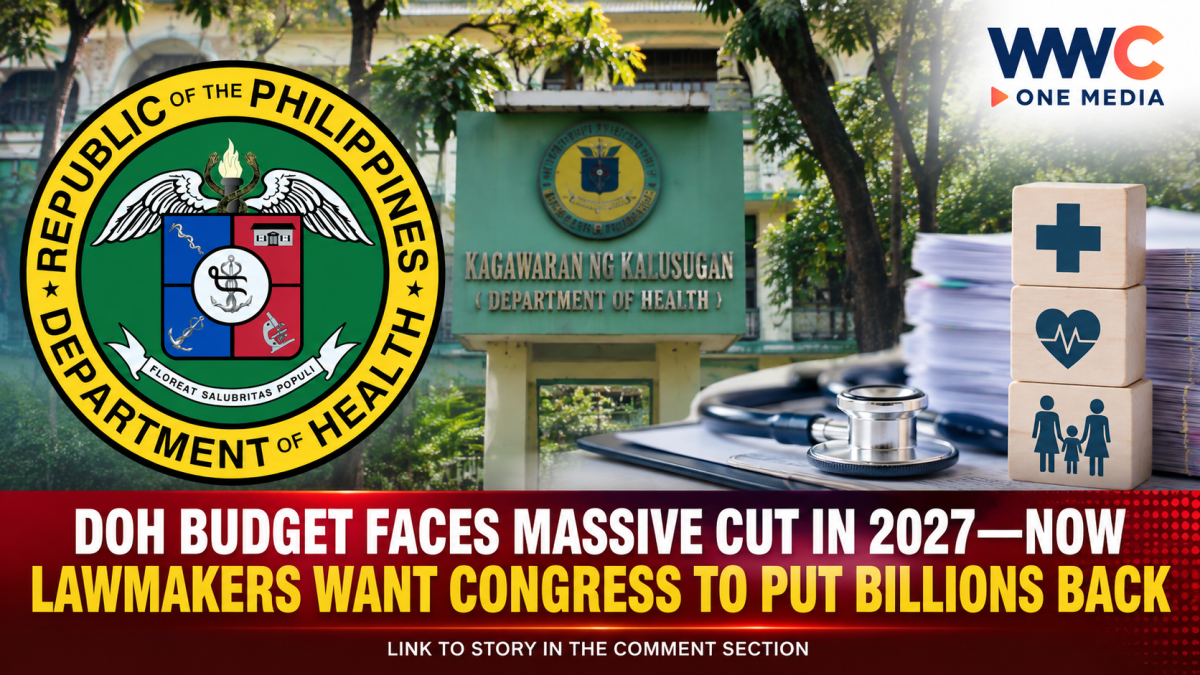
MANILA, Philippines — A proposed 21-percent reduction in the Department of Health’s (DOH) 2027 budget is drawing growing concern from lawmakers and health officials, with calls mounting for Congress to restore funding for hospitals, health facilities and the Philippine Health Insurance Corp. (PhilHealth).
The proposed health-sector allocation currently stands at about ₱353.8 billion, significantly lower than the ₱448.1 billion appropriated for 2026. The reduction comes even as the government continues to face demands for stronger public hospitals, expanded healthcare access and lower out-of-pocket medical costs.
During House budget deliberations, Health Secretary Edwin Mercado said the department needs substantially more funding to sustain several critical programs.
Among the DOH’s priorities are additional funding for PhilHealth, the Health Facilities Enhancement Program (HFEP), and the operations of government hospitals.
According to Mercado, the department is seeking an additional ₱170 billion for PhilHealth, ₱15 billion for HFEP and ₱12 billion for DOH hospital operations.
PhilHealth funding emerges as a major pressure point
One of the biggest concerns is the proposed reduction in government support for PhilHealth.
PhilHealth President and CEO Beverly Lorraine Ho asked lawmakers to restore at least ₱170 billion from the insurer’s original proposed allocation of ₱376 billion. Under the proposed 2027 National Expenditure Program, only about ₱74 billion is allocated for the subsidy of indirect contributors, including indigent Filipinos, senior citizens and persons with disabilities.
Health officials warned that the lower allocation could eventually affect the government’s ability to sustain and expand PhilHealth benefits.
Mercado said projections indicate that PhilHealth could face a substantial funding gap when covering claims involving indirect contributors.
The concern is particularly significant as the government pushes programs designed to reduce the amount Filipinos have to pay from their own pockets when seeking medical treatment.
Hospital expansion could also take a hit
The proposed cuts extend beyond insurance coverage.
The DOH’s Health Facilities Enhancement Program, which finances the construction, improvement and upgrading of government health facilities, is also facing a reduction.
The program’s proposed funding was reported at around ₱14 billion, down from roughly ₱29 billion, according to DOH officials cited by the Inquirer.
Mercado warned that the reduction could delay the government’s goal of expanding public hospital capacity by 15,000 beds by 2028 from the current level of around 30,000 beds.
The DOH is also planning to build 176 primary healthcare facilities in 2027, with an allocation of about ₱506 million, while continuing efforts to expand the country’s network of super health centers.
House lawmakers question whether the funding is enough
The House Committee on Appropriations reviewed the proposed DOH budget on September 2, with lawmakers examining whether the allocation would be sufficient to provide affordable and accessible healthcare.
House health committee chair Rep. Ciriaco Gato Jr. called for greater investment in healthcare, emphasizing that health services should be treated as a right rather than a privilege.
The debate comes as the proposed ₱7.2-trillion national budget for 2027 is being scrutinized by Congress.
The overall national spending plan is about 6 percent higher than the 2026 budget, but several sectors considered critical to human development are nevertheless facing reductions.
Budget watchdogs have pointed out that the proposed spending plan contains significant reductions in several social-sector allocations, including health.
The People’s Budget Coalition has also warned that portions of the proposed budget could be vulnerable to political intervention and called for greater transparency during congressional deliberations.
DOH budget debate comes amid concerns over medicines
The funding controversy comes at a particularly sensitive time for the health department.
In a separate Senate budget hearing on September 4, Sen. Raffy Tulfo questioned DOH officials over the expiration and procurement of medicines, raising allegations that some drugs may have been purchased close to their expiration dates.
Tulfo cited government records showing billions of pesos worth of medicines and medical supplies that had expired or were nearing expiration over several years.
The allegations have not been established as fact, and DOH officials have been asked to address procurement and inventory-management concerns. Mercado said the department is strengthening its inventory system and procurement procedures, including changes in how medicines are purchased and tracked.
The Senate discussion adds another layer to the 2027 budget debate: lawmakers are being asked to provide more money for healthcare while simultaneously demanding stronger safeguards to ensure that existing funds are used efficiently.
Government says budget cuts reflect fiscal prioritization
The Department of Budget and Management, meanwhile, has defended the proposed 2027 spending plan, saying agencies initially submitted more than ₱11 trillion in funding proposals, far above the government’s available fiscal space.
DBM Acting Secretary Kim Robert de Leon said the final ₱7.2-trillion National Expenditure Program resulted from prioritization, with funding directed toward programs considered necessary, implementation-ready and capable of producing the greatest public benefit.
The proposed health-sector allocation of ₱353.8 billion includes funding for the DOH, specialty hospitals and PhilHealth.
That explanation, however, has not ended calls for Congress to reconsider the health allocation.
The decision now shifts to Congress
The proposed DOH budget is not yet final.
Congress still has the power to modify the executive’s proposal during the budget deliberations before the 2027 General Appropriations Act is enacted.
For health officials and lawmakers pushing for additional funding, the central question is whether the government can maintain its healthcare commitments with the proposed allocation—or whether Congress will restore billions of pesos for PhilHealth, hospitals and health facilities.
With the 2027 national budget now under congressional scrutiny, the fight over the DOH allocation could become one of the most consequential battles in the country’s healthcare funding debate.
For millions of Filipinos relying on public hospitals and government-backed health coverage, what Congress decides in the coming budget negotiations could ultimately determine how much healthcare support will actually be available next year.
WWC ONE MEDIA J.M.D



Leave a Reply