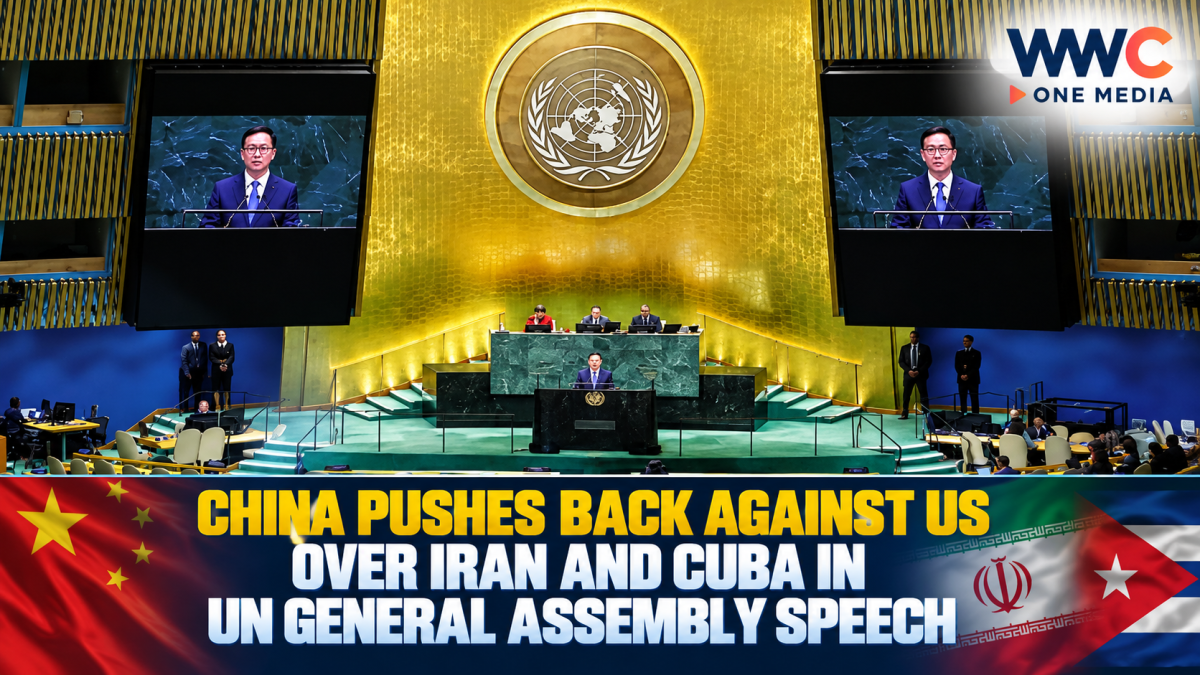
China used its address to the United Nations General Assembly to push back against US policy on Iran and Cuba, calling for respect for the sovereignty of Gulf countries and an end to what Beijing described as threats and sanctions against Cuba.
Chinese Vice President Han Zheng delivered the speech on Sept. 26 without directly naming the United States. He said countries in the Middle East, including those around the Gulf, should have their sovereignty and security respected, while urging major powers to uphold international rules and resolve disputes through consultation.
The remarks came just days after US President Donald Trump and Chinese President Xi Jinping held talks at the White House. The meeting was accompanied by public displays of diplomatic warmth, but disagreements over Washington’s approach to Iran and Cuba remain significant.
Iran was a major point of tension. The United States has been engaged in a conflict with Iran since US-Israeli strikes began in February, while the Strait of Hormuz has become a central issue in efforts to reach a settlement.
Trump has also warned Beijing against providing direct or indirect assistance to Tehran. US Ambassador to China David Perdue said Washington received assurances from Beijing that China would not support Iran, although reports have circulated about Chinese military and economic assistance to Tehran.
Han’s comments reflected China’s broader position that disputes in the Middle East should be addressed through negotiations rather than unilateral military action. Beijing has previously called on Iran and the United States to return to negotiations and has urged the reopening of the Strait of Hormuz to protect international energy supplies.
China’s criticism also extended to Cuba. Han urged the United States to stop threatening military action against Cuba and called for the lifting of what Beijing described as the US blockade and sanctions against the island.
The comments came after Cuba experienced a major collapse of its electrical grid earlier in September, leaving millions without power. Cuba’s energy system has faced longstanding problems involving fuel shortages and aging infrastructure, while the US restrictions on oil supplies have added pressure to the country’s energy situation.
Russia’s foreign minister Sergey Lavrov later echoed China’s call for Washington to lift restrictions on Cuba, showing that opposition to the US approach was also being voiced by another permanent member of the UN Security Council.
Han also used the UN address to emphasize China’s stated view that large and small countries should have equal standing in international affairs. He portrayed Beijing as a partner for developing nations and argued that major international issues should be handled through consultation rather than unilateral action.
The speech came against a complicated backdrop in US-China relations. The two governments have continued negotiations over major strategic and economic issues, even as they disagree over conflicts in the Middle East, sanctions, trade and China’s relationship with countries such as Iran.
Beijing’s latest UN position therefore underscored the difference between diplomatic engagement with Washington and disagreements over specific foreign-policy issues. The Trump-Xi meeting produced assurances concerning Iran, but China’s public statements at the UN showed that Beijing continues to oppose key elements of US policy toward Tehran and Havana.
The developments leave Iran, the Strait of Hormuz and Cuba as three areas where US-China tensions could continue to intersect with broader international diplomacy, even as Washington and Beijing maintain channels for direct negotiations.