
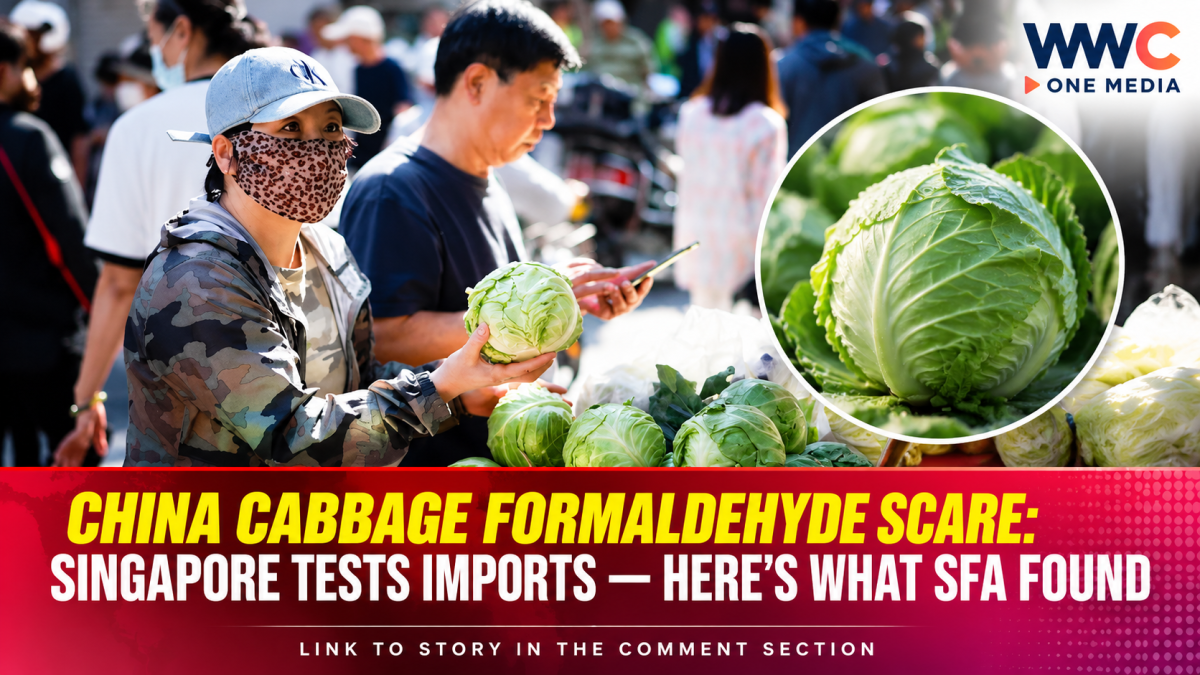
SINGAPORE — Concerns over reports of cabbages in China being treated with formalin have reached Singapore, but the Singapore Food Agency (SFA) says testing of imported cabbages and other vegetables from China has found no evidence of formaldehyde contamination in the produce tested.
The SFA issued the clarification on Friday, September 4, after reports emerged from China that some cabbages in Hebei province had allegedly been treated with formalin — a solution containing formaldehyde — to help preserve the vegetables during transportation.
The agency said it had stepped up surveillance and testing of Chinese vegetable imports following those reports.
What did Singapore’s tests find?
According to the SFA, samples of cabbages and other vegetables imported from China were tested as part of its food-safety surveillance programme.
The results showed no evidence of formalin contamination in the produce tested.
The agency stressed that Singapore uses a science-based food-safety system involving monitoring, sampling and testing to ensure food products sold in the country comply with its regulations.
The SFA also said it will continue monitoring vegetables from China and other food products entering the Singapore market.
How did the controversy begin in China?
The concern originated in China’s Hebei province, where reports surfaced alleging that some cabbage growers or handlers had used a formaldehyde solution to preserve vegetables during transportation.
Chinese authorities subsequently conducted inspections of perishable vegetables following the reports.
The issue gained wider attention after an environmental blogger, identified by the handle Qige, posted a video on Douyin alleging that workers in Kangbao county, Hebei, had dipped cabbages in a substance said to contain formaldehyde before transportation.
Authorities in China investigated the allegations, putting the spotlight on the illegal use of formaldehyde as a food-preservation treatment.
Why is formaldehyde a concern?
Formaldehyde is a chemical widely used for industrial and other purposes. It is not something consumers should intentionally be exposed to through food.
The important distinction, however, is that reports of alleged treatment of some cabbages in China do not mean that all cabbages imported from China are contaminated.
For Singapore consumers, the latest SFA testing is therefore significant: the agency specifically reported that the imported vegetables it tested showed no evidence of formalin contamination.
What should consumers do?
The SFA continues to advise consumers to practise good food-handling hygiene.
Consumers should wash their hands before and after handling vegetables and thoroughly wash vegetables that are not ready to eat before consuming them.
Washing vegetables is a normal food-safety practice, but consumers should also avoid interpreting the precaution as evidence that Singapore’s imported cabbages have been found to contain formaldehyde.
Singapore says monitoring will continue
The SFA said its surveillance programme will continue, including monitoring, sampling and testing of food products sold in Singapore.
That means the agency’s latest announcement should be viewed as a food-safety update rather than a warning that Chinese cabbages currently sold in Singapore are contaminated.
For now, based on the SFA’s reported testing, there is no evidence of formaldehyde contamination in the Chinese cabbages and other vegetables tested in Singapore.
The development nevertheless highlights why food-import surveillance remains important, particularly when allegations involving potentially hazardous chemicals emerge overseas.

Leave a Reply