
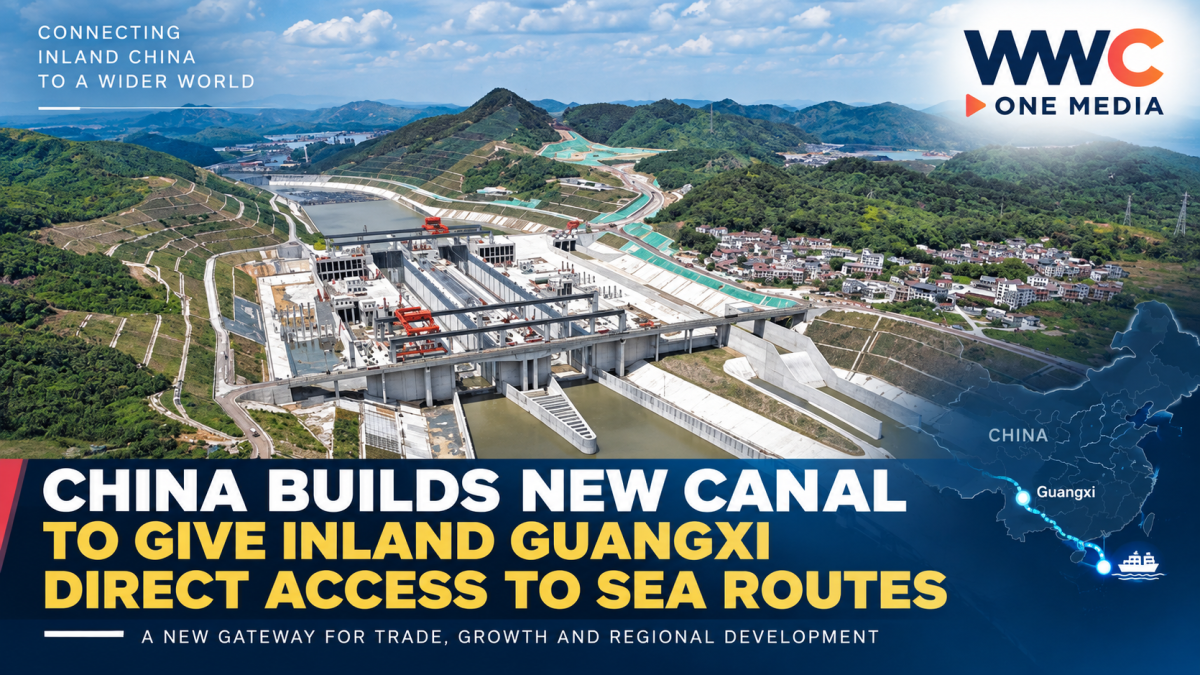
China is nearing completion of the Pinglu Canal in the southern Guangxi region, a major infrastructure project designed to give inland areas a more direct connection to international shipping routes in the Gulf of Tonkin.
The 134-kilometre waterway will connect the Xijiang River system with the Beibu Gulf, allowing cargo vessels to travel between inland Guangxi and the sea without relying on longer existing routes. The project is expected to shorten shipping distances from parts of Guangxi by as much as 560 kilometres.
Construction of the canal began in August 2022. The project includes three major lock complexes and is designed to accommodate vessels carrying up to 5,000 tonnes of cargo.
The canal is being developed at an estimated cost of around US$10 billion and is expected to become operational by the end of 2026. It has involved the excavation of hundreds of millions of cubic metres of material as engineers cut through mountainous terrain in Guangxi.
Once completed, the waterway is expected to improve access to the Beibu Gulf ports, including Qinzhou, giving inland cities such as Nanning a shorter route to international markets.
The project is also closely connected to China’s expanding trade links with Southeast Asia. The Beibu Gulf provides access to maritime routes serving countries across the region, making the canal part of a wider effort to strengthen transport connections between China’s interior and ASEAN markets.
Chinese authorities have promoted the canal as a way to reduce logistics costs and improve the efficiency of freight transportation. By shifting more cargo to waterways, the project could also reduce pressure on road and rail networks serving the region.
The Pinglu Canal is notable in modern Chinese infrastructure history because it is described as the country’s first major river-to-sea canal built since the founding of the People’s Republic of China in 1949.
The project is part of a broader renewed focus on canal infrastructure in China, as authorities explore waterways as another means of connecting inland production centres with domestic and international markets.
When the Pinglu Canal opens, it will create a new inland-to-sea shipping corridor for Guangxi and provide a shorter maritime gateway toward Southeast Asia, potentially reshaping freight flows across southern China.




Leave a Reply