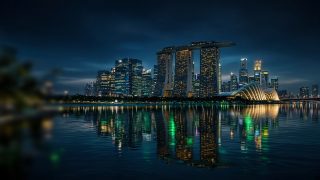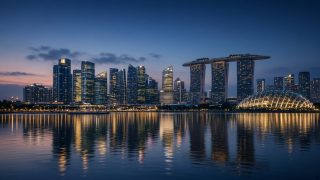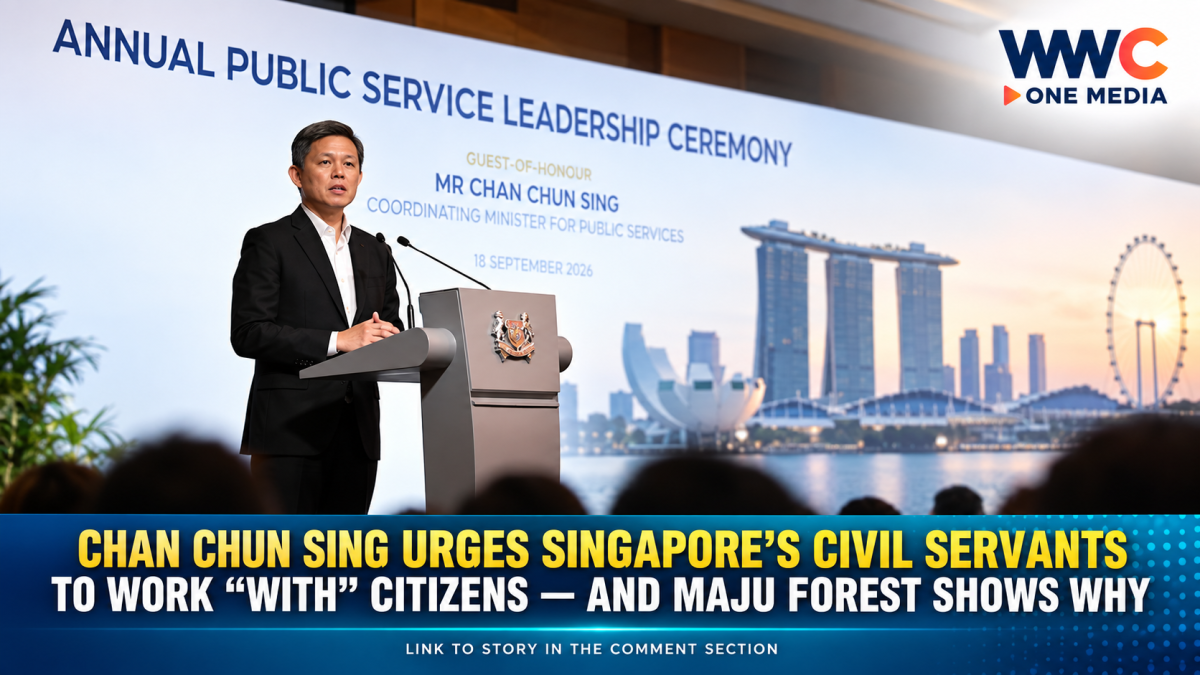
SINGAPORE — Singapore’s public servants must move beyond simply working “for” citizens and instead learn to work “with” them, Coordinating Minister for Public Services Chan Chun Sing said on Friday (Sept 18), highlighting the debate over Maju Forest and Gillman Barracks as an example of the increasingly complex trade-offs involved in policymaking.
Speaking at an annual ceremony for public service leaders at Marina Bay Sands, Mr Chan said public agencies must engage citizens and stakeholders more closely, understand competing interests and explain the trade-offs behind difficult policy decisions. About 800 public-sector leaders attended the event, according to CNA.
The comments come after months of public discussion over plans to develop housing at Maju Forest in Sunset Way and Gillman Barracks, where proposed development prompted concerns from residents and nature groups about the loss of forest, biodiversity and ecological connections.
Maju Forest and Gillman Barracks become a real-world test
The government announced in July that new homes would be developed at the two sites following environmental and heritage studies. Under the initial plans, about 15 hectares of Maju Forest and at least 10 hectares of forest at Gillman Barracks could be cleared for housing.
The proposals triggered public debate over how Singapore should balance housing demand with the preservation of natural spaces.
The government subsequently said it would retain more greenery at both sites following public feedback. Minister of State for National Development Alvin Tan said in August that the adjustments would mean fewer homes would ultimately be built at the two locations.
At the time, authorities had not yet announced the precise amount of additional greenery that would be retained.
For the plans then under consideration, around 35 per cent of the forested areas at Maju Forest was to be retained, including native-dominated secondary forest, a freshwater stream, its riparian buffer and the former Jurong railway line. At Gillman Barracks, around 40 per cent of the relevant green spaces was included in the plan, including much of the native-dominated secondary forest and the entire forest stream.
CNA reported that nature groups had also called for stronger ecological connections between surrounding green areas, including links towards Labrador Nature Reserve, Telok Blangah Hill Park, HortPark and Mount Faber Park.
Public feedback becomes part of the planning equation
The controversy illustrates the challenge Mr Chan described: major land-use decisions rarely involve a single objective.
Housing needs have to be considered alongside land availability, environmental concerns, transport, energy and other infrastructure requirements.
In Parliament earlier in August, Mr Tan said the environmental and heritage studies for Maju Forest and Gillman Barracks were part of the consultation process and were not intended to justify a development plan that had already been fixed. He said agencies would consider the studies and public feedback before finalising the detailed plans.
The issue also generated significant public mobilisation. More than 1,000 people attended a rally at Hong Lim Park on Aug 16 organised by SG Climate Rally, with participants calling for greater protection of natural areas and more transparency in land-use decisions.
Reuters subsequently reported that two petitions had attracted more than 49,000 signatures calling on the government to consider alternatives such as brownfield redevelopment and higher-density redevelopment of existing housing estates. Reuters also reported that environmental studies identified 113 animal species at Maju Forest, including the critically endangered straw-headed bulbul and the Sunda pangolin.
Why Chan says public servants need a different approach
Mr Chan’s message extends beyond the Maju Forest debate.
He said public-sector leaders increasingly have to deal with problems that cross traditional institutional boundaries. Among the challenges he identified were the impact of artificial intelligence on the workforce, an ageing population and the need to sustain economic growth in a more complex international environment.
That means government agencies cannot always rely on existing structures or established ways of working, he said.
Instead, public servants need to identify which problems fall within their responsibilities, recognise where their own capabilities end and work with others who may be better positioned to address particular issues.
Mr Chan also encouraged public-sector leaders to gain international exposure through exchanges, overseas development programmes and secondments to international organisations or foreign government institutions.
The objective, he said, is to help Singapore’s public-sector leaders better understand international partners, norms and perspectives while building professional networks that can become important when conventional channels are no longer sufficient.
The bigger question for Singapore
The Maju Forest and Gillman Barracks debate underscores a broader challenge facing Singapore: how to allocate scarce land when different public priorities compete for the same space.
Singapore has limited land, while demand for housing and infrastructure continues alongside efforts to preserve natural areas. Reuters noted that nearly 80 per cent of Singapore’s population lives in government-built housing and that the government has said not all housing demand can be met through brownfield sites alone.
For residents and nature groups, however, the debate is also about how much ecological value can be retained as development proceeds and how early the public should be involved in decisions affecting natural spaces.
That makes Maju Forest more than a dispute over one housing project. It has become a concrete example of the difficult policy choices Singapore’s public service faces — and of the kind of public engagement Mr Chan says will increasingly be necessary.
The detailed plans for the two sites are still being refined following the government’s decision to retain more greenery than originally proposed. The eventual outcome will show how the competing considerations of housing, conservation, infrastructure and public feedback are ultimately balanced.