
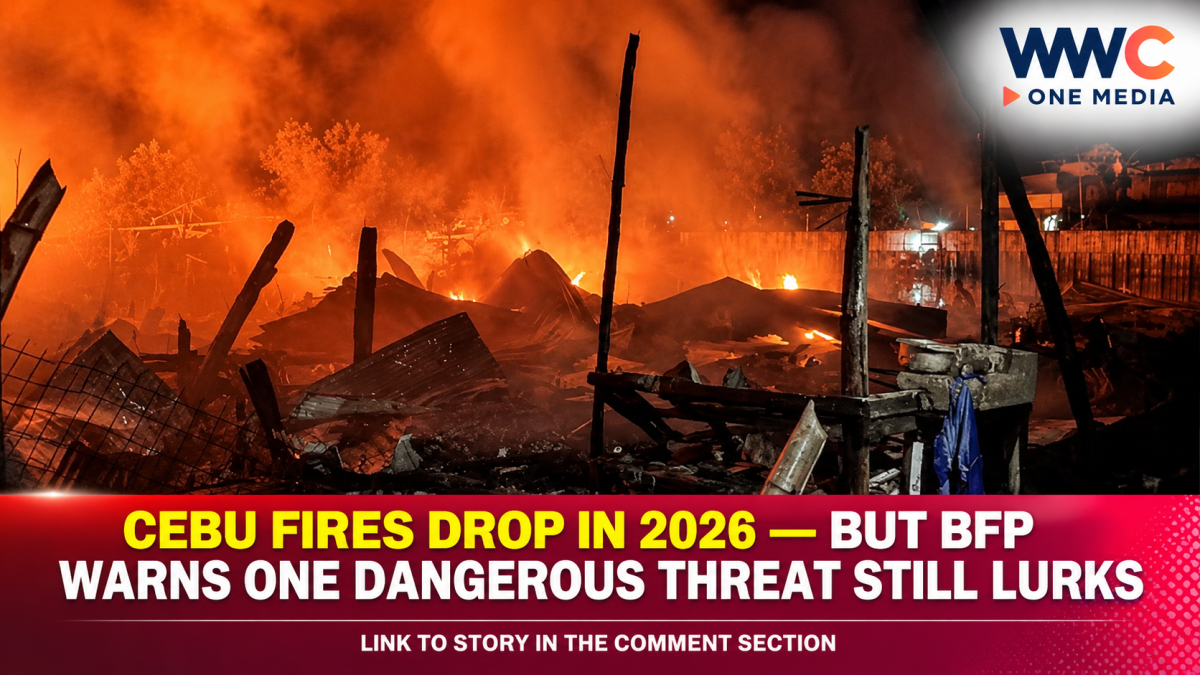
CEBU CITY, Philippines — Fire incidents in Cebu have shown a downward trend in 2026, offering some relief to residents and firefighters, but authorities continue to warn that the decline should not be mistaken for a reason to become complacent.
The said fire incidents recorded from January through September 2026 were lower compared with the same period last year, citing data from the Bureau of Fire Protection (BFP).
The latest development comes after Cebu City also recorded a significant decline during the first quarter of the year.
Data cited by local reports showed 67 fire incidents in Cebu City from January to March 2026, down from 89 incidents during the same period in 2025. That represented a reduction of about 25 percent.
Despite the improvement, fires continued to cause substantial damage.
During the first quarter of 2026, estimated fire-related losses in Cebu City reached about P13.55 million. March alone accounted for 21 incidents and approximately P6.45 million in estimated damage.
Why the decline matters
The reduction is being linked in part to intensified fire-prevention efforts and public information campaigns.
Cebu City fire officials have previously emphasized the importance of the BFP’s Oplan Ligtas na Pamayanan, which focuses on educating communities about fire prevention and encouraging residents to identify hazards before they trigger a disaster.
Earlier in 2026, Cebu City fire officials reported that more than 20 fire incidents had been recorded during January and February, still lower than the 55 incidents recorded during the same two-month period in 2025. Officials attributed part of the improvement to sustained public education.
But the numbers also show why the situation remains serious.
Electrical-related problems—including short circuits, overloaded electrical systems and other wiring issues—have repeatedly been identified among the major fire risks in Cebu. Bombo Radyo previously cited electrical short circuits, battery explosions, overcharging and overloading among the causes associated with fires in the city.
Fewer fires do not mean zero danger
Several major fires have still struck Cebu communities this year.
In January, a fire in Sitio Riverside, Barangay Tejero, Cebu City, reached the second alarm.
The incident displaced 82 families, or 301 people, after 68 houses were affected, including 62 that were destroyed and six that were damaged, according to the Cebu City Disaster Risk Reduction and Management Office and GMA News.
Another major fire hit Barangay Tejero in May, with GMA reporting that at least 75 houses were destroyed or damaged and more than 125 families were displaced in the affected Cebu-area fire incidents.
Meanwhile, neighboring Mandaue City also reported a decline in fires. From January to May 2026, Mandaue recorded 22 fire incidents, compared with 25 during the same period in 2025—a 12 percent decrease.
However, Mandaue fire officials warned that significant risks remain, particularly electrical overloading, damaged fire hydrants and hotter weather conditions.
The city reported that only 10 of its 35 fire hydrants had strong water pressure, while 13 were nonfunctional, highlighting the continuing challenges faced by firefighters even when the number of incidents is falling.
The bigger picture: Cebu’s improvement contrasts with national trend
Cebu’s decline is particularly notable because the nationwide fire situation has moved in the opposite direction at certain points this year.
In May, the BFP reported that the Philippines had recorded 9,451 fire incidents, up 42 percent from 6,675 during the comparable period in 2025. The BFP said the increase was associated in part with the heat index and a rise in non-structural fires, including grass and forest fires outside Metro Manila.
That makes Cebu’s reported decline an important local development—but it should not be interpreted as evidence that fire risks across the entire country are falling.
Prevention remains the key
Fire officials continue to remind households to avoid overloading electrical outlets, regularly inspect wiring, unplug appliances when they are not being used and never leave cooking unattended.
The BFP has repeatedly stressed that many structural fires are preventable and that fire safety is a responsibility shared by households, communities and local authorities.
For Cebu residents, the lower number of incidents is encouraging.
But the lesson from the fires that have already occurred in 2026 is clear: a downward statistic does not eliminate the danger.
One overloaded outlet, faulty wire, unattended flame or damaged electrical connection can still turn an ordinary day into an emergency.




Leave a Reply