
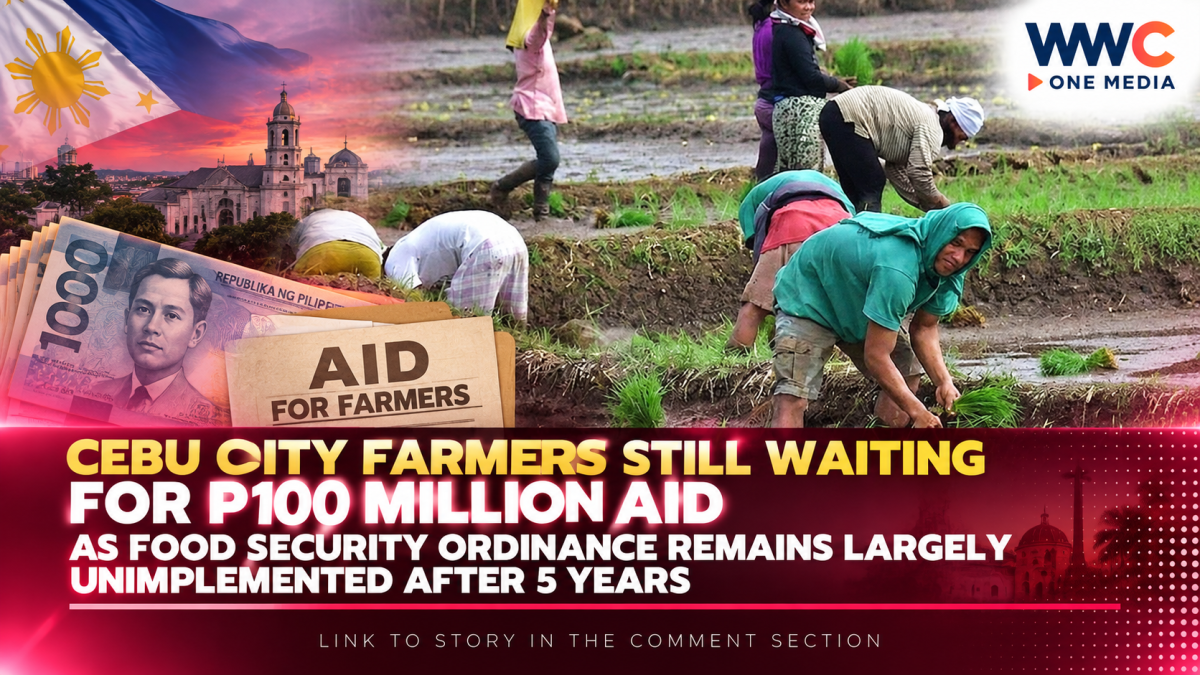
CEBU CITY, Philippines — Five years after Cebu City passed a landmark Food Security Ordinance promising millions in support for local farmers, agriculture scholarships and stronger food production programs, key provisions of the measure have still not reached their intended beneficiaries.
Councilor Phillip Zafra, the author of the ordinance, raised the issue during a Cebu City Council discussion on Sept. 8, warning that programs designed to help farmers remain pending despite the measure having been approved in 2021.
The delay has put renewed attention on Cebu City’s ability to strengthen local food production at a time when local businesses and producers are facing increasing competition from imported products.
P100 Million in Farmer Aid Still Pending
The Cebu City Food Security Ordinance was passed in June 2021, during the Covid-19 pandemic, with the goal of strengthening sustainable food production and improving the city’s long-term food security.
The ordinance included an initial P100 million allocation for food production programs, agricultural education and local markets.
But Zafra said one of the measure’s most important provisions — direct financial support for farmers — has yet to be implemented.
The assistance was intended to help farmers:
- Buy farm inputs
- Prepare and cultivate their land
- Acquire agricultural equipment
- Develop cold storage facilities
Zafra stressed that the city already has a law designed to support local farmers but has yet to fully put its promised assistance into action.
Agriculture Scholarship Program Also Still on Hold
Farmers are not the only ones affected by the delay.
The ordinance also calls for Cebu City to establish a 10-year scholarship program for qualified residents pursuing agriculture- and fishery-related degrees.
Preference is intended for students from agricultural barangays, with the program designed to help develop the next generation of farmers, agricultural workers and food producers.
Zafra expressed disappointment that the scholarship component has also remained pending.
The program was envisioned as a long-term investment in Cebu City’s food security by encouraging more young people to pursue careers connected to agriculture and fisheries.
Ordinance Also Promised Bayanihan Markets and Food Army
The Food Security Ordinance contains other ambitious provisions aimed at transforming how food is produced and sold across Cebu City.
These include plans for:
- A centralized Bayanihan Market in every barangay
- Priority selling opportunities for local farmers, fisherfolk and small traders
- A Cebu City Food Army involving residents and displaced workers interested in food production
- Protected agricultural and fishery zones
- Tax incentives for properties used exclusively for agricultural and fisheries production
However, Zafra’s latest remarks specifically identified the farmer assistance and scholarship programs as provisions that remain pending.
Issue Raised Amid Growing Concerns Over Imported Meat
The delayed implementation was brought up as Cebu City councilors discussed growing concerns from local meat traders about competition from imported meat and processed products.
Councilor Pastor “Jun” Alcover Jr. called for a review of national policies governing imported meat after local traders reportedly raised concerns about competing with foreign products.
Alcover said local businesses were seeking fair competition rather than an outright ban on imports.
He called for strict enforcement of inspection, certification, food safety and health requirements for imported meat products.
The City Council moved to transmit a resolution urging Cebu City’s congressional representatives to review relevant laws and enforcement.
For Zafra, however, the solution should not depend entirely on action from Manila.
Cebu City, he argued, already has its own food security ordinance — and it needs to be implemented.
Five Years Later, Farmers Still Waiting
The controversy raises difficult questions about what happened to one of Cebu City’s major food security initiatives.
The ordinance was designed to reduce pressure on local producers, strengthen agricultural education and create more opportunities for farmers and fisherfolk.
Yet five years after its passage, key programs remain unavailable to the people they were supposed to help.
The issue is particularly significant as food security, agricultural productivity and dependence on imported products continue to be major concerns across the Philippines.
For Cebu City’s farmers, however, the debate is no longer simply about future plans.
It is about when the assistance promised years ago will finally arrive.
The Bottom Line
Cebu City’s five-year-old Food Security Ordinance promised P100 million in programs, direct assistance for farmers and a long-term agriculture scholarship program — but key provisions remain unimplemented.
Councilor Phillip Zafra has now renewed calls for the city to act, arguing that Cebu cannot afford to ignore local food production while farmers and businesses face growing competition from imported products.
Five years after the ordinance was passed, Cebu City’s farmers are still waiting — and the biggest question now is why the aid promised to strengthen the city’s food security has yet to reach them.
WWC ONE MEDIA J.M.D




Leave a Reply