
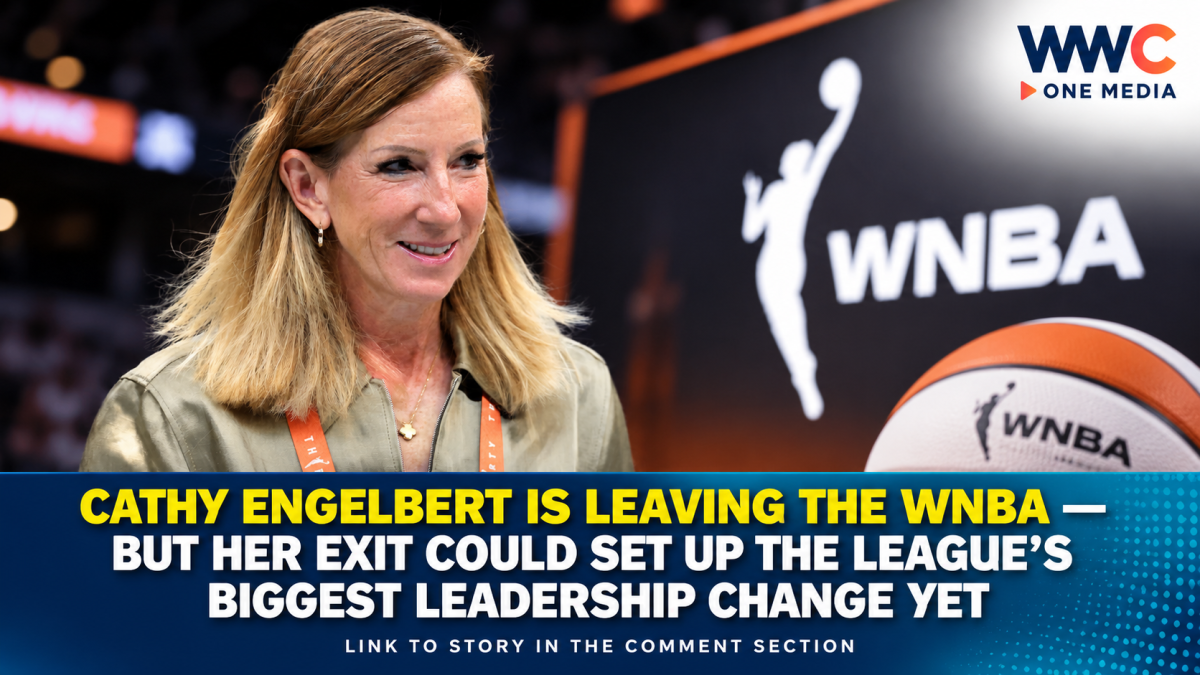
NEW YORK — The WNBA is preparing for a major leadership transition.
WNBA Commissioner Cathy Engelbert will retire at the end of 2026, closing a more than seven-year tenure that transformed the league commercially while also bringing some of its most intense controversies and challenges.
The WNBA confirmed Engelbert’s decision on September 4, with her retirement taking effect December 31, 2026. She was appointed in 2019 as the league’s first commissioner after previously serving as CEO of Deloitte.
NBA Commissioner Adam Silver praised Engelbert for leading the WNBA through what he described as the most significant period of growth in the league’s 30-year history.
Her departure comes at a pivotal moment. The WNBA is entering an era of unprecedented attention, investment, player salaries, media exposure and expansion — meaning the choice of her successor could have major implications for the league’s next phase.
From a struggling league to a rapidly growing sports property
When Engelbert arrived in 2019, the WNBA was still fighting questions about its long-term financial viability and sustainability.
Seven years later, the league looks dramatically different.
Under Engelbert’s leadership, the WNBA expanded from 12 teams to a planned 18 by 2030, secured a major long-term media-rights agreement and recorded significant increases in viewership, attendance, digital engagement, merchandise sales, League Pass subscriptions and franchise valuations.
The financial transformation has been particularly striking.
According to the Associated Press, the average WNBA franchise was valued at roughly $10 million in 2019. By 2026, that figure had risen to approximately $460 million.
Engelbert also helped oversee a major capital raise in 2022, bringing in $75 million to fund areas including marketing, fan engagement, digital products and international expansion. The WNBA described it at the time as the largest investment round in women’s sports.
Historic player salaries and a new financial era
One of the most consequential developments of Engelbert’s tenure came through collective bargaining.
The WNBA and its players reached a new collective bargaining agreement in 2026 following difficult negotiations. The deal created the league’s first contracts capable of reaching $1 million in player salary, marking a dramatic change from the economics of the league’s earlier years.
Engelbert also helped negotiate the league’s new media-rights agreement, another central piece of the WNBA’s financial transformation.
The league has simultaneously been preparing for continued expansion, with its footprint expected to reach 18 teams by 2030.
She also helped the WNBA survive the pandemic
Engelbert’s tenure began just before one of the most disruptive periods in professional sports history.
In 2020, the WNBA created its isolated “Wubble” environment in Bradenton, Florida, allowing the league to complete a pandemic-shortened season during the COVID-19 crisis.
The league later introduced the Commissioner’s Cup and expanded its regular-season schedule. The WNBA has announced plans for a 50-game regular season beginning in 2027, another sign of how dramatically the league’s operating model has changed during Engelbert’s tenure.
She also oversaw the introduction of charter air travel for WNBA teams and players, an important change in working conditions and travel logistics for the league.
But the growth came with growing pains
Engelbert’s tenure was not without controversy.
As the WNBA’s popularity exploded, disagreements emerged over player safety, officiating, social-media abuse and other league policies. Relations between the commissioner’s office and some players also became strained, particularly around collective bargaining.
ESPN reported that Minnesota Lynx star Napheesa Collier had sharply criticized Engelbert’s leadership in 2025, reflecting broader frustrations among some players.
The Associated Press similarly described Engelbert’s tenure as both transformative and tumultuous, noting tensions surrounding player relations and several controversial issues facing the league.
Engelbert, however, has maintained that her decision to retire was her own and that she was not pushed out by NBA or WNBA stakeholders.
She told AP that she had been thinking about retirement for months and believed the timing was appropriate after reaching several major milestones, including the new CBA, media-rights agreement and expansion plans.
The next question: Who replaces Engelbert?
That may now be the biggest story surrounding the WNBA.
Engelbert said the league has been working on succession planning for several years, but she did not identify specific candidates for the job.
The search is expected to consider both internal and external candidates, with NBA Commissioner Adam Silver ultimately playing a key role in the selection process.
Engelbert has also offered to help with the transition.
If the league cannot identify a replacement before the start of the 2027 season, she said she would remain temporarily to assist with the handover.
That makes the next several months particularly important.
The incoming commissioner will inherit a WNBA that is far bigger, richer and more visible than the organization Engelbert took over in 2019 — but also one facing the difficult task of managing unprecedented expectations from players, owners, fans, sponsors and a rapidly expanding audience.
Engelbert leaves the WNBA at a crossroads
Engelbert said she is leaving with gratitude and optimism about what comes next.
Her tenure has unquestionably coincided with the WNBA’s biggest commercial expansion, although the league’s growth has also been fueled by a wave of star power and cultural attention surrounding players such as Caitlin Clark, Angel Reese, A’ja Wilson and Paige Bueckers.
The timing of the transition could therefore prove crucial.
The WNBA enters 2027 with bigger ambitions, more teams, substantially higher player compensation and a larger national audience than ever before.
Now the league must determine who can take that momentum forward.
Cathy Engelbert’s WNBA era ends December 31. The next era begins with one enormous question: who gets the keys to the fastest-growing league in women’s basketball?
WWC ONE MEDIA J.M.S




Leave a Reply